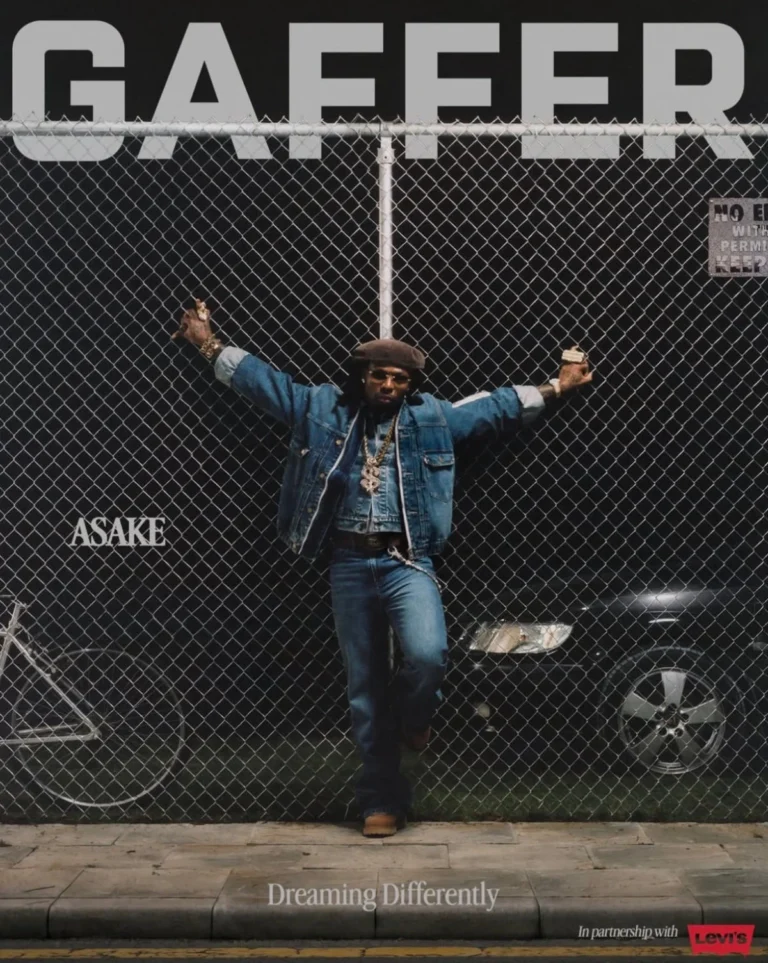
The landscape of modern Afrobeats has undergone a seismic shift, and at the center of this transformation stands Asake, an artist whose trajectory has moved from regional phenomenon to a global cultural force. In his latest feature for GAFFER Magazine, the Nigerian superstar articulates a philosophy that has defined his meteoric 2026: the necessity of creative sovereignty. By refusing to dilute his Yoruba-inflected sound or his signature street-inspired aesthetic to appease international markets, Asake has inadvertently provided a blueprint for emerging artists who fear that global success requires the abandonment of their cultural identity.
This profile in GAFFER arrives at the apex of what industry analysts are calling one of the most significant commercial runs in Nigerian music history. By anchoring his sound in the rhythmic complexities of Fuji music and the raw energy of Lagos street culture, Asake has proven that the path to the global stage is not through assimilation, but through the deliberate amplification of one’s roots.
A Chronology of a Breakthrough Year
The 2026 calendar year for Asake has been characterized by a series of strategic maneuvers that have solidified his position as an elite performer. His year began with a high-profile collaboration that signaled a shift in the hierarchy of the Afrobeats scene. In January 2026, the joint EP REAL, Vol. 1, featuring Asake and industry titan Wizkid, served as a massive commercial catalyst. The project did more than just satisfy fans; it acted as a bridge between two generations of Afrobeats royalty, amassing over 122 million on-demand streams in Nigeria alone within its first quarter. Tracks such as "Turbulence" and "Jogodo" effectively dismantled the myth that niche, high-energy Afrobeats tracks could not penetrate Western radio rotations.
Following the collaborative success of the winter, the spring marked the transition into Asake’s most ambitious solo project to date. In May 2026, he unveiled his fourth studio album, M$NEY. This project served as the inaugural full-length release under his independent imprint, Giran Republic, marking a pivotal moment in his career as he transitioned from a label-backed artist to a label owner. The album’s rollout was meticulously calculated, utilizing digital-first marketing that leaned heavily into his existing fan base before expanding outward.
By the summer, the momentum of M$NEY had reached a fever pitch. Asake took the project to international stages, starting with an innovative orchestral concert in London. This performance, which reimagined his high-octane tracks through classical arrangements, demonstrated the versatility of his songwriting. The culmination of this period was his return to The O2 Arena in London, where he delivered a sold-out headline show as part of his "In God We Trust" world tour. The show, which served as a masterclass in stage presence and production value, cemented his reputation as one of the few contemporary African artists capable of sustaining high-level arena tours globally.
Data-Driven Dominance
The statistics underpinning Asake’s 2026 run provide an objective measure of his cultural reach. The success of M$NEY is perhaps the most illustrative metric. Within its first week of release, the album garnered 37.5 million streams on Spotify Nigeria, a figure that eclipsed the previous record held by established industry leaders. This achievement is not merely a reflection of his popularity; it is a testament to the consistency of his output and the loyalty of his audience.
When analyzing the streaming data, industry experts note a trend toward "glocal" consumption—a phenomenon where hyper-local sounds gain massive traction in international markets. Asake’s music, characterized by heavy percussion, rapid-fire lyrical delivery in Yoruba, and the integration of diverse musical textures, has seen its highest growth rates in markets like the United Kingdom, the United States, and parts of Europe. His ability to maintain this level of engagement while operating independently via Giran Republic suggests that the infrastructure for African music distribution is evolving, allowing artists to bypass traditional label gatekeepers without sacrificing reach.
The Philosophy of Creative Sovereignty
In his conversation with GAFFER Magazine, Asake reflects on the pressure young artists face to "internationalize" their sound—a process often synonymous with adopting Western pop sensibilities. His advice to the next generation is firm: "There are no limits," he asserts. For Asake, the limit is only reached when an artist stops believing in the integrity of their own background.
"When you start, you are looking for a way in," Asake notes in the feature. "But the way in is not by becoming someone else. It is by showing the world exactly who you are, with all the nuances of your culture and your street life. When you stay true to that, people from across the globe don’t just listen to the music—they learn about your world."
This perspective has resonated with industry insiders and cultural critics who observe that the "Afrobeats wave" is now transitioning from a trend to a permanent pillar of the global music industry. By refusing to strip away the Yoruba linguistic markers or the specific rhythmic signatures of his work, Asake has forced global listeners to adapt to his aesthetic, rather than the other way around. This shift in the power dynamic between artist and audience is a hallmark of his career.
Implications for the Music Industry
The success of Asake’s 2026 campaign holds significant implications for the broader African music industry. Firstly, it validates the independent label model. By successfully managing his own imprint, Giran Republic, Asake has demonstrated that with the right data-driven strategy and a strong, authentic brand, artists can maintain creative control while achieving massive commercial scale.
Secondly, the success of his orchestral London show and his sold-out O2 appearance underscores the viability of the "premium" African concert experience. Promoters and venue operators are increasingly recognizing that Afrobeats artists are no longer "opening acts" or secondary attractions; they are primary drivers of ticket sales in major global music hubs. This transition requires a higher level of production, which Asake has delivered consistently, thereby setting a new standard for African live performances on the world stage.
Finally, Asake’s emphasis on "never forgetting your beginnings" serves as a counter-narrative to the standard industry trajectory of "mainstreaming." In many cases, artists who rise to global fame lose their local core audience. Asake, however, has managed to expand his reach without alienating his original fan base. His music remains a staple in Lagos clubs even as it climbs the charts in London and New York. This dual-market success is a rare and difficult balance, one that hinges on his refusal to dilute his sound.
Looking Toward the Future
As the 2026 year draws toward its final quarter, the conversation around Asake has shifted from whether he can break through to how he will sustain this level of influence. His GAFFER feature is widely viewed as a "state of the union" address for his career. By articulating his values—authenticity, consistency, and a profound respect for one’s origin—he is effectively positioning himself as a mentor for the burgeoning class of Afrobeats talent.
The industry response to his recent activities has been overwhelmingly positive. Peers in the Nigerian music ecosystem have noted that Asake’s transparency regarding his independent journey has encouraged other artists to explore similar avenues. Furthermore, the collaborative spirit he displayed with Wizkid early in the year has set a template for high-value partnerships that prioritize musical synergy over simple branding exercises.
Ultimately, Asake’s 2026 run is more than just a collection of streams and sold-out shows; it is a case study in the power of identity. By leaning into his unique perspective, he has not only secured his own legacy but has also widened the gate for other artists who share his roots. As he continues to navigate the complexities of global fame, the central lesson remains clear: the most effective way to reach the world is to remain unapologetically, undeniably yourself. Asake has not just commanded attention; he has commanded respect, proving that in the modern music economy, authenticity is the most valuable currency an artist can possess.