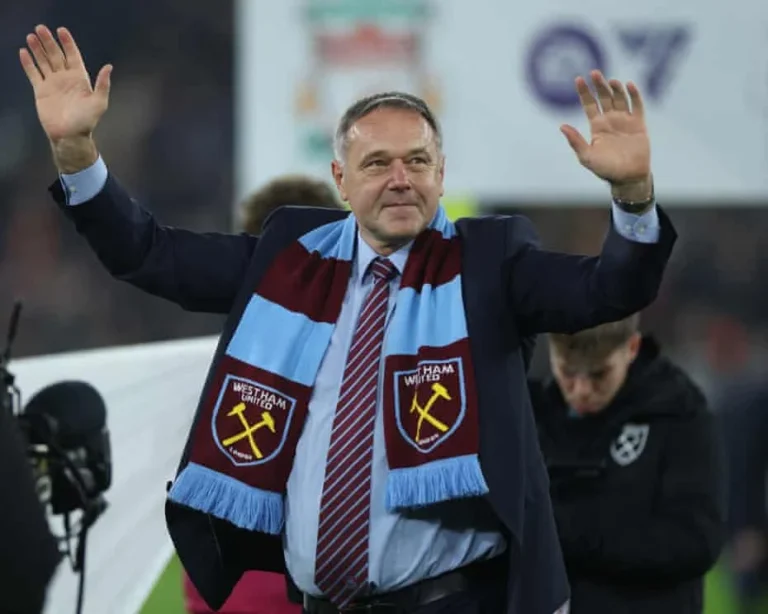
The footballing world is in mourning following the announcement that Ludek Miklosko, the celebrated former West Ham United and Czech international goalkeeper, has passed away at the age of 64. His death marks the conclusion of a courageous five-year battle with cancer, a period during which the former shot-stopper remained a figure of immense resilience and dignity. Miklosko, whose career spanned nearly two decades and left an indelible mark on both the English Premier League and the European international stage, leaves behind a legacy defined not only by his technical prowess between the posts but by the profound emotional bond he shared with the West Ham faithful.
A Career Defined by Resilience and Reliability
Ludek Miklosko’s professional journey began in his native Czechoslovakia, where he established himself as a dominant force in the domestic league with Banik Ostrava. His reputation for commanding the penalty area and executing high-pressure saves caught the attention of international scouts, eventually leading to his pivotal move to London in 1990. At the time, West Ham United was looking for a figure to anchor their defensive line, and Miklosko proved to be a transformative signing.
Between 1990 and 1997, Miklosko made 373 appearances for the Hammers. His tenure was characterized by a rare combination of shot-stopping agility and a commanding presence that brought stability to a volatile era for the club. He was instrumental in securing two promotions to the English top flight in 1991 and 1993, performances that elevated him to legendary status at Upton Park. Even long after his departure, the “Ludo” chant remained a staple of the West Ham terrace songbook, a testament to the lasting impression he left on the supporters.
The Chronology of a Legacy
The timeline of Miklosko’s professional and personal life reflects a man who was deeply integrated into the fabric of the sport. Born in 1960, he rose through the ranks of Czechoslovakian football, earning 40 international caps for his country before the transition to the Czech Republic. His international career was marked by consistency and leadership, providing a steady hand for his national team during a period of significant geopolitical change in Central Europe.
Upon arriving at West Ham in 1990, Miklosko immediately became a fan favorite. His most iconic performance is often cited as the final day of the 1994-1995 season, where his heroic display against Manchester United arguably prevented the Red Devils from clinching the Premier League title, a moment that remains etched in the folklore of English football history.

Following his playing career, Miklosko transitioned into a coaching role, returning to the club he loved to serve as the goalkeeping coach. This phase of his life allowed him to mentor the next generation of players, cementing his reputation as a teacher of the game. However, his life took a difficult turn five years ago with a cancer diagnosis. Despite the severity of his illness, he continued to maintain a public profile defined by grace. In a poignant development in December 2024, Miklosko made the difficult decision to cease active cancer treatment, choosing to focus on quality of life and time spent with his family.
Official Responses and Communal Mourning
The passing of Miklosko has triggered a wave of tributes from across the global football community. West Ham United, in a formal statement, expressed deep sorrow over the loss of their former star: "It is with deep and profound sadness that West Ham United announces the passing of legendary former goalkeeper and coach, Ludek Miklosko. Rest in peace Ludek, our beloved, inspirational goalkeeper and gentle giant of a man."
The club has confirmed that they will honor his memory with a dedicated period of appreciation during their upcoming League Cup third-round fixture against Fulham. This gesture serves as a symbolic acknowledgment of his contributions, ensuring that his legacy is commemorated in the environment where he spent his most productive years.
Banik Ostrava, the club where his professional journey began, also issued a statement honoring his memory. They described him as an "outstanding goalkeeper and above all a great personality," reflecting the high regard in which he was held in his home country.
Perhaps most touching was the statement released by his son, Martin Miklosko, on behalf of the family. He acknowledged the outpouring of support: "We are heartbroken at his loss, but take huge comfort from the immense support he received from all of you, along with the knowledge that he is now at peace and no longer suffering. Dad simply loved West Ham United, and especially hearing his name sung loud and proud at every game. The club, and its fans, were and always will be a part of our family, so thank you all from the bottom of our hearts."
Statistical Context and Professional Impact
To understand the magnitude of Miklosko’s career, one must look at the data. Making 373 appearances for a club like West Ham in the highly physical environment of English football is no small feat. During the 1990s, the transition from the old First Division to the Premier League era necessitated a higher level of athleticism for goalkeepers. Miklosko was at the forefront of this evolution, adapting his style to meet the changing demands of the modern game.

His 40 international caps for Czechoslovakia and subsequent service to the Czech Republic illustrate his longevity at the highest level. In an era before the proliferation of elite sports science, his ability to remain a first-choice goalkeeper for over a decade in top-tier competition speaks volumes about his professional discipline and physical conditioning.
Implications for the Club and the Sport
The loss of a figure like Ludek Miklosko serves as a sobering reminder of the finite nature of professional sports careers and the human beings behind the jerseys. For West Ham United, the passing of such a prominent figure highlights the importance of maintaining historical continuity. By honoring Miklosko, the club not only pays tribute to an individual but also reinforces the identity and values that define its fanbase.
The broader implications for the football world involve the increasing focus on the long-term well-being of former players. The outpouring of love for Miklosko demonstrates the capacity for football clubs to act as extended families, providing support systems that extend well beyond the final whistle. As the sport continues to modernize, the preservation of these narratives and the recognition of legends like Miklosko remain essential to the cultural health of the game.
Reflections on a Life Well-Lived
Ludek Miklosko’s life was not defined solely by his saves or his clean sheets, but by his conduct in the face of adversity. His decision to stop treatment in late 2024 was a testament to his autonomy and his desire to exit his life on his own terms. It was a choice that resonated with many who have followed his health struggles over the last five years.
His legacy is one of unwavering loyalty—to his club, to his teammates, and to the fans who filled the stands to watch him work. He navigated the highs of promotion and the lows of illness with the same stoic, gentle, and reliable demeanor that made him a favorite on the pitch.
As the footballing world prepares to honor him at the upcoming League Cup match, the silence in the stadium will likely be as loud as the cheers he once received. The loss of Ludek Miklosko is a loss for the sport, but for the community of West Ham United and the fans of the Czech Republic, it is the loss of a hero who represented the best qualities of a goalkeeper: a steady hand, a courageous heart, and an enduring, gentle spirit. He leaves behind a void that will be felt, but his story—a career of 373 appearances and a life of resilience—will be told for generations to come.