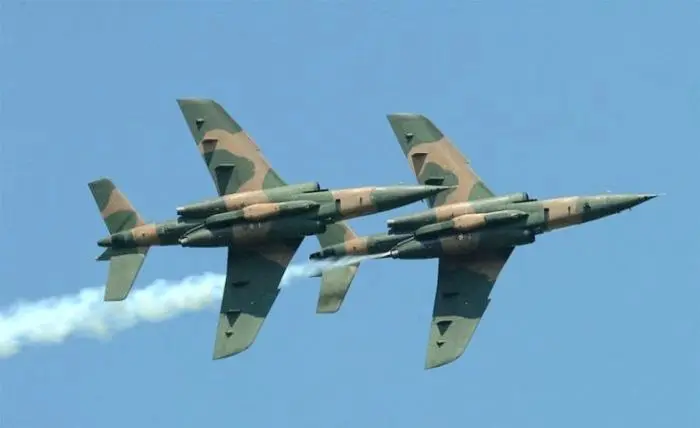
The Federal Government of Nigeria has unequivocally stated that the airstrike conducted on April 11, 2026, targeting the Jilli Market axis in Gubio Local Government Area of Borno State, was a deliberate, intelligence-led operation aimed at confirmed terrorist targets, not an indiscriminate attack. This assertion comes amidst reports of civilian casualties following the Nigerian Air Force (NAF) operation, carried out under the umbrella of Operation HADIN KAI, designed to counter insurgency in the North-East. The government’s stance, communicated through a comprehensive statement by the Minister of Information and National Orientation, Mohammed Idris, seeks to clarify the circumstances surrounding the controversial incident and underscore the military’s commitment to precision targeting in its fight against terrorism.
Official Stance and Justification for the Strike
According to the Federal Government, the operation was executed in one of the most active insurgent corridors in the North-East, an area long designated as a high-risk zone with explicit security advisories restricting civilian presence. The Minister emphasized that the Jilli axis, locally known as "Kasu Daulaye" or "the terrorists’ market," has historically functioned as an insurgent-controlled enclave. Intelligence reports, validated through sustained surveillance, reconnaissance, and human intelligence, confirmed that elements of Boko Haram and the Islamic State’s West Africa Province (ISWAP) actively utilized the area for crucial logistical and operational activities. These included the collection of levies from local populations, the procurement of essential supplies, and the coordination of their ongoing attacks against both military and civilian targets.
The government underscored that the decision to strike was not taken lightly but was the culmination of a rigorous targeting process. This process involved extensive collaboration between the Nigerian Air Force and the Nigerian Army, ensuring the confirmed presence of terrorist elements before the execution of the strike. The primary objectives were to disrupt critical supply lines, degrade insurgent capacity, and dismantle their operational infrastructure in the region. The official narrative firmly rejects any suggestion of indiscriminate targeting, framing the operation as a calculated response to persistent and escalating security threats emanating from the Jilli corridor.
Historical Context of the North-East Insurgency
The conflict in Nigeria’s North-East, primarily driven by Boko Haram and its splinter faction ISWAP, has raged for over a decade, claiming tens of thousands of lives and displacing millions. Borno State, particularly its northern and central parts, remains the epicenter of this protracted humanitarian and security crisis. Boko Haram, which emerged in the early 2000s advocating for a strict interpretation of Islamic law and the cessation of Western education, escalated its insurgency into a full-blown armed conflict by 2009. Its brutal tactics, including mass abductions, bombings, and village raids, have devastated communities and crippled socio-economic activities.
ISWAP, which broke away from Boko Haram in 2016, has distinguished itself through a more sophisticated approach, often focusing on territorial control, tax collection, and establishing parallel governance structures in areas under its influence. This faction has also been more adept at engaging the Nigerian military directly, often targeting military bases and convoys.
Operation HADIN KAI, formerly Operation Lafiya Dole, is the Nigerian military’s overarching counter-terrorism and counter-insurgency effort in the North-East. Its mandate encompasses disrupting terrorist activities, reclaiming lost territories, protecting civilians, and facilitating humanitarian aid. However, the nature of asymmetric warfare, where insurgents often embed themselves within civilian populations or exploit local resources, presents immense challenges for military operations, frequently leading to tragic incidents of civilian harm, even in the context of precision strikes. The strategic importance of markets like Jilli in insurgent-controlled zones stems from their dual utility: as economic hubs for local communities and as vital logistical and revenue-generating points for terrorist groups.
Chronology of Events Leading to the Jilli Airstrike
The government’s statement provided a specific timeline of intelligence gathering and preceding incidents that informed the April 11, 2026, airstrike:
- Years Prior (Approx. 2021): Borno State Governor Babagana Zulum officially confirmed that Jilli and Gazabure markets had been closed approximately five years prior to the airstrike due to insurgent control. This closure underscores the long-standing recognition by state authorities of these areas as known hubs for terrorist operations, indicating a sustained period of insurgent influence.
- January 2026: Troops operating along the Bindul–Jilli axis suffered casualties from an Improvised Explosive Device (IED) attack. This incident highlighted the persistent threat posed by terrorist networks in the corridor and their capability to inflict harm on security forces, reinforcing the area’s designation as a high-risk zone.
- April 9, 2026: Coordinated attacks were carried out by insurgent groups in Ngamdu and Benisheikh. These attacks were subsequently linked by intelligence agencies to the same terrorist network operating within the Jilli corridor, signaling an escalation of hostile activities and a need for immediate intervention to disrupt their operational capabilities.
- Weeks Preceding April 11, 2026: The Nigerian military initiated an intensified period of surveillance and reconnaissance in response to the escalating threats. This sustained intelligence gathering was crucial in confirming the presence and activities of terrorist elements within the Jilli Market area.
- April 11, 2026: Following a rigorous targeting process based on weeks of surveillance and confirmed intelligence, the Nigerian Air Force, in coordination with the Nigerian Army, executed the counter-terrorism airstrike in the Jilli axis.
- April 12, 2026: Reinforcing the intelligence rationale, troops apprehended a 15-year-old ISWAP courier named Tijjani in Ngamdu. Tijjani admitted to actively moving funds and logistics between Jilli and other insurgent locations, thereby providing direct corroboration of the depth of terrorist activity in the area and their exploitation of civilians, including minors, for operational purposes.
This detailed chronology, the government argues, demonstrates a pattern of escalating terrorist activity in the Jilli corridor, necessitating the decisive military action taken on April 11.
Intelligence Gathering and Targeting Precision
The Federal Government’s defense of the airstrike hinges significantly on the robustness of its intelligence gathering and targeting process. The description of the Jilli axis as "Kasu Daulaye" (the terrorists’ market) is central to this narrative, indicating a long-established understanding of the area’s role within the insurgent ecosystem. The statement detailed how intelligence confirmed the use of the area by Boko Haram and ISWAP for critical functions: collecting levies, procuring supplies, and coordinating attacks. These activities are vital for the sustenance and operational capabilities of terrorist groups, making such locations legitimate military targets under the laws of armed conflict.
The apprehension of the 15-year-old ISWAP courier, Tijjani, the day after the strike, provided a tangible piece of evidence supporting the intelligence assessment. His testimony about moving funds and logistics between Jilli and other locations offered real-time validation of the market’s strategic importance to the insurgents. Furthermore, the confirmation from Borno State Governor Babagana Zulum that Jilli and Gazabure markets had been officially closed five years prior due to insurgent control lends significant weight to the government’s claim that the area was not a conventional, bustling civilian market at the time of the strike but rather a known and actively utilized insurgent hub. The synergy between intelligence, surveillance, and reconnaissance (ISR) capabilities of the NAF and ground intelligence from the Nigerian Army was reportedly crucial in developing a comprehensive picture of the target area before the strike was authorized and executed.
The Controversy: Civilian Casualties and Government’s Response
Despite the government’s detailed justification, reports from the ground indicated that innocent citizens were killed during the April 11 airstrike, sparking immediate concern and criticism. While the official statement does not provide specific figures for civilian casualties, it acknowledges the reports and expresses profound regret. "Every Nigerian life is sacred, and any loss of civilian life is deeply regretted," the statement affirmed, extending condolences to the families of those affected and sympathizing with the injured.
In a move aimed at transparency and accountability, the Federal Government has ordered a full and independent investigation into the incident. This investigation is mandated to meticulously review all aspects of the operation, including the intelligence that informed the strike, the targeting process employed, and the execution of the mission itself. The objective is to identify any operational gaps, determine the extent of civilian harm, and ensure accountability where needed. This commitment to investigation is crucial for rebuilding trust with affected communities and demonstrating adherence to international humanitarian law.
Beyond the investigation, the government also stated its commitment to providing humanitarian support to affected families. It is actively working with the Borno and Yobe State governments, as well as the National Emergency Management Agency (NEMA) and State Emergency Management Agencies (SEMA), to coordinate and deliver aid. Furthermore, operational safeguards are slated for strengthening to minimize the risk of civilian harm in future military operations. The government also reiterated its plea to civilians to strictly observe security advisories, avoid restricted zones, and cooperate fully with security agencies, emphasizing the challenges of operating in areas where insurgents deliberately blend with or exploit civilian populations.
Broader Implications and Challenges
The Jilli Market airstrike incident underscores the profound complexities and inherent dilemmas faced by nations engaged in asymmetric warfare against non-state armed groups. The challenge of distinguishing combatants from non-combatants in conflict zones, especially when insurgents deliberately operate within civilian infrastructure or exploit local populations, remains a critical and persistent issue. While the government asserts precision targeting based on robust intelligence, reports of civilian casualties inevitably raise questions about the accuracy of intelligence, the proportionality of force used, and the effectiveness of de-confliction mechanisms to protect civilians.
Such incidents, regardless of the official justification, often contribute to an erosion of public trust in the military and government, particularly in regions already traumatized by years of conflict and violence. The perception of military operations, even those aimed at terrorists, as indiscriminately harmful can alienate local populations, making intelligence gathering more difficult and inadvertently pushing some towards sympathy or support for insurgent groups. This highlights the delicate balance between aggressive counter-terrorism efforts and the imperative to protect civilian lives and uphold human rights.
The international community, including human rights organizations and humanitarian agencies, frequently scrutinizes military actions in conflict zones, particularly when civilian casualties are reported. The demand for transparency, thorough investigations, and accountability is universal. Nigeria’s decision to launch an independent investigation is a critical step towards addressing these concerns and demonstrating adherence to international norms of warfare. The findings of this investigation will be pivotal in shaping public perception, influencing future operational protocols, and potentially impacting the country’s standing on the global stage regarding its counter-terrorism efforts.
Future Outlook
The independent investigation ordered by the Federal Government represents a crucial juncture for Nigeria’s counter-insurgency strategy. Its thoroughness, impartiality, and the subsequent actions taken based on its findings will be instrumental in reinforcing the credibility of the Armed Forces and rebuilding trust with the communities most affected by the conflict. The government’s stated commitment to reviewing intelligence, targeting, and execution, and ensuring accountability, must translate into tangible outcomes.
Moving forward, there will be increased pressure on the Nigerian military to not only degrade insurgent capabilities but also to demonstrate an unwavering commitment to civilian protection. This will likely involve refining intelligence processes to minimize errors, enhancing precision targeting technologies, and strengthening protocols for civilian harm mitigation. The emphasis on humanitarian support and collaboration with state governments and emergency agencies is also vital for addressing the immediate needs of affected communities and fostering a sense of government care. Ultimately, sustained peace and stability in the North-East will depend not just on military victories but also on winning the hearts and minds of the populace, ensuring their safety, and providing avenues for justice and redress when harm occurs. The Jilli Market airstrike serves as a stark reminder of the ongoing challenges in achieving this delicate balance.