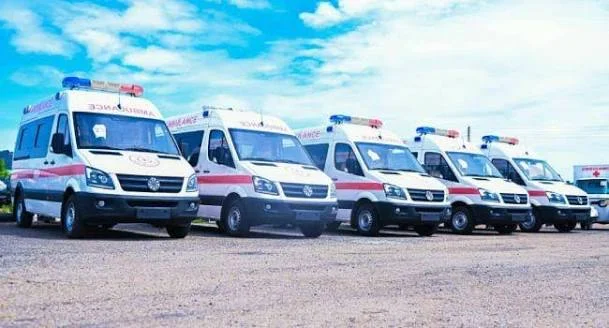
The Federal Government of Nigeria has initiated a strategic overhaul of the emergency medical response framework in Bauchi State, marking a significant milestone in the national effort to decentralize healthcare access and reduce preventable mortality rates. This initiative, spearheaded by the Coordinating Minister of Health and Social Welfare, Prof. Muhammad Ali Pate, centers on the deployment of state-of-the-art ambulances under the National Emergency Medical Services and Ambulance System (NEMSAS). The project is designed to bridge the critical gap between emergency occurrences and hospital arrival, a challenge that has historically hampered healthcare outcomes in Nigeria’s northern regions.
Strategic Deployment and Infrastructure Integration
The newly commissioned fleet of ambulances has been distributed to five pivotal health institutions across Bauchi State. The selection of these facilities—Toro General Hospital, Gamawa Hospital, the Federal Medical Centre (FMC) in Misau, the Abubakar Tafawa Balewa University Teaching Hospital (ATBUTH), and the North-East Vesicovaginal Fistula Centre in Ningi—reflects a deliberate geographical spread intended to cover both urban centers and underserved rural corridors.
Beyond the delivery of vehicles, the unveiling at ATBUTH included the inauguration of a Compressed Natural Gas (CNG) facility. This dual-focus approach highlights the government’s dual commitment to healthcare service delivery and sustainable energy transitions. The integration of CNG technology is expected to lower operational costs for the hospital, allowing for a reallocation of financial resources toward medical supplies and personnel training. By adopting cleaner energy, the facility sets a precedent for sustainable infrastructure in the Nigerian public health sector, potentially serving as a pilot model for other teaching hospitals nationwide.
A Chronology of Healthcare Reforms in Bauchi
The recent deployment is not an isolated event but rather the latest phase in a multi-year effort to stabilize the healthcare landscape in Bauchi. In early 2026, the Federal Government signaled its intent to aggressively address systemic deficits in the state’s medical infrastructure.
- Early 2026: The Federal Government authorized an initial investment of approximately ₦10 billion, specifically earmarked for medical equipment, essential pharmaceutical supplies, ambulance procurement, and comprehensive maternity kits.
- Mid-2026: Implementation began on the revitalization of over 100 primary healthcare centers (PHCs). This phase focused on staffing, basic diagnostic capabilities, and the structural integrity of clinics that serve as the first point of contact for the majority of the rural population.
- September 2026: The current deployment of NEMSAS-compliant ambulances marks the operationalization of the emergency referral layer of the strategy, ensuring that patients stabilized at PHCs can be safely and rapidly transported to secondary and tertiary facilities like ATBUTH.
The Rationale Behind the NEMSAS Framework
The NEMSAS framework is a core component of the Federal Government’s broader "Renewed Hope" health agenda. Historically, Nigeria has struggled with a fragmented referral system, where patients often face significant delays in accessing specialized care. In rural Bauchi, these delays are frequently compounded by poor road networks and the scarcity of specialized transport.
Prof. Muhammad Ali Pate emphasized that the efficacy of a health system is often determined by its response time during "the golden hour"—the critical period following a trauma or medical emergency. By providing these specialized vehicles, the government aims to eliminate the reliance on public transport or informal, non-medicalized means of emergency conveyance. The ministry’s mandate to the beneficiary facilities is clear: the ambulances must be integrated into a robust, 24/7 referral network supported by digital communication and triage protocols.
Investment in Specialized Care and Diagnostic Capacity
The government’s strategy extends beyond basic emergency response. A critical component of the current initiative is the expansion of specialized treatment capabilities within the state. For too long, residents of Bauchi in need of oncology services or advanced diagnostic imaging were forced to travel to distant states or abroad.

The ongoing investments in ATBUTH and the FMC in Misau are specifically targeting the reduction of this "medical migration." By upgrading diagnostic equipment—such as modern MRI and CT scan facilities—the government aims to ensure that complex conditions are detected and managed locally. This is particularly vital for cancer care, where early detection is statistically linked to significantly higher survival rates. The inclusion of the North-East Vesicovaginal Fistula Centre in this investment portfolio is also a strategic move to address gender-specific health challenges that disproportionately affect women in the region, thereby aligning the initiative with national gender-equality and health-equity goals.
Socio-Economic Implications and Public Health Impact
The socio-economic implications of these investments are substantial. By reducing the distance and time required to access emergency and specialized care, the government is lowering the "out-of-pocket" expenditure often incurred by families during health crises. Furthermore, the revitalization of over 100 primary healthcare centers acts as a localized economic stimulus, creating jobs for healthcare workers and supporting local supply chains.
Analysts observe that the success of this initiative will hinge on the maintenance culture adopted by the hospital administrations. The Federal Government has explicitly tasked the management of these facilities with the responsibility of maintaining the ambulances and ensuring that they remain operational. This shift toward localized accountability is a marked departure from previous models where equipment often fell into disrepair due to centralized, bureaucratic management failures.
Addressing the Challenges of Sustainability
While the deployment of vehicles and the investment in CNG infrastructure are positive developments, stakeholders note that the long-term sustainability of these programs remains the ultimate test. The operational costs—including fuel, maintenance, and the retention of specialized staff—must be met with consistent funding and efficient management.
The partnership between the federal and state governments is viewed as a necessary synergy. While the federal government provides the capital investment and policy framework, the state government must provide the enabling environment, including the training of paramedics and the integration of emergency call-out systems. If executed effectively, the current intervention could transform Bauchi into a model for emergency medical care in Northern Nigeria, potentially reversing the high indices of maternal and child mortality that have historically challenged the region.
Looking Ahead: The Path to Universal Health Coverage
The broader vision for the Federal Ministry of Health is the achievement of Universal Health Coverage (UHC), where every citizen can access high-quality health services without suffering financial hardship. The investments made in Bauchi serve as a microcosm of the federal strategy: starting with the primary level, strengthening the referral pathway, and ultimately bolstering the specialized capacity of teaching hospitals.
As the government continues to roll out these initiatives, the focus is expected to shift toward digital health record integration. By connecting the newly deployed ambulances to a central dispatch system, the government hopes to create a data-driven emergency response environment. This would allow health authorities to track real-time emergency demand, optimize ambulance routing, and better allocate medical resources across the state.
In conclusion, the deployment of new ambulances to Bauchi State is a vital step in strengthening the public health architecture of Nigeria. By addressing the critical bottleneck of emergency transport, the Federal Government is taking a pragmatic approach to saving lives. However, the true measure of success will be found in the sustained uptime of these services and the resulting improvement in clinical outcomes for the people of Bauchi. With continued federal investment, state-level collaboration, and diligent maintenance by hospital authorities, these interventions hold the potential to set a new standard for emergency and specialized healthcare in the region, ultimately fostering a healthier and more resilient population.