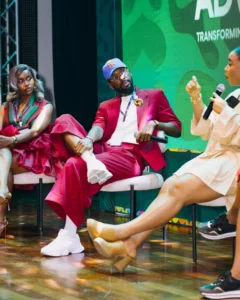
The Africa International Film Festival (AFRIFF) consistently serves as a premier cultural convergence for African cinema, storytelling, and high fashion. Year after year, the red carpet outside the festival’s opening gala transforms into a high-stakes runway where actors, directors, producers, and style icons showcase the pinnacle of continental sartorial artistry. It was against this glittering backdrop of cinematic celebration that renowned actress and media personality Folu Storms delivered one of the most talked-about fashion moments of the season. Stepping out in a fresh-off-the-runway creation by the avant-garde Nigerian label Iremitide, Storms offered a masterclass in maximalist elegance, proving definitively that when executed with precision, more is indeed more.
The ensemble immediately dominated fashion commentary circles, drawing praise from style critics, designers, and attendees alike. Known for her discerning eye and willingness to embrace bold, structural designs, Storms navigated the bustling red carpet with an effortless poise that matched the imposing yet sophisticated nature of her attire. Her appearance at the high-profile event not only underscored her status as a formidable style icon within the African entertainment ecosystem but also cast a brilliant spotlight on the innovative trajectory of contemporary Nigerian fashion design.
Anatomy of a Showstopper: The Iremitide Metallic Creation
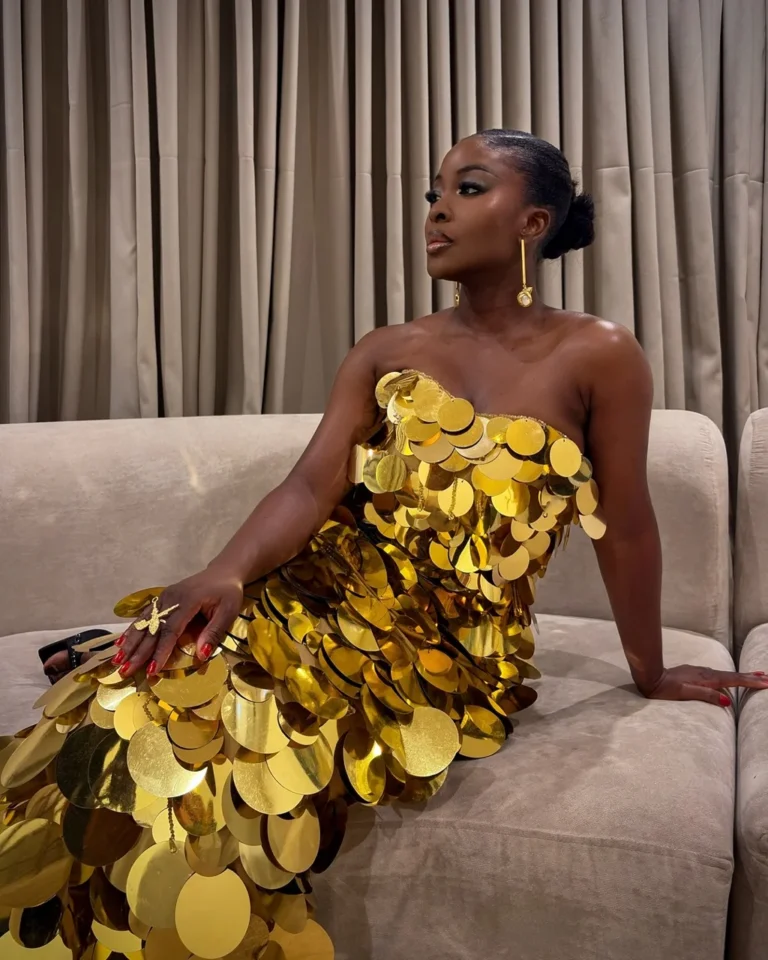
At the core of Folu Storms’ unforgettable red-carpet appearance was a strapless, floor-length gown engineered by Iremitide, a rising force within the Nigerian fashion landscape that recently turned heads at Lagos Fashion Week. The garment is a study in texture, light, and architectural tailoring. Completely covered in oversized metallic gold paillettes, the dress deviates significantly from traditional red-carpet minimalism, opting instead for a tactile opulence that commands attention from every angle.
The defining characteristic of the gown lies in its meticulous construction. The oversized metallic discs are meticulously overlapped to create a striking, armour-like texture. This design choice introduces an element of structural strength and modern warrior-queen aesthetics while maintaining a fluid, body-skimming silhouette. As Storms moved, the highly reflective finish of the gold paillettes interacted dynamically with the ambient lighting of the gala venue, creating a sense of constant movement and multidimensional depth. Despite the heavy visual weight of the metallic embellishments, the streamlined silhouette ensured that the garment remained graceful rather than cumbersome.
Complementing the boldness of the dress required a careful curation of hair, makeup, and accessories that would elevate the look without competing with the gown’s intricate details. Storms achieved this balance through a sleek, braided bun that elegantly exposed her shoulders and collarbones, allowing the dress’s clean, strapless neckline to take center stage. For jewelry, she opted for delicate gold drop earrings courtesy of Symbols of Authority. These understated yet refined pieces added just the right amount of polish, tying the entire metallic theme together with subtle sophistication.
The meticulous visual presentation was the result of a collaborative creative effort involving a talented roster of stylists, beauty professionals, and directors. The look’s overall vision was spearheaded by creative directors Kindred Kreative for Spiraling Series, with creative assistance from Tofemi. Makeup artist Glam by Sheyi delivered a flawless, luminous beat that enhanced Storms’ natural features, while hairstylist Styled by Desojiii executed the immaculate braided updo. L0niimi captured the night’s best angles through photography and videography, supported by content assistant Curatedbycole_, ensuring the look was preserved for digital immortality.
The Context of AFRIFF: Where Cinema Meets African Couture
To fully appreciate the impact of Folu Storms’ red-carpet appearance, one must examine the cultural weight of the event itself. The Africa International Film Festival has evolved significantly since its inception, growing into one of the most influential film festivals on the African continent. Founded to foster international collaboration, provide training, and unlock markets for African filmmakers, AFRIFF has successfully positioned Lagos as a vibrant hub for global cinema.
However, the festival is much more than screenings, masterclasses, and industry panels; it is a premier cultural platform where the worlds of film, art, and fashion continuously intersect. African cinema has long maintained a profound relationship with fashion, with costume design playing a pivotal role in visual storytelling. In recent years, red-carpet events attached to major festivals like AFRIFF have intentionally transformed into showcases for indigenous and continental designers. Attendees frequently use these platforms to champion local talent, wearing bespoke or runway pieces that tell stories of African heritage, craftsmanship, and modern luxury.
By choosing to wear a cutting-edge design by Iremitide—a brand deeply embedded in the contemporary Lagos fashion dialogue—Storms actively participated in this tradition of cultural advocacy. Her red-carpet moment was not merely an exercise in vanity, but a deliberate celebration of the symbiotic relationship between Africa’s burgeoning film industry and its world-class fashion sector.
The Rise of Iremitide and the Evolution of Nigerian Fashion
The choice of designer is equally telling of the current trajectory of the Nigerian fashion industry. Iremitide, the label responsible for the architectural gold gown, has been steadily building a reputation for pushing boundaries, experimenting with unconventional materials, and redefining traditional silhouettes. The brand’s recent presentation at Lagos Fashion Week solidified its position as a label to watch, capturing the attention of industry insiders who are eager to see how Nigerian designers continue to scale global markets.
The Nigerian fashion economy has experienced exponential growth over the past decade, driven by a wave of young, audacious designers who refuse to be bound by traditional aesthetic constraints. Brands like Iremitide are at the forefront of this movement, integrating local craftsmanship with global haute couture sensibilities. The use of oversized metallic paillettes to construct an armour-like surface demonstrates a high level of technical proficiency and conceptual depth, proving that Nigerian design houses are capable of producing avant-garde pieces that rival those found on the runways of Paris, Milan, or New York.
Industry analysts note that high-profile celebrity endorsements play a critical role in the commercial and cultural viability of these emerging labels. When a respected public figure like Folu Storms chooses to wear a runway piece to a major international festival, it instantly elevates the brand’s visibility, driving media coverage, consumer interest, and potential international retail opportunities. This synergy between talent and design is a cornerstone of the modern African creative economy’s ongoing expansion.
Broader Implications for Celebrity Styling and Cultural Representation
Folu Storms’ strategic fashion choice at the AFRIFF Opening Gala highlights a broader shift in how African celebrities approach red-carpet styling. Increasingly, public figures are viewing their wardrobe choices as powerful tools for cultural diplomacy and economic support. By prioritizing indigenous and continental designers over established Western luxury houses, African stars are helping to construct a self-sustaining ecosystem within the local creative industries.
Furthermore, this moment reflects the maturation of African red-carpet culture. Audiences no longer look merely for conventional glamour; they seek narrative, innovation, and authenticity. Storms’ ensemble delivered on all fronts, merging the theatricality required for a major film festival opening with wearable art that honored the intricacies of African craftsmanship. As African cinema continues to capture global attention through streaming platforms and international box offices, the corresponding visibility of African fashion ensures that the continent’s cultural exports remain comprehensive, multifaceted, and deeply impactful.
The ripple effects of such fashion moments extend far beyond a single evening of applause. They inspire aspiring designers, validate the painstaking labor of artisans and beauty professionals, and challenge global fashion capitals to pay closer attention to the vibrant innovations emerging from the Global South. As Folu Storms stepped into the gala venue, radiating confidence in her golden armour of paillettes, she did not just attend an event—she made a definitive statement about the unyielding brilliance, power, and future of African creativity.