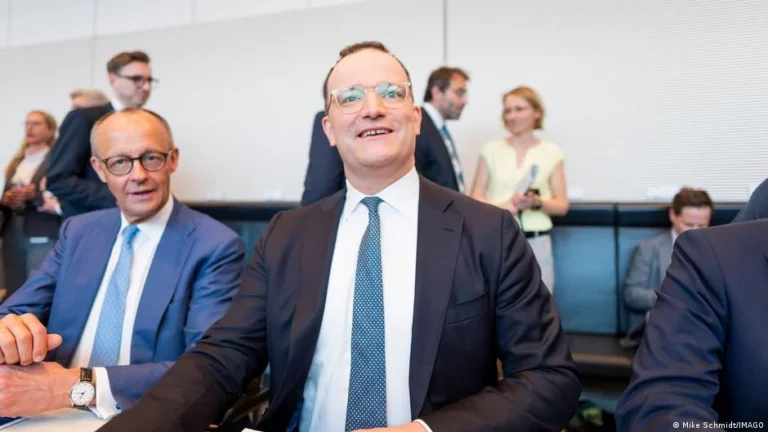
Jens Spahn, a prominent figure within Germany’s conservative political landscape and the parliamentary leader of the ruling Christian Democratic Union/Christian Social Union (CDU/CSU) bloc in the Bundestag, tendered his resignation on Saturday, April 19, 2025. The decision came amid escalating public and political debate surrounding his choice to become a father via surrogacy, a practice that remains prohibited under German law. Chancellor Friedrich Merz, leader of the CDU, formally requested Spahn’s resignation, underscoring the severity with which the party viewed the breach of its stated principles. Spahn, 45, confirmed his departure from the parliamentary leadership but clarified that he would retain his seat as a member of the Bundestag, indicating a retreat from frontline party management rather than a complete exit from political life.
The controversy centers on the fact that surrogacy is not permitted within Germany’s legal framework, with the CDU, Spahn’s own party, being a vocal opponent of its legalization. Spahn and his husband, Daniel Funke, had their child through a surrogate mother in the United States, where the practice is legal in many states. This geographical distinction, while legally insulating Spahn from domestic prosecution for the act itself, did not shield him from a torrent of criticism regarding perceived hypocrisy and a challenge to party credibility.
Background to the Surrogacy Debate in Germany
Germany’s stance on surrogacy is rooted in a comprehensive legal framework that prioritizes the protection of embryos and seeks to prevent the commercialization of human reproduction. The central piece of legislation is the Embryo Protection Act (Embryonenschutzgesetz) of 1990, which strictly prohibits various reproductive practices, including surrogacy. This law explicitly forbids doctors from performing artificial insemination on surrogate mothers and prohibits intermediaries from arranging such agreements. The underlying rationale for this ban is multifaceted, encompassing ethical concerns about the potential exploitation of women, particularly those in vulnerable economic situations, and the commodification of children. Critics of surrogacy within Germany often argue that it can reduce a woman’s body to a reproductive vessel and a child to a "product" of a contract, conflicting with fundamental human dignity.
The CDU, as a party with strong Christian values embedded in its foundation, has consistently upheld this legal prohibition. Its platform often emphasizes traditional family structures and a cautious approach to bioethical issues. For a high-ranking party official like Spahn, who had previously articulated reservations about the concept of "rented wombs" and had voted in line with party policy to maintain the ban, his personal decision to pursue surrogacy abroad created an undeniable tension between his public persona, his political obligations, and his private life.
Chronology of Events Leading to Resignation
The events unfolded rapidly over the past week, bringing a swift end to Spahn’s tenure as parliamentary group leader:
- Earlier This Week: Jens Spahn and his husband, Daniel Funke, publicly announced their new parenthood, sharing a photograph on social media depicting them with a stroller. This announcement, intended as a joyous personal milestone, immediately ignited a firestorm of criticism across Germany’s political spectrum.
- Immediate Backlash: The public revelation prompted accusations of double standards directed at Spahn. Critics pointed out the stark contradiction between his senior position in a party that staunchly opposes surrogacy within Germany and his personal choice to utilize the practice internationally.
- Previous Stance: Prior to this personal development, Spahn had publicly expressed his ethical reservations about surrogacy. In past statements, he indicated that as a Christian and a gay man, he found the idea of "rented wombs" profoundly difficult to reconcile. He had consistently voted along party lines in favor of upholding the domestic ban on surrogacy.
- Friday, April 18, 2025: In an attempt to address the mounting criticism, Spahn gave an interview to Germany’s Bild newspaper for a podcast. During the interview, he tried to defend his decision, stating that he had "wrestled with myself for a long time, including on the issue of surrogacy." This effort, however, appeared insufficient to quell the controversy or satisfy his party’s leadership.
- Late Friday/Early Saturday: Behind the scenes, discussions intensified. Chancellor Friedrich Merz, recognizing the escalating damage to the party’s credibility and internal cohesion, engaged in critical conversations with Spahn. It became evident that Sp Merz would request Spahn’s resignation.
- Saturday, April 19, 2025: Jens Spahn publicly announced his resignation as the parliamentary leader of the CDU/CSU bloc. In a statement released to news agencies, Spahn acknowledged the incompatibility of his personal happiness with his political office: "In recent days, I have come to realize that my personal happiness in starting a family with my husband and becoming a father is incompatible with my political office."
Official Responses and Party Dynamics
The resignation elicited a range of reactions, highlighting the complex interplay of personal ethics, party discipline, and political opportunism in Germany.
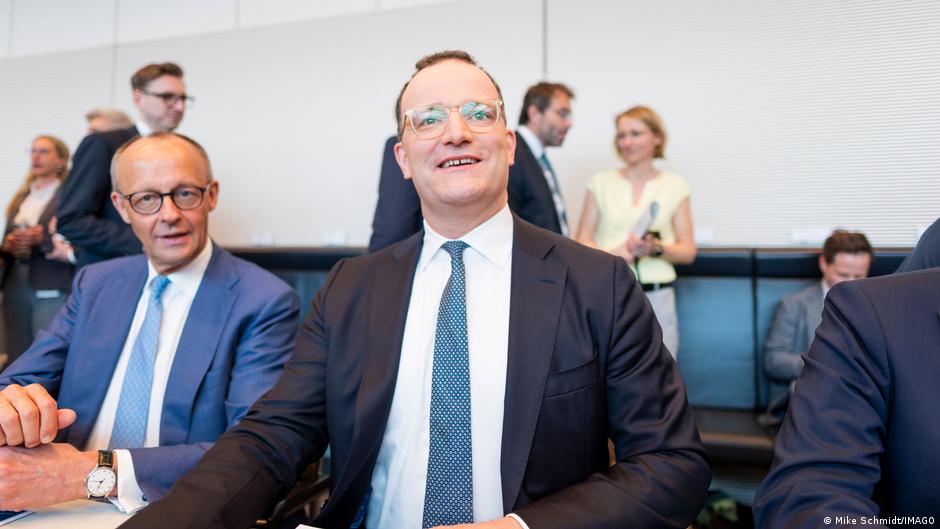
Chancellor Friedrich Merz (CDU): Following Spahn’s announcement, Chancellor Merz publicly endorsed the decision, labeling it both "correct" and "unavoidable." Merz emphasized a core tenet of political leadership: "credibility is the most valuable asset in politics." His statement underscored the CDU’s commitment to its principles, even when it involves difficult decisions concerning high-ranking party members. Merz also outlined the immediate next steps, stating his intention to coordinate with Markus Söder, the leader of the CDU’s Bavarian sister party, the Christian Social Union (CSU), to propose a new parliamentary group chair. This move highlighted the necessity of maintaining unity and strong leadership within the conservative bloc, particularly given the ongoing challenges of coalition governance.
Jens Spahn’s Statement: Spahn’s own words conveyed a sense of personal sacrifice for the sake of his political role. His acknowledgment that his "personal happiness" was "incompatible with my political office" suggested an understanding of the untenable position he had created for himself and his party. While not an apology for his personal choice, it was a recognition of the political implications.
Reactions from Other Political Parties:
- Social Democratic Party (SPD): Mattias Miersch, Spahn’s counterpart from the center-left SPD, adopted a tone of empathy, focusing on the personal toll of the situation. "As a person, I can imagine how the last few hours must have been for Jens Spahn and his family," Miersch stated, adding wishes for "all the best and much strength for the time after office." This measured response from a coalition partner reflected the delicate balance of maintaining governmental stability while acknowledging a politically charged event. The SPD, while having a more progressive stance on social issues than the CDU, likely aimed to avoid exacerbating internal tensions within the governing coalition.
- Alliance 90/The Greens: The co-chairs of the Greens, Britta Hasselmann and Katharina Dröge, issued a joint statement that was more critical. They asserted that Spahn’s resignation was not "only about a personal decision that stood in defiance of a party position." Instead, they attributed it to a broader pattern of Spahn’s "scandals, mistakes, and leadership weaknesses," which they argued "ultimately led to this point." This response from an opposition party sought to frame the resignation within a larger narrative of Spahn’s political vulnerabilities, referencing his past controversies.
- Alternative for Germany (AfD): Alice Weidel, co-leader of the far-right AfD, characterized Spahn’s resignation as "overdue." Weidel seized the opportunity to launch a broader attack, claiming that Spahn’s "COVID-era misadventures alone made him untenable." She further asserted, "That he has now undermined a law that he himself voted for has definitively destroyed his credibility." The AfD’s reaction was characteristic of its strategy to criticize established parties, leveraging any perceived hypocrisy or scandal to reinforce its anti-establishment narrative.
- The Left Party (Die Linke): Sören Pellmann of the socialist Left Party echoed the sentiment of accountability, stating that anyone "who bears political responsibility must be measured by the yardsticks that they set for other people." This statement underscored the principle of consistent application of ethical and legal standards, regardless of personal circumstance.
- Free Democratic Party (FDP): Wolfgang Kubicki, a leader of the liberal FDP, expressed "pity" that Spahn had not clarified sooner "that he had changed his opinion on surrogate mothers on the basis of his own personal experiences." Kubicki’s comment highlighted the FDP’s generally more liberal approach to personal freedoms and social issues, suggesting that an honest evolution of views might have been more politically palatable than a perceived double standard.
Broader Implications and Analysis
Jens Spahn’s resignation carries significant implications for his own political future, the CDU, and the broader German political landscape.
For Jens Spahn: This marks a considerable setback for a politician once widely regarded as a "rising star" within the conservative bloc. Having previously served as Minister of Health during the challenging COVID-19 pandemic and as Parliamentary State Secretary in the Ministry of Finance, Spahn had built a reputation as a dynamic and ambitious leader. He was re-elected parliamentary group leader with a robust 85% of the vote just months prior in May, showcasing his internal party support. While he retains his Bundestag seat, his removal from a key leadership position will undoubtedly diminish his immediate influence and could impact his long-term career trajectory within the CDU. The incident serves as a stark reminder of the intense scrutiny public figures face, particularly when their private lives intersect with public policy and party ideology.
For the CDU/CSU: The episode allowed Chancellor Merz to assert strong leadership and reinforce the party’s commitment to its foundational principles. By demanding Spahn’s resignation, Merz sent a clear message about the importance of credibility and adherence to party lines, especially on ethically sensitive issues. This move could strengthen Merz’s authority within the party and project an image of principled leadership to the conservative base. However, it also brings the conservative bloc’s stance on bioethics and family policy into renewed focus. While the CDU has maintained a traditional position, society is evolving, and internal debates about modernizing certain aspects of their platform may continue, particularly regarding LGBTQ+ rights and evolving family structures. The swift action prevents a prolonged internal distraction, allowing the party to focus on governance and upcoming electoral challenges.
For German Politics and Society: The controversy reignites a broader public debate about surrogacy in Germany. While the legal status of surrogacy for domestic arrangements remains firm, the case highlights the growing complexity introduced by international surrogacy. It forces a discussion on how Germany’s laws interact with global practices and whether existing legal frameworks adequately address the realities of modern family formation. While Spahn will not face legal consequences in Germany for raising a child born abroad to a surrogate mother, the ethical and political fallout underscores the deep divisions and sensitivities surrounding this issue. The incident also prompts reflection on the expectations placed upon politicians regarding their personal conduct aligning with their public policy positions, particularly on matters of morality and ethics. It underscores the challenges for political parties in balancing traditional values with the evolving social norms and personal choices of their members in a diverse society.
In conclusion, Jens Spahn’s resignation is a significant development, not only for his individual career but also for the CDU’s internal dynamics and the ongoing societal dialogue in Germany regarding bioethics, family law, and political accountability. The events underscore the enduring tension between personal liberty and political responsibility, particularly when sensitive ethical issues are involved.