
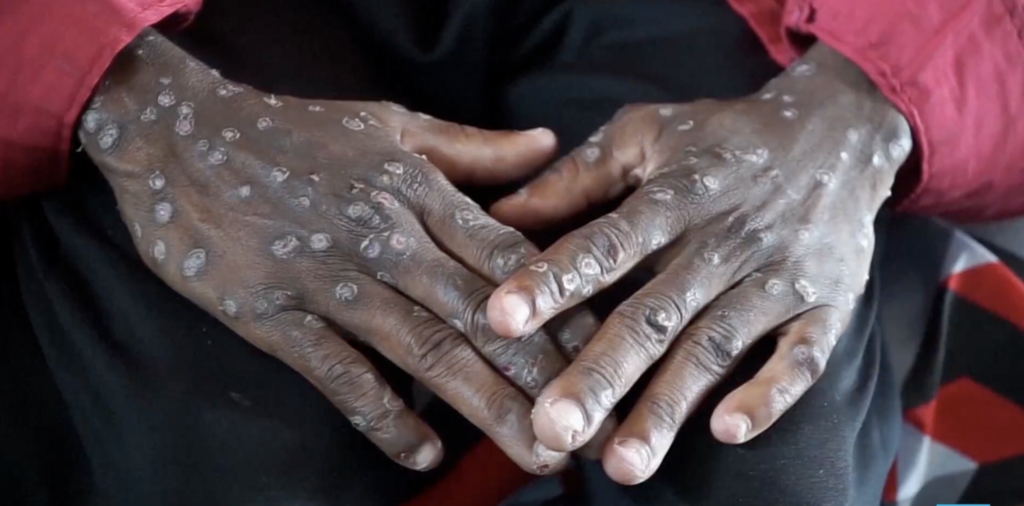
The international public health architecture is facing a fundamental reckoning as global health leaders warn that the recurring declarations of Public Health Emergencies of International Concern (PHEICs) represent a profound failure of the world’s prevention systems. According to a landmark report released by the Independent Panel for Pandemic Preparedness and Response, titled Hiding in Plain Sight, the trajectory of the mpox virus from a localized zoonotic affliction in West and Central Africa to a global health crisis serves as a stark textbook example of systemic neglect. Despite circulating for more than half a century and causing sporadic, well-documented outbreaks in vulnerable, under-resourced communities, mpox was largely ignored by the international community until it breached the borders of wealthy nations.
The report, presented by prominent global health figures including former Prime Minister of New Zealand and Independent Panel Co-Chair Helen Clark, argues that the international response mechanism is dangerously reactive. By the time a PHEIC is officially declared by the World Health Organization (WHO), the system has already failed to contain the pathogen at its source. Health experts emphasize that preventable health emergencies are direct consequences of underfunded primary healthcare, unheeded early warning signals, and a persistent global failure to invest in local health intelligence.
A Half-Century of Omission: The Chronology of an Ignored Pathogen
To understand the global mpox crisis of the 2020s, analysts must look back decades. For over fifty years, mpox—formerly known as monkeypox—circulated primarily within animal reservoirs in rainforest regions of Central and West Africa. Sporadic human cases emerged periodically, typically affecting impoverished rural communities where individuals came into contact with infected wildlife. Despite these recurrent signals, international funding, diagnostic development, and vaccine research remained virtually non-existent for the disease.

The turning point occurred gradually throughout the late 2010s and early 2020s, culminating in a dramatic epidemiological shift. Decades of unmitigated transmission allowed the virus to evolve, resulting in new variants capable of efficient human-to-human transmission, notably through sexual contact. In July 2022, the WHO declared mpox a PHEIC for the first time as the virus rapidly spread to 82 countries across multiple continents, driven largely by outbreaks in North America and Europe.
However, this first global declaration exposed glaring inequities in the international health response. While wealthy nations swiftly secured and deployed vaccines and therapeutic countermeasures for their affected populations, the Democratic Republic of Congo (DRC)—the true epicentre of the epidemic—was left largely unassisted. Vaccines were unavailable to frontline health workers and vulnerable populations in the DRC, allowing the virus to mutate further and spread more aggressively.
Throughout 2023, epidemiological signals continued to flash red. Researchers and local health workers noted surging case numbers and changing transmission patterns, signaling the rise of dangerous new variants. According to report author Dr. Els Torreele, alarm bells were ringing continuously, yet international institutions and wealthy donor governments failed to listen until August 2024. That month, the WHO and the Africa Centres for Disease Control and Prevention (Africa CDC) were forced to jointly declare mpox a public health emergency for the second time, scrambling to mobilize resources for a crisis that could have been preempted years prior.
The Broader Crisis: Recurring Systemic Failures in Disease Control
The systemic issues highlighted by the mpox crisis are not isolated to a single pathogen. Global health experts emphasize that similar patterns of neglect and delayed response plague numerous other infectious threats worldwide.

During recent media briefings, panel members drew comparisons to international reactions surrounding sporadic infectious disease scares, such as a potential plague case reported in Russia. Analysts pointed out that sensationalized media coverage often distracts from the reality that endemic pathogens—including the plague bacterium—persist continuously in animal reservoirs across multiple global regions, occasionally spilling over into human populations, particularly in fragile states lacking robust public health infrastructure.
This reactive cycle extends beyond mpox to other high-consequence pathogens currently straining regional health systems in Africa. Aggrey Aluso, executive director of the Resilience Action Network Africa (RANA), highlighted the ongoing challenges surrounding the detection and containment of the Ebola Bundibugyo outbreak in the DRC. Much like mpox, initial detection of the Ebola outbreak faced severe delays, and affected regions are now paying a heavy human and economic price.
Dr. Marie Roseline Belizaire, WHO Africa regional director of emergency preparedness and response, outlined the compounding hurdles that hobble local responses to these outbreaks. Diagnostic bottlenecks remain a primary obstacle, with clinical samples frequently requiring transport across hundreds of kilometers to reach specialized laboratories. Compounding these delays are critical gaps in healthcare staff training, widespread fuel shortages, a scarcity of secure isolation facilities, and severe local funding deficits. Dr. Belizaire emphasized the danger of "invisible transmission," noting that effective containment requires vastly strengthened surveillance systems and proactive contact tracing to ensure patients are identified and treated before transmission chains multiply.
Financing Gaps and the Demand for Strict Accountability
At the heart of the Independent Panel’s critique is a profound financial and structural deficit in global pandemic preparedness. Dr. Joanne Liu, a member of the Independent Panel, underscored the stark contrast between the estimated funding required to maintain effective annual pandemic preparedness and response—pegged at approximately $15 billion—and the reality that only around $2 billion is raised annually.
Furthermore, Dr. Liu stressed that increasing funding alone is insufficient without robust, transparent accountability mechanisms. It is no longer acceptable for international bodies to rely solely on high-level tracking tools. Global health donors and recipient governments must implement rigorous accountability frameworks to guarantee that allocated funds bypass bureaucratic bottlenecks and reach frontline health workers and community clinics where they are most urgently needed.
Shifting the Paradigm: Community Readiness as the First Line of Defense
To break the cycle of recurring emergencies, the Independent Panel’s report argues for a complete paradigm shift in global health security. Instead of treating local communities merely as passive beneficiaries or consumers of top-down medical interventions during a crisis, global health systems must integrate communities as active, ongoing partners in health intelligence.
Helen Clark emphasized that outbreaks invariably begin and end at the grassroots level. Empowering local populations to recognize, detect, and report unusual health risks provides an invaluable early warning system that formal institutional structures often miss. Achieving this requires sustained, long-term investments in primary healthcare infrastructure and country-led research into neglected tropical pathogens.
Dr. Torreele called for immediate investments in context-relevant control measures that can be effectively implemented at the community level. True preparedness in fragile regions requires the development and deployment of significantly cheaper, unregistered vaccines maintained in strategic national or regional stockpiles, alongside user-friendly rapid diagnostic tests capable of differentiating mpox from clinically similar conditions like chickenpox and measles.

Redefining Success in Public Health
Ultimately, the Independent Panel asserts that the metrics used to evaluate global health interventions must be fundamentally revised. Emergency response success should no longer be measured solely by a late-stage decrease in case numbers or the eventual containment of an international spread after millions of dollars have been expended.
Instead, true success must be measured by the proactive deployment of medical countermeasures before emergencies spiral out of control, and by the enduring resilience left behind in local health systems. Strengthening fragile regions with sustainable diagnostic capacity, accessible local stockpiles of medical countermeasures, and robust primary healthcare networks remains the only viable path to ensuring that future pathogens remain contained rather than erupting into global crises.