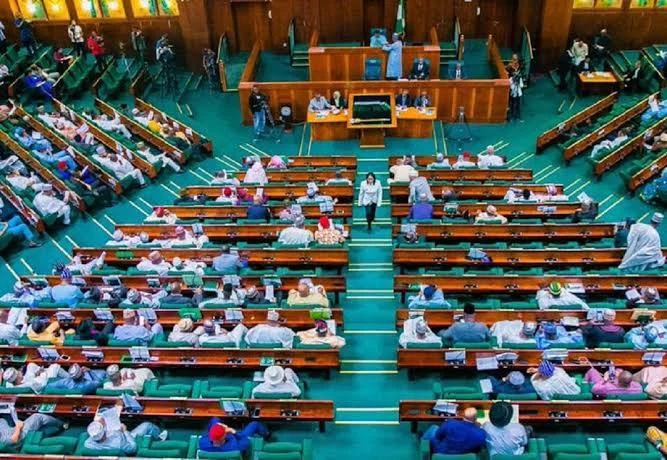
Abuja – The Nigerian House of Representatives has unanimously called for a far-reaching and comprehensive audit of all assets seized, forfeited, recovered, managed, disposed of, or repatriated by various government agencies since the return to democratic rule on May 29, 1999. This landmark resolution, adopted following a motion sponsored by Hon. Ibe Osonwa, underscores a growing legislative concern over the opaque nature of asset recovery and management processes within the nation, aiming to foster greater transparency and accountability in the utilization of public funds.
The motion, which invoked Sections 88 and 89 of the 1999 Constitution (as amended) empowering the National Assembly to conduct investigations into the conduct of affairs of any person, authority, ministry, or government department, highlights a critical gap in Nigeria’s anti-corruption architecture. Hon. Osonwa, leading the debate on the floor of the House, articulated profound concerns regarding the conspicuous absence of a centralized database for recovered assets. He argued passionately that systemic weaknesses in documentation, coupled with inadequate oversight mechanisms, have collectively created significant vulnerabilities, making it exceedingly difficult to accurately track the true value, precise location, effective management, and ultimate utilization of these substantial assets.
The Rationale for a Centralised Register and Audit
The call for an audit is not merely a procedural exercise but a fundamental step towards reforming Nigeria’s asset recovery framework. Since 1999, successive administrations have intensified efforts to combat corruption, illicit financial flows, and money laundering, leading to the recovery of billions of Naira worth of assets. These efforts have been spearheaded by a consortium of anti-corruption agencies, security institutions, ministries, departments and agencies (MDAs), regulatory bodies, and the judiciary. The recovered assets span a vast spectrum, including liquid cash, extensive landed properties, corporate shares, valuable petroleum assets, diverse vehicles, marine vessels, aircraft, various investments, emerging digital assets, and a host of other movable and immovable properties.
Despite these significant recovery successes, Nigeria has grappled with the persistent challenge of effective post-recovery management. Hon. Osonwa pointed out that the current fragmented approach has rendered it impossible to maintain a unified national register capable of providing comprehensive, real-time information on recovered assets. "There is presently no centralised and publicly accessible National Asset Recovery and Management Register capable of providing comprehensive information on the status, value, location, management, disposal, utilisation, and proceeds of recovered assets across the Federation," he stated, emphasizing the critical need for a paradigm shift.
This lack of a unified system has created an environment ripe for mismanagement, potential re-looting, and a severe erosion of public trust. The implications extend beyond mere administrative inconvenience; they directly impact the nation’s capacity to leverage these recovered funds for development projects and to demonstrate tangible results in the fight against corruption. Without a clear, auditable trail, the narrative of successful asset recovery often fails to translate into visible benefits for the citizenry, fueling cynicism and undermining the credibility of anti-corruption campaigns.
Legislative Milestones and the Proceeds of Crime Act (POCA) 2022
The legislative framework for asset recovery in Nigeria has evolved significantly over the past two decades. Early efforts were largely driven by the enabling acts of the Economic and Financial Crimes Commission (EFCC) in 2004 and the Independent Corrupt Practices and Other Related Offences Commission (ICPC) in 2000. These agencies were empowered to investigate, seize, and forfeit assets derived from criminal activities. However, a major turning point came with the enactment of the Proceeds of Crime (Recovery and Management) Act (POCA) in 2022.
POCA 2022 was specifically designed to provide a more robust, comprehensive, and harmonized legal framework for the tracing, seizure, forfeiture, recovery, preservation, management, and disposal of proceeds of crime. Prior to POCA, various laws provided for asset forfeiture, but there was no single, overarching legislation that streamlined the process and addressed the critical aspect of asset management post-recovery. The Act aims to prevent the dissipation of assets, ensure their proper management, and ultimately facilitate their utilization for the benefit of the Nigerian people.
Hon. Osonwa referenced POCA 2022, commending the various agencies for their efforts under this and preceding frameworks. He acknowledged the substantial assets recovered from corruption, money laundering, terrorism financing, illicit financial activities, and other criminal offenses. However, the effectiveness of POCA, or any asset recovery legislation, hinges critically on its implementation, which includes transparent management and accountability for recovered assets. The current call for an audit is, therefore, a legislative effort to ensure that the spirit and letter of POCA are upheld in practice.
The Global Context of Asset Recovery and Repatriation
Nigeria’s struggle with asset recovery and management is not unique, but it carries particular weight given the scale of illicit financial flows from the country. Globally, the repatriation of stolen assets, often referred to as "Abacha loot" in Nigeria’s context, has been a complex and protracted process. Nigeria is a signatory to the United Nations Convention Against Corruption (UNCAC), which provides a framework for international cooperation in asset recovery. Under UNCAC, state parties commit to assisting each other in the identification, freezing, confiscation, and return of assets derived from corruption.
The recovery of assets like the various tranches of the Abacha loot from Swiss, US, and other foreign accounts, or the recent settlements related to the P&ID gas contract saga, highlights both the successes and the inherent difficulties in international asset recovery. While the funds repatriated often come with stringent conditions for their utilization – typically for specific development projects monitored by international bodies – domestically recovered assets often lack such robust oversight mechanisms. This disparity further underscores the urgency for a national, unified system.
Implications of a Comprehensive Digital Registry
The House of Representatives’ call for the establishment of a comprehensive digital registry is a forward-looking proposal with profound implications. Such a registry would serve multiple critical functions:
- Enhanced Accountability: By centralizing information on all recovered assets, their current status, and eventual disposal, it would make it significantly harder for assets to be siphoned off or mismanaged without detection. Public access, even if limited to aggregated data, would foster public scrutiny.
- Improved Coordination: Various government institutions involved in asset recovery (EFCC, ICPC, police, customs, judiciary, AGF’s office) often operate in silos. A digital registry would provide a common platform, improving inter-agency communication and reducing duplication of efforts.
- Reliable Information: It would provide policymakers, researchers, and the public with accurate and verifiable data on the scale of asset recovery efforts, enabling better resource allocation and strategic planning for anti-corruption initiatives.
- Economic Impact: With clear data on recovered assets, the government can more effectively integrate these funds into national development plans, directing them towards critical infrastructure, healthcare, education, or poverty alleviation programs, thereby demonstrating a tangible return on anti-corruption efforts.
- International Credibility: A transparent and efficient asset management system would bolster Nigeria’s reputation on the international stage, encouraging greater cooperation from foreign jurisdictions in future asset recovery efforts.
Challenges and the Path Forward
Implementing a nationwide audit and establishing a robust digital registry will not be without its challenges. The sheer volume and diversity of assets recovered since 1999, spanning numerous agencies and multiple administrations, present a logistical and technical hurdle. Data might be incomplete, scattered across different systems, or even deliberately obscured. Resistance from entrenched interests that benefit from the current opacity is also a possibility.
However, the political will demonstrated by the House of Representatives is a crucial first step. The proposed audit will require the full cooperation of all MDAs, anti-corruption agencies, security institutions, and the courts. It will necessitate a forensic examination of records, verification of asset values, and tracking of disposal processes. The findings of such an audit could potentially expose significant discrepancies, leading to further investigations and sanctions where wrongdoing is discovered.
Civil society organizations and anti-corruption advocates have long championed greater transparency in asset recovery. This legislative move aligns with their consistent calls for public disclosure and accountability, offering a renewed sense of hope that recovered wealth will genuinely serve the public interest. The successful implementation of this audit and the establishment of a functional digital registry would mark a pivotal moment in Nigeria’s ongoing battle against corruption, signaling a genuine commitment to ensuring that the proceeds of crime are truly transformed into resources for national development.
In conclusion, the directive from the House of Representatives for a comprehensive audit and the establishment of a centralized digital registry represents a critical legislative intervention. It is a bold step towards dismantling the existing fragmentation and opacity in asset management, promising a future where recovered national wealth is managed with utmost transparency, accountability, and ultimately, deployed for the sustainable development and welfare of all Nigerians. The success of this initiative will be a testament to Nigeria’s resolve in transforming its anti-corruption rhetoric into tangible results.