The global financial technology sector has transitioned from a period of unbridled disruption to one defined by institutional maturity, where the success of a startup is measured less by its user interface and more by its regulatory resilience and unit economics. While the allure of the fintech market remains potent—driven by a massive shift toward digital payments, embedded finance, and cross-border wealth management—the barriers to entry have risen significantly. Today’s successful founders are moving away from the "move fast and break things" mantra, adopting instead a disciplined approach that prioritizes compliance, specific problem-solving, and sustainable monetization. In regions like Africa, the UK, and the United States, the opportunity for innovation remains vast, but the path to a viable company requires a meticulous blend of technological prowess and financial literacy.
The Foundation of Problem-Solving in Modern Finance
The most resilient fintech companies do not begin with a broad vision of replacing traditional banks; rather, they identify a singular, high-friction financial problem and solve it with surgical precision. This "wedge" strategy allows a startup to gain a foothold in a competitive market before expanding into adjacent services. For instance, a founder focusing on cross-border payments for freelancers faces a vastly different set of operational and regulatory hurdles than one building B2B compliance software for Tier-1 banks. By narrowing the scope, a startup can better define its customer segment, tailor its licensing requirements, and align its product roadmap with the specific needs of its users.
The industry has seen a clear pattern among winners such as Paystack, LemFi, and Fincra. These organizations did not launch with a full suite of banking products. Instead, they identified gaps in payment processing, remittance, and business liquidity, respectively. By mastering a single domain, they built the necessary trust and infrastructure to support subsequent product layers. This methodology suggests that for new entrants, the initial goal should be achieving "evidence of demand" rather than a comprehensive feature set.
Navigating the Complex Regulatory Landscape
In the fintech ecosystem, regulation is not a secondary concern to be addressed after scaling; it is a fundamental design constraint. The relationship between innovation and oversight has become increasingly formalized, particularly in emerging markets. In Nigeria, for example, the Securities and Exchange Commission (SEC) has implemented a Regulatory Incubation program. This framework is specifically designed for fintech models that perform capital market activities but require a phased approach to full compliance. Simultaneously, the Central Bank of Nigeria (CBN) maintains a rigorous supervisory function over payment systems, offering different licensing categories that dictate exactly what a startup can and cannot do with customer funds.
Founders must determine their regulatory path early. This often involves a strategic choice: applying for a direct license, which offers greater control but requires significant capital and time, or partnering with a licensed "sponsor" bank to provide services under their umbrella. The latter, often referred to as Banking-as-a-Service (BaaS), has become a popular route for startups to get to market quickly. However, recent global trends show that regulators are increasing their scrutiny of these partnerships, placing more responsibility on the startup to maintain robust Anti-Money Laundering (AML) and Know Your Customer (KYC) protocols.
Strategic Market Categorization and Defense
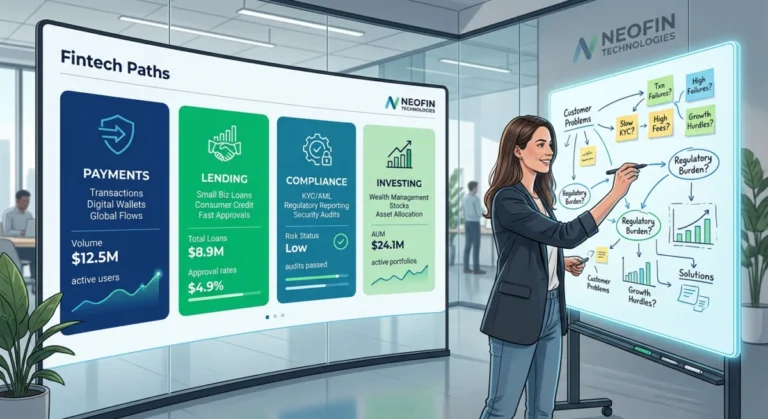
To build a defensible business, founders must choose a category that aligns with their core competencies and offers a clear path to a "moat"—a competitive advantage that is difficult for others to replicate. Common lanes in the current market include:
- Payments and Remittances: Solving for the speed and cost of moving money across borders or between merchants.
- Lending and Credit: Utilizing alternative data to provide loans to underserved segments.
- Wealth Management: Democratizing access to stocks, bonds, and high-yield savings.
- Insurtech: Applying data science to risk assessment and claims processing.
- Regtech and Compliance: Building tools that help other financial institutions stay compliant.
The rise of companies like Regfyl, which recently raised $1.1 million to enhance compliance and fraud tooling, highlights a growing sub-sector: infrastructure. As more consumer-facing fintechs enter the market, the demand for the "shovels" of the industry—security, identity verification, and fraud prevention—has skyrocketed. This shift indicates that the next generation of fintech giants may not be household names, but rather the essential pipes through which all digital transactions flow.
Validating Demand and Building for Trust
Fintech is unique because it deals with the most sensitive asset a customer possesses: their money. Therefore, the product must not only work flawlessly but must also project an aura of safety and reliability. Validation should happen before heavy investment in code. Founders are increasingly using "painted door" tests, waitlists, and high-fidelity prototypes to gauge interest. If a potential user is unwilling to provide their information or sign up for a waitlist, it is a strong signal that the proposed solution does not solve a sufficiently painful problem.
When building the Minimum Viable Product (MVP), the focus should be on "trust features." This includes transparent pricing, clear transaction statuses, robust security headers, and responsive customer support. A lean product that handles one transaction type perfectly is infinitely more valuable than a "super-app" that suffers from frequent downtime or confusing navigation.
Risk Management and Operational Integrity
Money inevitably attracts bad actors, making risk management a day-one priority. Startups must plan for fraud, chargebacks, and identity theft from the outset. A comprehensive risk checklist for a modern fintech includes:

- Identity Verification: Multi-layered KYC processes that go beyond simple ID uploads.
- Transaction Monitoring: Real-time analysis to flag suspicious patterns.
- Data Encryption: Ensuring that sensitive financial data is protected both at rest and in transit.
- Operational Redundancy: Having backup processors and cloud providers to prevent service outages.
The failure to manage these risks can be fatal. Beyond the immediate financial loss of a fraud attack, the loss of reputation and the potential for regulatory fines can end a startup before it reaches its first anniversary.
The Economics of Fintech: Monetization and Capital Raising
A fintech startup requires a sustainable revenue model that accounts for the high costs of compliance and settlement. Common models include transaction fees (a percentage of the volume processed), subscription fees (SaaS models for business tools), and interest margin (the difference between the interest earned on loans and the cost of capital).
Investors have become more discerning in their funding decisions. The "growth at any cost" era has been replaced by an era of "capital efficiency." When pitching to venture capitalists, founders must present a believable story backed by unit economics. Recent funding rounds illustrate this trend: LemFi’s $53 million raise and Carrot Credit’s $4.2 million seed round demonstrate that investors are still willing to deploy significant capital, provided the startup addresses a sharp, underserved market with a clear path to profitability.
The First 90 Days: A Tactical Roadmap
The trajectory of a fintech startup is often determined in its first three months. A structured approach to these early days can prevent the common pitfalls of over-engineering or regulatory oversight.
Days 1 to 30: Discovery and Compliance Mapping
During the first month, the focus is on identifying the specific regulatory licenses required and interviewing potential customers to refine the "pain point." This period should end with a clear understanding of whether the product will be built on independent licenses or through a partnership.
Days 31 to 60: Technical Architecture and Partnerships
The second month involves selecting the technical stack and securing essential partnerships. This includes choosing a payment processor, a cloud provider, and potentially a banking partner. This is also when the core security architecture is designed.
Days 61 to 90: Beta Testing and Feedback Loops
The final month of the launch phase should involve a closed beta with a small group of users. This is not about scaling; it is about finding bugs, testing the "trust" of the user interface, and ensuring that the ledger systems are accurate to the cent.
Broader Impact and Industry Implications
The evolution of fintech is fundamentally changing the global economy. By lowering the cost of financial services, these startups are driving financial inclusion in regions that were previously ignored by traditional banking institutions. The shift toward embedded finance—where non-financial companies offer financial services—is further expanding the market.
However, the increased complexity of the ecosystem means that founders must be more than just "tech-savvy." They must be "system-savvy," understanding how their product fits into the global web of regulation, telecommunications, and traditional finance. The winners of the next decade will be those who can balance the agility of a startup with the discipline of a financial institution.
As the industry continues to mature, the focus will likely shift toward interoperability and cross-border standardization. Startups that build with these global trends in mind will be better positioned to scale beyond their initial markets. The fintech journey is difficult and high-stakes, but for those who execute with discipline, the opportunity to redefine the world’s relationship with money remains one of the most significant frontiers in the modern economy.