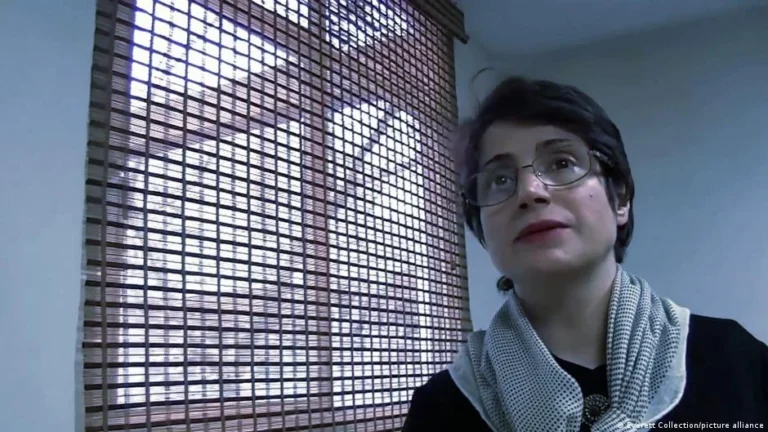
The Parliamentary Assembly of the Council of Europe (PACE) formally recognized the extraordinary bravery of Nasrin Sotoudeh on September 28, awarding her the Vaclav Havel Human Rights Prize. This distinction, which honors exceptional civil society action in the defense of human rights, serves as a global acknowledgment of a career defined by immense personal sacrifice. Sotoudeh, who remains one of Iran’s most prominent legal advocates, was selected from a distinguished shortlist that included Iranian-American journalist Masih Alinejad and Hungarian human rights attorney Marta Pardavi. The award, carrying a €60,000 endowment, underscores the international community’s commitment to supporting those who challenge authoritarian structures under the constant threat of state-sponsored retaliation.
A Legacy of Legal Advocacy Under Fire
Nasrin Sotoudeh has long been a thorn in the side of the Iranian judiciary. A lawyer by profession, she has dedicated her life to the defense of the marginalized, including political prisoners, journalists, religious minorities, and those facing the death penalty. Her work is not merely a legal vocation but a form of systemic resistance. By representing individuals targeted by the state—often those accused of "acting against national security"—Sotoudeh has consistently placed herself in the crosshairs of the Iranian intelligence apparatus.
Her legal practice has frequently focused on the most contentious issues in Iranian society: the abolition of the death penalty and the dismantling of compulsory hijab laws. These stances have made her a primary target for the authorities, leading to repeated arrests, harsh interrogation, and multiple prison sentences. Despite the volatility of her environment, Sotoudeh has refused to moderate her advocacy, maintaining that the law must serve as a shield for the oppressed, even in a system where the judiciary is often an arm of the state’s political repression.
Chronology of Struggle: A Timeline of Resilience
The trajectory of Sotoudeh’s career is marked by a cycle of legal victories followed by state retribution. Her commitment to human rights has been tested by nearly every branch of the Iranian security state over the past two decades:
- 2010: Sotoudeh is arrested on charges of spreading propaganda and conspiring to harm state security. She is sentenced to 11 years in prison, later reduced on appeal.
- 2012: While incarcerated, she is awarded the European Parliament’s Sakharov Prize for Freedom of Thought, an honor she shares with filmmaker Jafar Panahi. She is unable to accept the award in person due to her confinement.
- 2013: Following international pressure and a change in government administration, she is released early from prison.
- 2018: She is rearrested for her legal representation of women protesting the compulsory hijab mandate.
- 2019: A revolutionary court sentences her to a combined total of 33 years in prison and 148 lashes. The severity of the sentence triggers global outrage from human rights organizations.
- 2020: While held in Evin Prison, she initiates a hunger strike to protest the hazardous conditions of detention, particularly amidst the COVID-19 pandemic. That same year, she is honored with the Right Livelihood Award, often referred to as the "Alternative Nobel Prize."
- 2022: As the "Woman, Life, Freedom" movement sweeps through Iran following the death of Jina Mahsa Amini, Sotoudeh emerges as a symbolic figurehead, articulating the legal and moral arguments for the protestors.
- 2026: Sotoudeh is again arrested and subjected to legal proceedings, before being released on bail in May. Her selection as the recipient of the Vaclav Havel Prize in September of this year serves as a powerful statement on the persistence of her cause.
Supporting Data and the Cost of Advocacy
The risks Sotoudeh faces are not anecdotal; they are backed by the statistical reality of Iran’s judicial climate. According to reports from the United Nations and various human rights watchdogs, Iran remains one of the world’s leading executioners per capita. The state’s reliance on capital punishment is frequently used as a tool to silence dissent and maintain control.
Sotoudeh’s work in representing death-row inmates is particularly perilous because it forces the lawyer to confront the state’s primary instrument of fear. Furthermore, the 33-year sentence handed down in 2019 highlights the state’s willingness to use extreme judicial measures to neutralize high-profile activists. The fact that she was sentenced to 148 lashes—a punishment rarely carried out on prominent political figures—signals the extent to which the state sought to humiliate her for her advocacy regarding women’s rights.
Her advocacy for the victims of the "Woman, Life, Freedom" protests further exacerbated tensions. By documenting the cases of those arrested during the 2022 uprising, she provided an essential link between the streets and the international legal community, ensuring that the names of those imprisoned did not vanish into the obscurity of the Iranian prison system.
International Recognition and Official Responses
The Council of Europe’s decision to bestow the Vaclav Havel Prize upon Sotoudeh is a strategic signal to the Iranian authorities. By elevating her profile, the Council increases the "political cost" of any future state actions against her. In her video acceptance statement, broadcast from Tehran, Sotoudeh emphasized the collective nature of her work: "In moments like this, we remember past struggles, we recall our shared ideals and we think of the individuals across the globe who stand with us."
While the Iranian government has historically dismissed such international awards as "political interference" or "western propaganda," the consistency of the awards—from the Sakharov Prize in 2012 to the Vaclav Havel Prize in 2026—demonstrates a unified international front. The Charter 77 Foundation, which co-sponsors the Havel Prize, noted that Sotoudeh’s dedication to the rule of law serves as an inspiration for civil society movements across the globe, not just within the Middle East.
Analytical Implications: The Future of Dissent in Iran
The awarding of this prize raises critical questions regarding the future of human rights activism in Iran. With the government continuing its crackdown on civil liberties, the role of figures like Sotoudeh is becoming increasingly difficult to sustain. The "revolving door" of her arrests—being imprisoned, released on bail, and threatened with new charges—reflects a deliberate strategy by the state to keep activists in a state of constant legal precarity.
From a strategic perspective, the recognition of Sotoudeh serves two purposes:
- Normalization of Resistance: By framing her work as a defense of universal human rights, the international community validates the protests within Iran as legitimate exercises of civil rights rather than purely political unrest.
- Pressure on the Judiciary: Increased international scrutiny complicates the Iranian judiciary’s attempt to conduct "closed-door" trials. When a lawyer of Sotoudeh’s international standing is involved in a case, the state is forced to weigh the internal benefit of repression against the external cost of global condemnation.
However, there is a tangible limit to this international protection. As evidenced by her arrest earlier in 2026, the Iranian authorities remain largely undeterred by external praise. The implications for the future suggest a protracted struggle where legal advocacy becomes a high-stakes endurance test. For Sotoudeh, the Vaclav Havel Prize is not merely a reward for past service but a recognition of a struggle that continues to evolve.
As she continues to operate within the constraints of the Iranian legal system, her story serves as a case study for the effectiveness of "long-game" activism. While she remains subject to the whims of the state, her ability to maintain a public voice—even from the confines of Tehran—demonstrates the limits of state control. The international community, through this award, has reaffirmed that while a government may imprison a person, it cannot easily extinguish the influence of their convictions. As the political landscape of Iran remains volatile, Sotoudeh stands as a testament to the idea that the legal defense of human rights is an essential component of any transition toward a more open and just society.