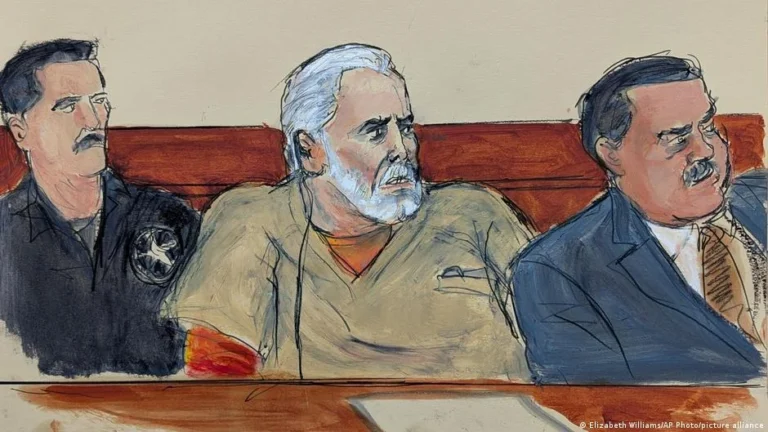
Ismael "El Mayo" Zambada, the notoriously elusive co-founder and long-time leader of the Sinaloa cartel, was sentenced to life in prison without the possibility of parole on Tuesday by a United States court, marking a monumental victory for U.S. law enforcement in its decades-long battle against international drug trafficking. The sentencing concludes a prolific and violent criminal career that spanned nearly 50 years, during which Zambada ascended to the pinnacle of global organized crime, steering one of the world’s most powerful and ruthless drug syndicates. His conviction and sentencing represent one of the most significant judicial outcomes against a Mexican drug lord in the United States since his former partner, Joaquín "El Chapo" Guzmán, received a similar life sentence in 2019.
The End of a Reign: Zambada’s Sentencing and Apology
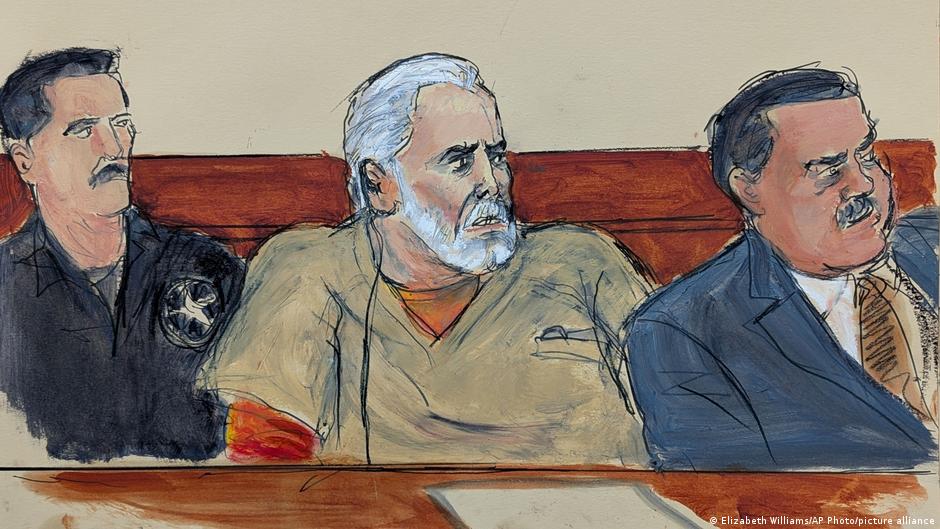
U.S. District Judge Brian Cogan, presiding over the case in Brooklyn, New York, underscored the gravity of Zambada’s crimes, stating, "The almost unimaginable amount of drugs attributable to him and the number of murders that we can document is enough to justify Congress’s decision to make this a mandatory life sentence." This statement highlights the immense scale of the Sinaloa cartel’s operations under Zambada’s leadership, which prosecutors detailed involved the systematic trafficking of vast quantities of illicit substances into the United States, alongside an extensive network of violence and corruption.
During the sentencing hearing, the 76-year-old Zambada offered a rare public apology, expressing remorse for his actions. "I apologize for the harm I caused and for the example I set," he stated, adding a plea to future generations to "choose a different path." He elaborated on his personal journey, acknowledging, "I grew up in an environment where violence and crime seemed normal, but now I know that’s no excuse. There comes a time when every person must take responsibility for their decisions. I didn’t, and many people paid the price." This unusual display of contrition from a figure known for his ruthless pragmatism provided a glimpse into the complex persona of a man who spent decades evading justice.
A Decades-Long Pursuit: Zambada’s Elusiveness and Capture
Ismael Zambada García, widely known as "El Mayo," stood as one of the most enduring and enigmatic figures in the pantheon of Mexican drug traffickers. Unlike his flashier counterpart, "El Chapo" Guzmán, Zambada maintained a remarkably low profile, earning him a reputation for discretion and a legendary ability to evade capture. For decades, he was a ghost, reportedly never sleeping in the same bed twice and rarely using electronic communications, relying instead on a vast network of informants and loyalists to remain one step ahead of law enforcement. His survival at the top of the drug trade for so long, while countless rivals and partners were apprehended or killed, cemented his status as a strategic mastermind.
The pursuit of Zambada by U.S. intelligence and law enforcement agencies spanned several presidential administrations, with a standing reward of up to $15 million for information leading to his arrest. His capture in July 2024, an event shrouded in some intrigue, marked the culmination of this relentless effort. Reports indicated that Zambada claimed he was kidnapped in Mexico and subsequently transported to Texas, a detail that has yet to be fully elaborated by official sources but highlights the unconventional circumstances surrounding his apprehension. This event sent shockwaves through the criminal underworld, as it signaled the end of an era for a man who had been a permanent fixture on the U.S. "most wanted" list.
The Plea Deal: Averting the Death Penalty
Following his transfer to the United States, Zambada faced a formidable array of charges, including engaging in a continuing criminal enterprise and racketeering conspiracy. These charges encapsulated a criminal career responsible for untold suffering and illicit profits. Prosecutors meticulously documented Zambada’s culpability for 85 underlying crimes, which included ordering acts of torture and orchestrating numerous murders, notably the killing of his own nephew. The overwhelming evidence against him, amassed over years of investigations, left little room for a successful defense.
In a strategic move, Zambada pleaded guilty to the charges, agreeing to cooperate to some extent with authorities. In exchange for his plea, prosecutors agreed not to seek the death penalty, a legal option often reserved for the most heinous drug trafficking offenses under U.S. law. This plea agreement underscores the U.S. Justice Department’s pragmatic approach to securing convictions against high-value targets, even if it means foregoing the maximum possible sentence in favor of a guaranteed life imprisonment and potentially valuable intelligence. U.S. Attorney Joseph Nocella Jr. for the Eastern District of New York stated that Zambada had spent nearly four decades "poisoning American communities" for profit and ordering the murders of anyone who stood in his way, emphasizing that his sentencing finally brought an end to this reign of terror.
The Sinaloa Cartel: A Global Drug Empire
Under the joint leadership of Zambada and Guzmán, the Sinaloa cartel evolved into one of the most formidable and sophisticated drug trafficking organizations in the world. Its reach extended far beyond the borders of Mexico, establishing complex supply chains from South America, across Central America, and into the United States, Europe, and Asia. The cartel’s business model was brutal yet efficient, relying on corruption, intimidation, and extreme violence to control vast territories and smuggling routes.
The organization was responsible for flooding the United States with staggering quantities of illicit drugs, including tons of cocaine, methamphetamine, heroin, and, increasingly in recent years, fentanyl. The rise of fentanyl, a highly potent synthetic opioid, has exacerbated the opioid crisis in the U.S., leading to tens of thousands of overdose deaths annually. Prosecutors presented evidence illustrating how Zambada’s cartel played a central role in this deadly trade, profiting immensely while leaving a trail of devastation in its wake. The cartel’s annual revenues were estimated to be in the billions of dollars, making it a powerful economic force that corrupted institutions and fueled violence across the region. In recognition of its severe threat, former U.S. President Donald Trump designated the Sinaloa cartel as one of six Mexican drug gangs deemed Foreign Terrorist Organizations.
Timeline of a Criminal Empire and Its Demise
- 1970s-1980s: Ismael Zambada García begins his career in drug trafficking, initially operating under various cartels before the rise of the Guadalajara Cartel. He gains a reputation for his organizational skills and ability to evade law enforcement.
- Late 1980s-Early 1990s: Following the fragmentation of the Guadalajara Cartel, Zambada, along with Joaquín "El Chapo" Guzmán, forms the Sinaloa Cartel. Their alliance lays the groundwork for what would become the most powerful drug trafficking organization.
- 1993: "El Chapo" Guzmán is first arrested in Guatemala but escapes prison in 2001, allowing Zambada to consolidate more power within the cartel and expand its operations.
- 2000s-2010s: The Sinaloa Cartel, under the joint leadership of Zambada and Guzmán, expands aggressively, dominating drug routes into the U.S. and engaging in brutal turf wars with rival organizations such as the Juárez and Beltrán Leyva cartels. Zambada’s low profile contrasts sharply with Guzmán’s growing notoriety.
- 2014: "El Chapo" Guzmán is recaptured in Mexico.
- 2015: Guzmán makes his infamous second escape from a maximum-security prison.
- 2016: Guzmán is recaptured for the third time.
- 2017: Guzmán is extradited to the United States to face federal charges.
- 2019: "El Chapo" Guzmán is convicted in a U.S. federal court on all counts, including drug trafficking, money laundering, and firearms offenses, and is subsequently sentenced to life in prison plus 30 years, serving his term at the federal Supermax prison in Florence, Colorado.
- July 2024: Ismael "El Mayo" Zambada is arrested, reportedly after claiming to be kidnapped in Mexico, and transferred to U.S. custody in Texas. He is arrested alongside Joaquín Guzmán López, one of "El Chapo’s" sons.
- Earlier in 2024 (exact date not specified in source): Zambada pleads guilty to charges including engaging in a continuing criminal enterprise and racketeering conspiracy, acknowledging culpability for 85 underlying crimes, in exchange for prosecutors not seeking the death penalty.
- Tuesday (recent date): Zambada is sentenced to life in prison without parole in a U.S. District Court in Brooklyn, New York.
The Aftermath: A Cartel in Flux

Zambada’s sentencing, coming just years after "El Chapo’s" conviction, marks the definitive end of an era for the Sinaloa cartel’s traditional leadership. For decades, the duo had been the undisputed architects of the organization’s global empire. With both now imprisoned in the U.S., the cartel faces an uncertain future.
Zambada’s arrest has already led to a significant splintering within the organization. Reports indicate that loyalists to "El Mayo" are now pitted against factions aligned with Guzmán’s sons, collectively known as the "Chapitos" or "little Chapos." This internal power struggle has the potential to destabilize the cartel further, leading to increased violence as various factions vie for control of lucrative drug routes and territories. Joaquín Guzmán López, one of El Chapo’s sons arrested alongside Zambada, has also pleaded guilty to federal drug charges in the U.S. and awaits his own sentencing, further complicating the succession dynamics.
The U.S. Department of Justice and other law enforcement agencies have consistently reiterated their commitment to dismantling drug trafficking organizations at every level, from street dealers to kingpins. The successful prosecution of Zambada underscores this resolve, sending a clear message that no figure, no matter how powerful or elusive, is beyond the reach of international justice. However, analysts caution that while the removal of top leaders like Zambada and Guzmán is a significant blow, it rarely leads to the complete eradication of the drug trade. Instead, it often results in the emergence of new leaders, new alliances, and potentially more brutal competition as the illicit market adapts.
Broader Implications and Ongoing Challenges
The sentencing of Ismael "El Mayo" Zambada is not merely the end of a single criminal’s career; it represents a critical moment in the ongoing efforts to combat transnational organized crime. It highlights the effectiveness of international cooperation between U.S. and Mexican authorities, despite inherent challenges and complexities in their relationship. The U.S. strategy of targeting cartel leaders through intelligence gathering, extradition, and federal prosecution has yielded significant results in disrupting the command and control structures of these organizations.
However, the challenges persist. The insatiable demand for illicit drugs in the U.S., coupled with the economic realities and corruption in Mexico, continues to fuel the drug trade. The proliferation of synthetic drugs like fentanyl presents a new and evolving threat, requiring adaptive strategies from law enforcement and public health officials. The cycle of violence associated with drug trafficking continues to plague communities on both sides of the border.
As the Sinaloa cartel navigates its post-Zambada future, the world will watch closely to see if the U.S. victory against "El Mayo" translates into a lasting reduction in drug flows or if, as history often suggests, new figures will rise to fill the void, continuing the enduring struggle against the forces of organized crime. The life sentence for Ismael Zambada stands as a stark reminder of the devastating consequences of a life spent in the shadows of the drug trade, and a testament to the persistent pursuit of justice by those dedicated to upholding the rule of law.