Air raid sirens once again pierced the early morning quiet across parts of Jordan on Tuesday, signaling a dangerous escalation as Iranian missiles targeted the Hashemite Kingdom. The Jordanian army swiftly confirmed the interception and downing of three missiles originating from Iranian territory that had violated Jordanian airspace. Fortunately, initial reports indicated no injuries from this latest incursion, but the incident underscores Jordan’s increasingly perilous position in a volatile region.
This latest strike is not an isolated event but rather a continuation of a series of attacks that have significantly heightened stakes for Jordan, a crucial Arab ally of the United States. Just last week, a devastating Iranian missile strike on a US military base within Jordan claimed the lives of two US service members and left approximately 30 others wounded, marking a grim turning point in regional hostilities.
A Chronology of Rising Tensions
The recent wave of aggression can be traced back to late February, following a series of joint military operations launched by the United States and Israel targeting Iran. In the immediate aftermath of these operations, Iran retaliated by launching missiles towards various targets, including Jordan. While a brief lull in direct attacks on the kingdom ensued, Jordan has found itself directly implicated in the regional defense architecture, notably assisting in the interception of Iranian missiles launched towards Israel. Amman has consistently asserted that these defensive actions are undertaken solely to protect its own sovereign airspace.
However, the direct engagement has come with significant consequences. The attack on the US base last week signaled a dangerous shift, indicating Iran’s willingness to directly target facilities within Jordan that host American personnel. In response to this mounting pressure, Jordan took a decisive diplomatic step on Sunday, summoning Iran’s top diplomat in Amman. The Jordanian Foreign Ministry delivered a stern message, demanding an immediate cessation of what it unequivocally termed "unjustified and blatant Iranian attacks." This diplomatic rebuke highlights the gravity of the situation and Jordan’s growing frustration with being caught in the crossfire.
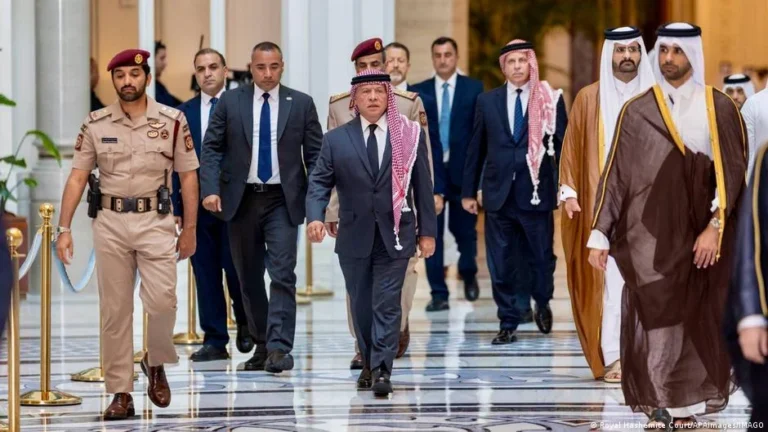
Erwin van Veen, a senior research fellow at the Clingendael Institute in The Hague, offered critical insight into Iran’s strategic calculations. "Iran has reserved itself the right to return fire on any state in the region that hosts US military assets or bases, and Jordan is one of them," he explained. This declaration by Iran places Jordan in an exceptionally vulnerable position, given its deep military and economic ties to the United States. Van Veen further noted the severe limitations on King Abdullah II’s options, emphasizing Jordan’s "very precarious balance with respect to military and economic dependence on the Americans."
Jordan’s Geopolitical Tightrope Walk: The US Alliance
Jordan’s strategic importance in the Middle East is inextricably linked to its robust alliance with the United States. Washington stands as Jordan’s largest single foreign benefactor, providing substantial economic and military assistance crucial for the kingdom’s stability and security. Under a seven-year Memorandum of Understanding signed in 2022, the US committed to providing $1.45 billion (€1.27bn) annually in aid. This commitment saw a significant increase in 2025, with Congress boosting the allocation to $1.65 billion, a figure that represents triple the amount provided in 2010. This financial lifeline supports a wide array of programs, from economic development initiatives aimed at improving livelihoods and fostering growth, to critical military assistance that includes training, equipment, and logistical support for the Jordanian Armed Forces.
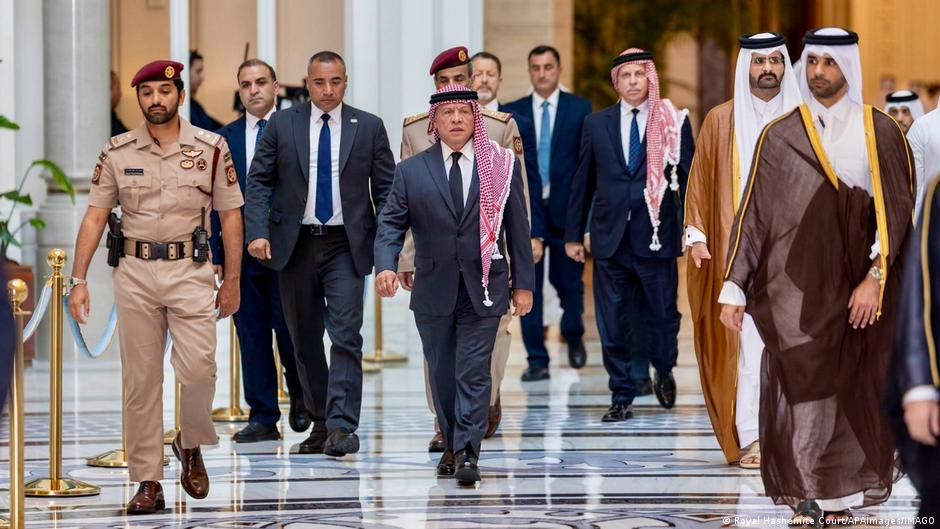
Beyond financial aid, the alliance is cemented by a Defense Cooperation Agreement signed in January 2021. This agreement formalizes US forces’ access to Jordanian military facilities, enabling joint exercises, intelligence sharing, and rapid response capabilities. According to a recent report by the Congressional Research Service, there are currently an estimated 4,000 US troops stationed in Jordan, a number that has seen an increase in recent years, reflecting the deepening military cooperation and the evolving security landscape. These troops are involved in various operations, including counter-terrorism efforts and regional stability initiatives, often operating from bases like the Muwaffaq Salti Air Base.
Despite this undeniable military presence, Jordanian officials have at times sought to downplay the extent of foreign military operations within the country. In March, Jordanian Foreign Minister Ayman Safadi publicly insisted that there were no "foreign military bases" in Jordan, a statement that has been met with scrutiny given the extensive US footprint. Kelly Petillo, program manager for the Middle East and North Africa at the European Council on Foreign Relations, suggested a possible rationale behind such pronouncements. She believes that one reason for downplaying foreign military presence in Jordan could be to mitigate rising anti-US sentiment among the Jordanian populace.
"Despite Jordan’s efforts to remain neutral in this war, existing alliances such as the one with the US not only affect Jordan’s fragile security but also cause public discontent," Petillo elaborated. She further speculated that Jordan, much like its Gulf allies in the region – including Bahrain, UAE, Saudi Arabia, Qatar, and Kuwait – might be increasingly questioning the long-term benefits of its alliance with the US. The perceived trade-off between receiving crucial support and being drawn into regional conflicts, thereby potentially fostering instability rather than ensuring security, is a growing concern.
Public opinion data reinforces this assessment. A 2023 poll conducted by Arab Barometer, a respected nonpartisan public opinion research network, revealed that only a meager 12% of Jordanians viewed US foreign policy favorably. This stark figure underscores the deep-seated public dissatisfaction and skepticism towards American actions in the region, placing immense pressure on King Abdullah II’s government to navigate its foreign policy carefully. The perception that the US alliance, while economically vital, makes Jordan a target, contributes to this internal tension.
Strained Ties with Israel and the Enduring Palestinian Question
The complexities of Jordan’s foreign policy extend beyond its relationship with the United States to its historically fraught, yet strategically necessary, ties with Israel. Kelly Petillo warned that Iran’s attacks could inadvertently "place [Jordan] in the same camp as Israel," a perception that could further inflame public discontent within Jordan. This impression carries significant risk, potentially fueling protests and reigniting calls for an end to the 1994 Israel-Jordan peace treaty, a cornerstone of regional stability.
Indeed, relations between Israel and Jordan have been increasingly strained over the past three years, reaching a nadir in November 2023. Both countries recalled their ambassadors following Jordan’s unequivocal condemnation of Israel’s military conduct during the initial days of its war in Gaza, which commenced after the devastating Hamas attack on Israel on October 7, 2023. Hamas is designated as a terrorist organization by the US, the EU, and several other nations. Jordan’s condemnation reflected deep public anger and official concern over the humanitarian crisis unfolding in Gaza.
Jordan has consistently been at the forefront of international efforts to push for a two-state solution, advocating for the establishment of an independent Palestinian state alongside Israel. This position is not merely a diplomatic stance; it is deeply rooted in the kingdom’s demographics and national identity. More than half of Jordan’s population, including Queen Rania, has Palestinian roots. According to the United Nations Relief and Works Agency for Palestine Refugees in the Near East (UNRWA), approximately 2.4 million Palestinian refugees reside in Jordan, many of whom are descendants of those displaced during the 1948 and 1967 Arab-Israeli wars.
The Palestinian issue is thus of paramount importance, resonating deeply within Jordanian society. Consequently, Jordan has repeatedly and vehemently rejected any proposals for further displacement of Palestinians into the kingdom. This steadfast refusal stems from a combination of humanitarian concerns, national security interests, and the immense economic burden of hosting a large refugee population whose return remains uncertain. This stance is further complicated by Jordan’s own domestic economic challenges. The country continues to grapple with high public debt, a persistent unemployment crisis, and a massive decline in vital USAID funding. Compounding this, the US pullback from funding UNRWA, a critical agency providing services to Palestinian refugees, has placed additional strain on Jordan’s capacity to manage the humanitarian needs within its borders.

The West Bank: A Catalyst for Regional Instability
Popular anger in Jordan concerning Israel has been significantly exacerbated by the accelerating expansion of Israeli settlements in the occupied West Bank. Both the United Nations and numerous human rights organizations have reported a substantial increase in settlement activities since 2023. This expansion, coupled with a surge in settler violence against Palestinian communities, has made life increasingly precarious for Palestinians in the West Bank.
Data from the aid organization Save the Children paints a grim picture: over 1,000 Palestinian children were displaced by settler violence in the West Bank during the first six months of 2026 alone. This figure represents half the total number of children forced from their homes by settler violence over the entire preceding three-year period, indicating a dramatic escalation of the crisis. These acts of violence and displacement further fuel regional tensions and contribute to the sense of injustice felt across the Arab world, including in Jordan.
Erwin van Veen highlighted the long-term strategic ambitions underpinning these developments. "As the current Israeli coalition wrote in its own coalition agreement at the start of its tenure in 2022, it ultimately intends to annex the West Bank," he stated. Such an outcome would have profound implications for regional stability, effectively ending any realistic prospect of a two-state solution and further entrenching the Israeli-Palestinian conflict.
The West Bank, a landlocked territory spanning approximately 5,655 square kilometers (2,183 square miles), is strategically located between Israel and Jordan. Israel gained control of this territory from Jordan during the 1967 Six-Day War. The international community, through resolutions by the United Nations Security Council, has consistently affirmed that "Israel’s establishment of settlements in Palestinian territory occupied since 1967, including East Jerusalem, had no legal validity." This international consensus underscores the illegality of the settlements and the ongoing violation of international law.
Broader Impact and Implications
Jordan, in essence, finds itself in an unenviable position – "between a rock and a hard place," as Erwin van Veen aptly put it. The kingdom has precious little room for maneuver, constrained by its complex relationships with Israel, Iran, and Washington. The confluence of direct Iranian missile attacks, the inherent risks associated with its indispensable US alliance, mounting internal public discontent, persistent economic fragility, and the unrelenting Israeli-Palestinian conflict creates an unprecedented array of challenges.
King Abdullah II’s government faces a delicate balancing act: maintaining vital alliances while appeasing a restive population, safeguarding national security without being drawn deeper into regional proxy wars, and upholding its principled stance on the Palestinian issue amidst an increasingly hostile environment. The instability emanating from this confluence of factors poses not only an existential threat to Jordan’s own security but also risks further destabilizing an already volatile Middle East, with potentially far-reaching consequences for international peace and security. The international community watches closely as Jordan navigates these treacherous waters, hoping to avert a broader regional conflagration.