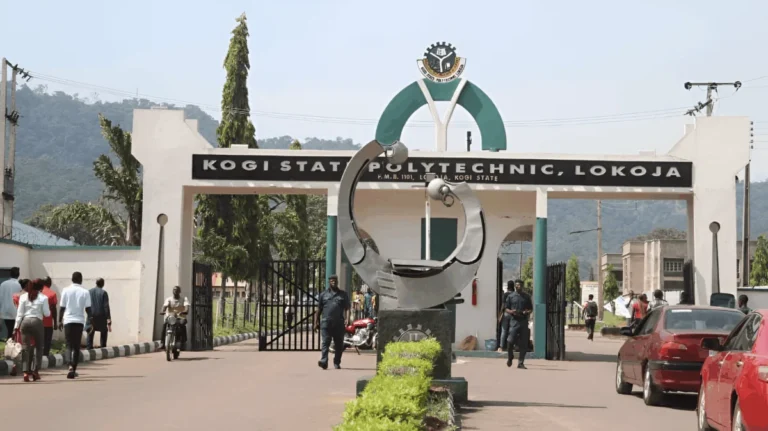
The Academic Board of Kogi State Polytechnic, Lokoja, has officially sanctioned the withdrawal of 229 students from the institution following their failure to meet the minimum academic requirements necessary to continue their various courses of study. This significant administrative action, announced through a formal statement on Friday, marks a decisive move by the polytechnic’s management to reinforce academic discipline and ensure that the quality of graduates produced by the institution remains competitive and credible in the national and international labor markets. The decision was reached during a comprehensive meeting of the Academic Board held on Tuesday, presided over by the Rector of the Polytechnic, Professor Salihu Avidime, and attended by a full quorum of principal officers, deans of schools, heads of departments, and other key members of the board.
The withdrawal of such a substantial number of students follows a rigorous internal auditing process that scrutinized the results of the first semester for the 2025/2026 academic session. According to John Onimisi, the institution’s acting coordinator of public relations and protocols, the Academic Board’s resolution was based on a meticulously prepared report from the Academic Board Central Results Verification Committee. This committee was tasked with the responsibility of reviewing student performance across all departments to ensure that the grading and results were consistent with the institution’s established academic regulations. The purge affects students across several levels of education, including National Diploma (ND) 1 and 2, as well as Higher National Diploma (HND) 1 and 2, indicating that the institution is applying these standards uniformly across its entire academic spectrum.
The Verification Process and Institutional Integrity
The cornerstone of this decision lies in the work performed by the Academic Board Central Results Verification Committee. In higher education administration, the verification of results is a critical safeguard against academic inflation and ensures that students who progress from one level to another possess the requisite knowledge and skills. At Kogi State Polytechnic, this committee undertook a painstaking department-by-department scrutiny of submissions. The objective was to eliminate errors, ensure fairness to the students, and maintain compliance with the National Board for Technical Education (NBTE) guidelines, which govern polytechnic education in Nigeria.
Professor Salihu Avidime, while chairing the board meeting, emphasized that the committee’s work was not merely a clerical exercise but a fundamental component of the institution’s commitment to academic integrity. By identifying and removing students who consistently fail to meet the "pass" threshold, the polytechnic aims to protect the value of the certificates it awards. In the Nigerian educational landscape, where the "degree vs. diploma" dichotomy remains a subject of public debate, polytechnics are under increasing pressure to demonstrate that their technical and vocational training is of the highest standard. Professor Avidime noted that the committee’s diligence helps the school maintain its reputation as a center of excellence, ensuring that only those who demonstrate academic commitment are allowed to represent the institution’s brand.
Affected Departments and Academic Scope
The 229 students withdrawn represent a broad cross-section of the polytechnic’s academic offerings. The affected individuals were enrolled in several high-demand programs, which suggests that the institution is refusing to lower the bar even in departments that attract high enrollment numbers. The programs cited in the official statement include Accountancy, Business Administration, Computer Science, and Mass Communication. These are fields where professional competence is paramount, and academic failure often translates to a lack of readiness for the professional certifications required in these industries.
Other departments impacted by the withdrawal include Public Administration, Science Laboratory Technology (SLT), and Building Technology. The inclusion of Science Laboratory Technology and Building Technology is particularly noteworthy, as these are core technical fields that require a high degree of precision and theoretical understanding. In these sectors, academic deficiency can have real-world consequences, ranging from laboratory errors to structural failures in the construction industry. By enforcing strict withdrawal policies for underperforming students in these technical areas, Kogi State Polytechnic is effectively performing a gatekeeping role for the safety and reliability of future technical services in Nigeria.
Chronology of the Decision
The timeline leading to the mass withdrawal reveals a structured administrative approach. The process began with the conclusion of the first semester examinations for the 2025/2026 academic session. Following the grading of scripts and the collation of scores by individual lecturers, the results were moved to the departmental boards for preliminary review. From there, they were submitted to the Central Results Verification Committee.
The committee spent several weeks auditing these results, looking for discrepancies and identifying students whose Cumulative Grade Point Average (CGPA) fell below the mandatory minimum required for "Good Standing." Under Nigerian polytechnic regulations, students who fail to maintain a certain CGPA—often 2.00 or 1.50 depending on the specific probationary policy—are typically placed on academic probation. If the performance does not improve, or if the failure is total, withdrawal becomes the standard procedure.
On Tuesday, the committee presented its final findings to the Academic Board. After a day of deliberations, the board, led by Professor Avidime, ratified the findings and approved the list of students to be withdrawn. By Friday, the public relations office was authorized to release the statement, and the full list was published on the institution’s official channels to notify the affected students and the general public.

Analysis of Implications for Students and the Institution
The withdrawal of 229 students has immediate and long-term implications for both the individuals involved and the institution. For the students, this marks a significant setback in their educational journey. While some may view this as a harsh measure, academic experts argue that it is a necessary part of the "weeding" process in higher education. Students who are unable to cope with the rigors of their chosen courses are often better served by redirecting their efforts toward programs that better suit their aptitudes or by seeking vocational training outside the traditional polytechnic system.
For Kogi State Polytechnic, the move is a strategic one. In the short term, it may lead to a slight reduction in tuition revenue, but in the long term, it strengthens the institution’s standing with regulatory bodies like the NBTE. It also serves as a deterrent to the remaining student body. The message is clear: the polytechnic is not a "degree mill" where payment of fees guarantees a certificate. This action is intended to foster a culture of seriousness, discipline, and hard work among the current students. It signals that the administration is prioritizing quality over quantity, a move that is likely to be welcomed by employers who recruit graduates from the school.
Furthermore, this action addresses the issue of "clogging" the system. Students who are not making academic progress occupy space, utilize resources, and demand faculty time that could be better allocated to students who are performing well. By removing those who do not meet the standards, the polytechnic can focus its resources on maintaining a high-quality learning environment for its high-achieving students.
Broader Context of Nigerian Higher Education
The situation at Kogi State Polytechnic is reflective of a broader trend in Nigerian higher education, where institutions are increasingly under fire for producing graduates who are sometimes perceived as "unemployable." In response, many rectors and vice-chancellors are tightening academic oversight. The Rector’s commendation of the verification committee for its "professionalism" and "diligence" highlights a shift toward data-driven administration in Nigerian schools.
There is also a socio-political dimension to this. Kogi State has been proactive in reforming its educational sector under recent administrations. The state government has invested in infrastructure and faculty development, and in return, it expects state-owned institutions to produce high-caliber graduates. The Academic Board’s decision aligns with the state’s broader goal of human capital development, which relies on the integrity of educational certifications.

Official Responses and Future Outlook
While the immediate reaction from the affected students has been one of disappointment, the polytechnic management has remained firm. The statement from John Onimisi reiterated that the decision was made "in the overall interest of sustaining academic excellence." The institution has indicated that the measure is not punitive but regulatory, aimed at upholding the laws and statutes that govern the polytechnic.
Looking ahead, the polytechnic is expected to continue its rigorous verification exercises in subsequent semesters. There are also indications that the school may introduce more robust academic support systems, such as tutoring and counseling, to help students who are struggling before they reach the point of withdrawal. However, the precedent set by the 2025/2026 first-semester results confirms that the era of academic complacency at Kogi State Polytechnic is over.
In conclusion, the withdrawal of 229 students is a bold assertion of the value of technical education in Kogi State. It serves as a reminder to students nationwide that the path to academic success requires consistent effort and adherence to institutional standards. As the polytechnic moves forward with its academic calendar, the focus remains on producing graduates who are not only holders of certificates but possessors of the knowledge and character that those certificates represent. This move by Professor Salihu Avidime and the Academic Board will likely be remembered as a pivotal moment in the polytechnic’s history, reinforcing its commitment to quality in an increasingly competitive educational landscape.