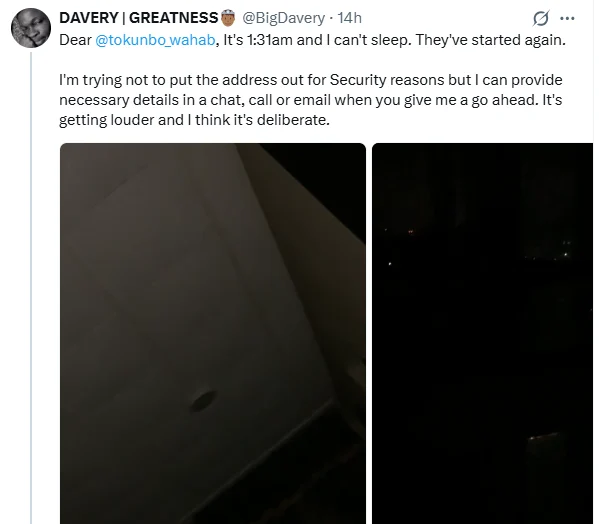
The persistent challenge of noise pollution in Lagos State has once again taken center stage after a frustrated resident utilized social media to petition the Commissioner for the Environment and Water Resources, Tokunbo Wahab, regarding a church conducting loud services in the early hours of the morning. The incident, which occurred in the early hours of November 7, 2026, highlights the growing tension between urban residential rights and the practices of religious organizations operating within densely populated neighborhoods.
The Midnight Disturbance: A Digital Plea for Relief
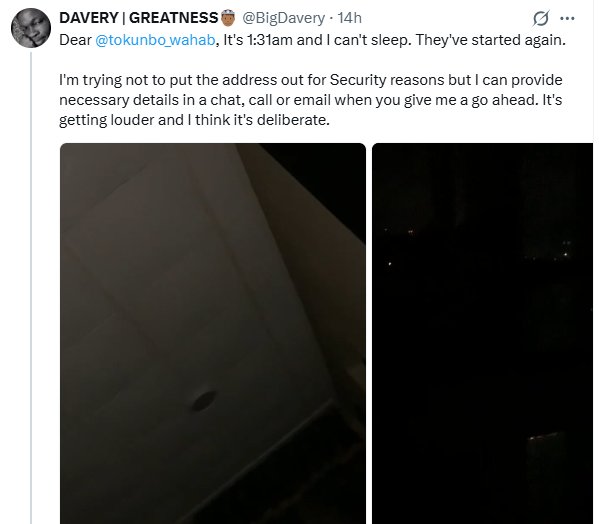
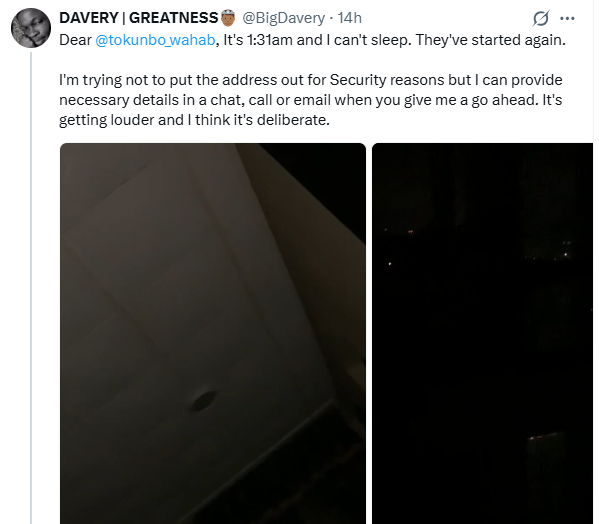
At approximately 1:31 AM on November 7, a Lagos resident took to the social media platform X to voice an urgent complaint regarding a local church’s late-night activities. The complainant provided video evidence documenting the high decibel levels emanating from the church’s external megaphones, which were broadcasting music and prayer sessions across the residential area.
In a direct appeal to Commissioner Tokunbo Wahab, the resident expressed deep frustration, stating, "It’s 1:31 AM and I can’t sleep. They’ve started again." The resident further noted that they were intentionally withholding the specific address of the facility to maintain security, while offering to provide the necessary information through private channels if requested by government officials. The complainant alleged that the noise levels appeared to be intentionally high, causing significant distress to neighbors who were unable to sleep or maintain a peaceful environment during the night.
Official Response and Enforcement Protocols
The reaction from the Lagos State government was swift, signaling the administration’s commitment to enforcing environmental regulations. Commissioner Tokunbo Wahab, known for his active oversight of the Ministry of the Environment and Water Resources, promptly responded to the digital outcry. He directed the General Manager of the Lagos State Environmental Protection Agency (LASEPA) to initiate an immediate investigation into the facility and take necessary enforcement actions.
This intervention is consistent with the current administration’s "zero-tolerance" policy toward environmental nuisances. Under the Lagos State Environmental Management and Protection Law, religious centers, nightclubs, and industrial facilities are strictly prohibited from exceeding noise limits, particularly during "quiet hours," which typically extend from 10:00 PM to 7:00 AM.
Chronology of Recent Enforcement Efforts
The November 7 incident is not an isolated event but rather part of a broader, sustained effort by the Lagos State government to address urban noise pollution. Over the past several months, the state government has ramped up enforcement, targeting various noise-emitting entities that fail to comply with state standards.
- Mid-2026: LASEPA intensified its "Operation Zero Tolerance for Noise," resulting in the sealing of several worship centers and bars across the Lagos mainland and island districts.
- September 2026: A series of town hall meetings were held between the Ministry of the Environment and religious leaders to emphasize the legal implications of noise pollution.
- October 2026: The state government deployed mobile decibel monitoring units to residential areas following an increase in complaints regarding "sound-proofing" violations in commercial buildings.
- November 2026: The current intervention follows the viral complaint on social media, showcasing how real-time digital reporting has become an effective tool for citizen oversight in the state.
Understanding the Regulatory Framework
Lagos State maintains strict regulations governing environmental noise. According to LASEPA guidelines, the permissible noise level in residential areas is set at 55 decibels (dB) during the day and 45 dB during the night. Many religious facilities, however, operate at levels exceeding 80 to 90 dB, which is equivalent to the sound of a lawnmower or a heavy-duty truck engine operating in close proximity.
The legal basis for these crackdowns stems from the Lagos State Environmental Management and Protection Law of 2017. This legislation empowers the state to shut down any facility—regardless of its nature or religious affiliation—that consistently violates noise pollution thresholds. Failure to comply can result in fines, the confiscation of sound equipment, and the temporary or permanent closure of the facility.
The Impact of Noise Pollution on Public Health
Environmental health experts frequently cite noise pollution as a significant contributor to public health issues in megacities like Lagos. Chronic exposure to high noise levels, particularly at night, is linked to a variety of physiological and psychological health challenges.
Research indicates that sleep deprivation caused by persistent nighttime noise can lead to increased blood pressure, cardiovascular disease, impaired cognitive function, and heightened stress levels. In a city as fast-paced as Lagos, where the average commute and working hours are already demanding, the loss of restorative sleep in the home environment significantly affects the productivity and well-being of the workforce.
Furthermore, noise pollution can create social friction. When religious organizations ignore the rights of their neighbors to quiet enjoyment of their properties, it fosters resentment and erodes the spirit of communal tolerance. The challenge for the government remains in balancing the freedom of worship, which is a constitutionally protected right, with the necessity of maintaining order and protecting the public’s right to a peaceful living environment.
Analysis: Technology as a Catalyst for Change
The use of X (formerly Twitter) to report the incident on November 7 highlights a significant shift in how citizens interact with the Lagos State government. Social media has effectively collapsed the distance between the governed and the government, allowing for near-instantaneous reporting of infractions that might otherwise go unnoticed by local authorities.
However, some critics argue that reliance on social media for enforcement may lead to inconsistent application of the law, where only cases that "go viral" receive attention. To address this, the government has been pushing for the use of the "Lagos Environmental Protection Agency" digital reporting portal, which aims to formalize the complaint process, ensure data integrity, and track the resolution of each case systematically.
Challenges in Enforcement and Future Outlook
Enforcement in a city as complex as Lagos faces unique challenges. Religious centers are often deeply embedded in the social fabric of local neighborhoods, and some leaders view state intervention as an infringement on their spiritual mandates. Commissioner Wahab’s administration has consistently maintained that religious freedom does not extend to the right to infringe upon the health and rights of others.
Moving forward, the government is expected to continue its dual strategy of public awareness campaigns and aggressive enforcement. This includes the potential requirement for mandatory sound-proofing for all new religious and entertainment facilities seeking permits within residential areas.
As the state continues to grow, the management of urban noise will remain a critical metric for the quality of life in Lagos. The incident involving the church in question serves as a reminder to all stakeholders—religious, commercial, and residential—that the state’s environmental laws are active and applicable to all.
Conclusion
The appeal by the Lagos resident is a microcosm of a larger urban struggle. As Lagos continues to expand, the friction between traditional practices and the needs of a modern, densely populated city will require ongoing, robust regulatory action. The prompt intervention of Commissioner Tokunbo Wahab and the subsequent actions of LASEPA demonstrate that the state government is prioritizing environmental quality as a central pillar of its governance.
For the residents of Lagos, the message from the authorities is clear: while the city is a hub of vibrant activity, there is an established legal boundary for noise, and the government remains committed to ensuring that the rights of those seeking rest and peace in their homes are protected against unauthorized disturbance. The outcome of the investigation into the implicated church will likely serve as a reference point for future enforcement actions, underscoring the state’s resolve to maintain a balanced, healthy, and regulated urban environment for all its inhabitants.