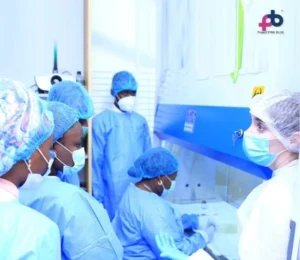
The Lagos State AIDS Control Agency (LSACA) has officially launched a strategic two-day intensive training program for peer educators and community representatives, marking a significant escalation in the state’s proactive efforts to decentralize HIV prevention, testing, and treatment services. The initiative, which took place on September 15 and 16, 2026, at the Lagos Chambers of Commerce and Industry in Ikeja, represents a critical shift toward community-led healthcare delivery, aiming to bridge the persistent gaps between clinical health facilities and the vulnerable populations residing within Lagos’s diverse neighborhoods.
The Strategic Importance of Peer-Led Interventions
As the commercial nerve center of Nigeria, Lagos State bears a significant portion of the national HIV burden. While urban medical centers provide the backbone of clinical care, the "last mile" of service delivery—reaching individuals who are either unaware of their status or are struggling to maintain adherence to antiretroviral therapy (ART)—often requires a more localized approach. Peer educators serve as the primary interface in this model. By operating within the fabric of their own communities, these individuals are uniquely positioned to dismantle the social stigmas and psychological barriers that frequently deter patients from seeking professional help.
Dr. Folakaemi Animashaun, the Chief Executive Officer of LSACA, emphasized during her keynote address that the efficacy of the state’s HIV response is inextricably linked to the strength of its grassroots network. "Peer educators are the essential bridge between the sterile environment of a hospital and the lived realities of our citizens," Dr. Animashaun stated. By bringing services closer to where people live, work, and make daily health decisions, the agency aims to increase the uptake of HIV counseling and testing (HCT) services, which remain the first step in the "95-95-95" target set by the Joint United Nations Programme on HIV/AIDS (UNAIDS).
Core Components of the Training Curriculum
The two-day curriculum was designed to be comprehensive, moving beyond basic awareness to equip participants with high-level technical and soft skills. The training modules were meticulously structured to ensure that community representatives are not merely conduits of information but are capable of navigating complex healthcare landscapes.
Key focus areas of the training included:
- Treatment Literacy: Empowering educators to explain the nuances of viral suppression and the long-term benefits of sustained ART adherence.
- Community Mobilization and Advocacy: Providing strategies to engage local leaders and stakeholders to foster supportive environments for people living with HIV.
- Confidentiality and Professional Ethics: Establishing strict protocols to protect the privacy of community members, which remains a cornerstone of trust in public health interventions.
- Documentation and Referral Pathways: Training participants on how to accurately document interactions and seamlessly navigate patients through the formal medical referral systems established by the Lagos State government.
By addressing these pillars, LSACA is professionalizing the role of the peer educator, ensuring that the assistance provided at the community level meets the same standard of care expected within formal clinical settings.
Addressing the Adolescent and Youth Demographic
A significant portion of the training was dedicated to the unique challenges faced by adolescents and young people living with HIV. Data consistently indicates that youth are among the most vulnerable groups due to limited access to information, systemic stigma, and the transition from pediatric to adult care services.
Dr. Animashaun underscored the need for tailored psychosocial support for this demographic. "Adolescents are in a developmental stage where peer validation is paramount. If we can mobilize their peers to become advocates for treatment adherence, we significantly increase the likelihood of them remaining in care," she noted. The training emphasized empathy-based communication and the creation of safe spaces, recognizing that clinical health outcomes for young people are often dictated by their mental and emotional well-being as much as their pharmaceutical regimen.

Contextualizing the HIV Landscape in Lagos
To understand the necessity of this training, one must view it within the context of Lagos State’s broader public health trajectory. Despite significant progress in the last decade, challenges remain. Issues such as the "hidden" population—those who do not identify with formal health systems—and the persistent threat of misinformation require a workforce that is both agile and localized.
The Lagos State government has consistently demonstrated a commitment to reducing the incidence of HIV, often through public-private partnerships and the integration of HIV services into general primary healthcare centers. However, the success of these programs is often hampered by a "facility-centric" model that ignores the socioeconomic factors keeping patients away from clinics. By shifting the focus to peer-led mobilization, LSACA is effectively expanding the reach of the state’s medical infrastructure without the proportional cost of building new physical facilities.
Strengthening Stakeholder Collaboration
The event in Ikeja served not only as a training ground but also as a networking hub for various stakeholders, including civil society organizations (CSOs), implementing partners, and local government officials. Dr. Animashaun’s call for a multi-sectoral approach highlights the agency’s recognition that HIV is not just a medical problem but a societal one.
The synergy between community networks and medical institutions is vital for data-driven decision-making. When peer educators report barriers—such as drug stock-outs, unfriendly clinical staff, or transport costs—the agency is better equipped to implement systemic reforms. This two-way communication loop is essential for building a resilient health system capable of withstanding future shocks.
Implications for the Future of HIV Care
The implications of this training are far-reaching. By decentralizing the response, LSACA is fostering a sense of community ownership over health outcomes. When individuals feel empowered to manage their own health—and the health of their peers—the reliance on intermittent external funding or centralized hospital care decreases, paving the way for a more sustainable public health model.
Furthermore, the emphasis on professionalism and ethical conduct during the training is a strategic move to sanitize the perception of HIV-related services. In many parts of Nigeria, the fear of judgmental healthcare workers or a breach of confidentiality prevents people from seeking testing. By training local representatives in empathy and strict confidentiality, LSACA is working to normalize HIV services, turning them into a routine part of community life rather than a source of shame.
A Call to Action for Continued Engagement
As the training concluded, participants were urged to view their role as a long-term commitment. Dr. Animashaun’s closing remarks served as a reminder that the work of a peer educator is never truly finished. The identification of barriers—be they economic, social, or cultural—is an ongoing process that requires constant vigilance and adaptation.
The Lagos State government, through LSACA, has reiterated its support for these grassroots efforts. By investing in the human capital of community networks, the state is effectively creating a buffer against the spread of the virus. The success of this program will ultimately be measured by the increase in the number of people who know their status, the number of patients retained in treatment programs, and the reduction in stigma-related incidents across the state.
In conclusion, the two-day training at the Lagos Chambers of Commerce and Industry marks a pivotal moment in the state’s HIV response strategy. By blending technical capacity-building with an empathetic, community-centered approach, the Lagos State AIDS Control Agency is laying the groundwork for a more inclusive and effective healthcare system. As these peer educators return to their respective communities, they carry with them the tools necessary to transform the landscape of HIV care in Lagos, moving the state closer to the vision of an AIDS-free generation through local action and sustained, collective effort.