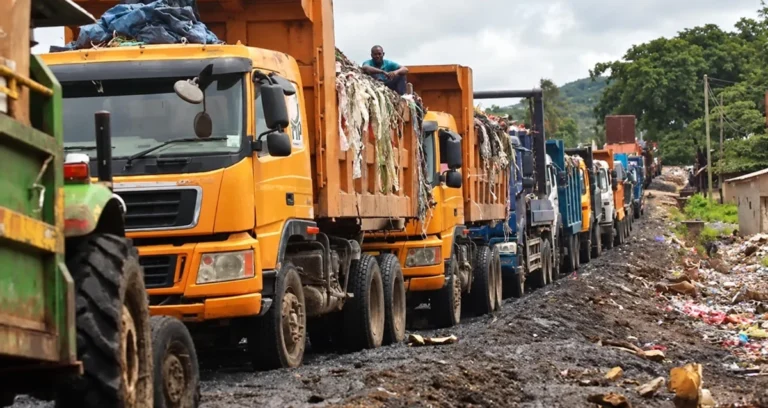
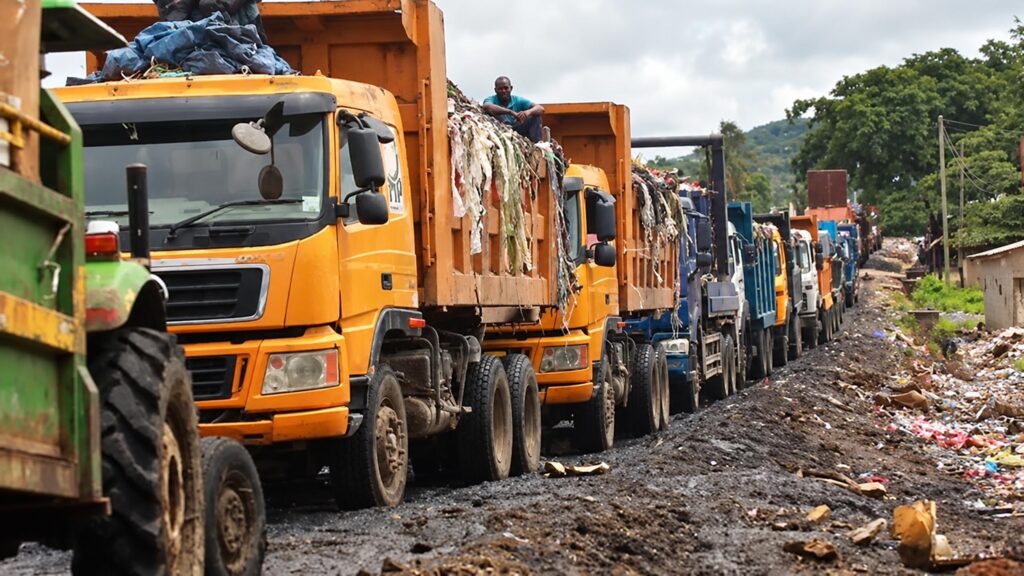
The acrid, heavy scent of burning plastic and decomposing organic matter drifted into Ester Kayombo’s bedroom in the dead of night, instantly triggering a visceral panic that her modest home had caught fire. In the dense, impoverished neighborhoods surrounding the sprawling Pugu Kinyamwezi dumpsite in Dar es Salaam, Tanzania, this alarming scenario has become an agonizingly familiar routine. Outside, massive, unregulated heaps of municipal waste were smoldering, sending thick, toxic plumes of black smoke billowing across the densely populated residential grid.
For Kayombo, a mother of three who operates a street food stall near the local cattle market selling ugali, rice, beans, and meat, the immediate emergency was personal and terrifying. Her three-year-old daughter, Eliza, suffers from severe asthma. As the smoke invaded their living quarters, Kayombo acted swiftly out of maternal desperation, wedging a damp cloth beneath the front door and cracking open a rear window to dissipate the fumes. Clutching her daughter’s rescue inhaler, she listened with a racing heart to the labored, whistling sounds of Eliza fighting for air.
"The smoke was so thick that my daughter struggled to breathe," Kayombo recounted, her voice heavy with exhaustion. Yet, despite the frequent, toxic fires, the pervasive noxious odors, and the constant environmental health hazards, Kayombo cannot afford to leave. Like millions of urban poor across Sub-Saharan Africa, she is trapped in an impossible calculus between immediate environmental survival and fundamental economic endurance. "My landlord is very kind. If I’m late paying the rent, he understands," she explained. "I rely on this market for my livelihood. I have nowhere else to go."
The Anatomy of a Municipal Governance Failure
The crisis at the Pugu Kinyamwezi dumpsite reached a critical tipping point when a massive, deep-seated subterranean fire burned continuously for an entire week, wrapping the impoverished communities on the city’s periphery in a suffocating shroud of smog. Local firefighting units deployed to the scene struggled for days to contain the volatile blaze, hampered by severe structural and operational deficiencies that expose the city’s profound lack of emergency preparedness.

Speaking on condition of anonymity, a senior municipal firefighter revealed the stark operational deficits hobbling local disaster response teams. "We simply do not have enough water tankers, fire retardant foam, and specialized protective gear required for prolonged exposure to chemical and hazardous waste fires," the firefighter stated.
This infrastructural paralysis unfolds against the backdrop of staggering demographic pressure. Dar es Salaam stands as one of the fastest-growing metropolitan centers on the African continent, currently housing a population exceeding six million residents. Much of this explosive growth is absorbed by informal settlements characterized by inadequate infrastructure, acute housing deficits, and a systemic waste management crisis.
City council statistics indicate that Dar es Salaam generates approximately 5,600 tonnes of municipal solid waste daily. However, municipal authorities possess the capacity to formally collect less than 40 percent of this total volume. Across crammed neighborhoods, uncollected refuse—a hazardous mixture of discarded food, single-use plastics, electronic waste, and medical debris—lters the streets, clogging vital drainage channels and dramatically escalating the risk of urban flooding during seasonal downpours.
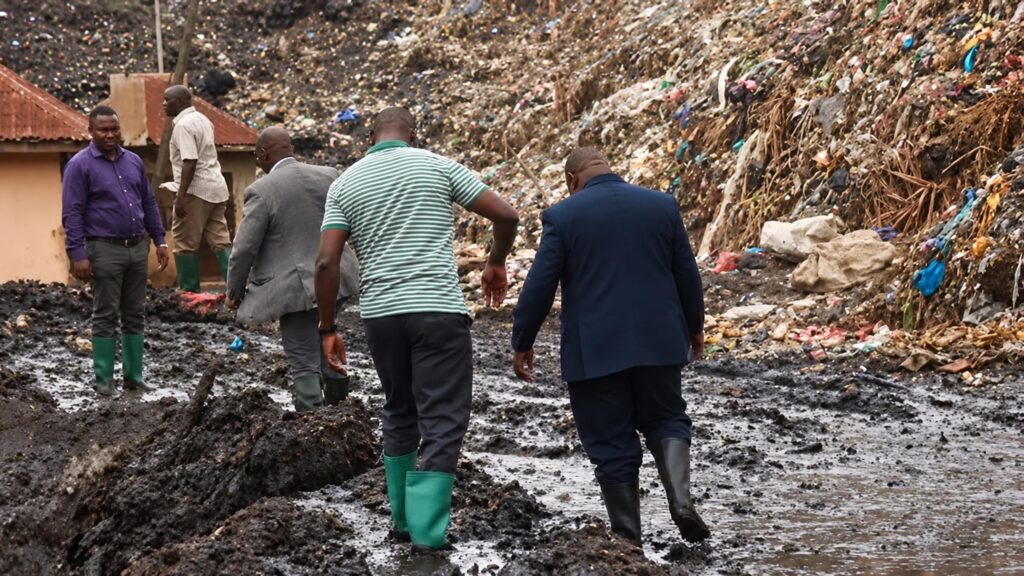
At the center of this crisis is the Pugu Kinyamwezi dumpsite. Sprawling across 65 hectares, the facility receives an estimated 2,500 tonnes of mixed, unsorted rubbish daily—vastly exceeding its design and operational capacity. Philip Benno, head of the Dar es Salaam City Council’s Waste Management Directorate, acknowledged the profound systemic overload. "We receive more rubbish than we can handle. Food waste and organic matter decompose anaerobically, releasing methane gas, which frequently triggers spontaneous fires during the dry season," Benno explained.
While municipal leadership maintains that the government is actively seeking international investors to modernize the facility into an engineered sanitary landfill capable of capturing methane for energy generation, policy analysts and urban researchers point out that progress has stalled. Chronic regulatory bottlenecks, bureaucratic inertia, and protracted delays in finalizing public-private partnership (PPP) frameworks have crippled timely infrastructural upgrades.
Air Quality Data and the Silent Toll of Particulate Pollution
The burning of mixed municipal waste releases a lethal cocktail of fine particulate matter, heavy metals, persistent organic pollutants, and toxic gases into the troposphere. Environmental health experts warn that these emissions pose severe, long-term risks to millions of urban residents.
A rigorous scientific study conducted by researchers from the Dar es Salaam Institute of Technology (DIT) and the Stockholm Environment Institute (SEI) analyzed particulate measurements recorded across 14 monitoring stations throughout the city between May 2021 and February 2022. The empirical findings painted a grim picture of urban air quality. Daily average concentrations reached staggering highs of up to 130.45 micrograms per cubic meter ($mu g/m^3$) for fine particulate matter ($PM2.5$), and 184.15 $mu g/m^3$ for the coarser fraction ($PM10$).
Crucially, the monitoring station positioned directly at the Pugu dumpsite recorded the most severe pollution spikes documented during the research period. Peak $PM_2.5$ readings at the site soared to nearly nine times the maximum threshold recommended by the World Health Organization’s 2021 global air quality guidelines, which set a 24-hour mean limit of 15 $mu g/m^3$.
"While our study did not collect direct clinical patient data, the empirical measurements clearly showed pollutant concentrations several times above WHO safe limits," noted Jacqueline Senyagwa, an SEI researcher and co-author of the study.
Globally, ambient and household air pollution contributes to an estimated 7.9 million premature deaths annually, with over 90 percent of these fatalities occurring in low- and middle-income countries, according to WHO figures. Beyond the immense human toll, the World Bank estimates that air pollution drains the global economy by nearly 5 percent of gross domestic product annually. Conversely, targeted, aggressive clean-air policies could drastically reduce population exposure by 2040, yielding global economic benefits of up to $2.4 trillion.

Localized Health Impacts and Strained Medical Facilities
At the community level, primary healthcare facilities bear the immediate, crushing brunt of these recurring pollution spikes. Clinics and district hospitals report sharp surges in patient admissions whenever dumpsite fires rage out of control or atmospheric inversion traps smog over the city.
"During landfill fires, we observe an alarming rise in pediatric outpatient visits for acute asthma attacks, bronchitis, and upper respiratory tract infections," said Dr. Daniela Tarimo, a physician practicing at Kivule District Hospital. "Children are disproportionately vulnerable to these environmental toxins because their respiratory systems are still actively developing, and they inhale a higher volume of air relative to their body weight compared to adults."
Local health centers frequently report that their medical inventories—particularly basic bronchodilators, oxygen supplies, and pediatric nebulizer kits—run dangerously low during extended fire episodes. This shortage forces low-income families to shoulder out-of-pocket expenses at commercial pharmacies, driving vulnerable households deeper into poverty.
The public health footprint of inadequate waste management extends far beyond airborne toxins. A separate cross-sectional study led by researcher Felician Andrew Kitole and colleagues surveyed 217 households across densely populated wards such as Tandale, Manzese, and Tandika. The findings revealed a profound municipal service gap: 61 percent of surveyed households lacked any access to formal waste collection services. Consequently, 35.9 percent of families resorted to burning their domestic rubbish in the open, while 41.9 percent dumped their waste illegally in open neighborhood lots.
The study correlated these hazardous waste disposal practices with a high prevalence of infectious and chronic diseases. Fourteen percent of households reported active respiratory infections linked directly to waste burning and compromised indoor air quality. Furthermore, researchers linked poor waste management to widespread waterborne and vector-borne illnesses, including diarrheal diseases affecting 39 percent of households, malaria in 28 percent, typhoid in 9 percent, skin infections in 5 percent, and cholera in 3 percent. These conditions were attributed to contaminated local water tables, uncollected garbage attracting disease vectors, and stagnant rainwater pooling in discarded containers that serve as ideal mosquito breeding grounds.
The Science of Dumpsite Fires and Structural Vulnerabilities
Environmental sanitation experts emphasize that dumpsite fires are rarely isolated accidents; rather, they are the predictable result of volatile waste compositions, poor operational management, and extreme thermal dynamics.
Zainabu Katima, a professor of environmental sanitation at the University of Dar es Salaam’s College of Engineering and Technology, explains that the mingling of diverse domestic refuse, discarded synthetic plastics, and rubber creates high-energy combustion profiles that are notoriously difficult to extinguish. "When different types of waste are indiscriminately dumped together without source-separation, a small localized spark or the intense subterranean heat generated by decomposing organic material can ignite a massive fire that spreads rapidly through the waste matrix," Katima told Health Policy Watch.
The WHO links chronic exposure to fine particulate matter to an increased incidence of ischemic heart disease, stroke, chronic obstructive pulmonary disease (COPD), and lung cancer. Because $PM_2.5$ particles are microscopic—measuring less than 2.5 micrometers in diameter—they bypass the body’s natural upper respiratory filters, penetrating deep into pulmonary alveoli and eventually crossing directly into the bloodstream.
"When plastics, electronic components, and synthetic packaging materials burn alongside ordinary household rubbish, they release toxic persistent organic pollutants, heavy metals, and fine particulate matter into the breathing zone," warned Regina Kilima, an environmental health researcher at the National Environmental Management Council (NEMC). For vulnerable children like Eliza, these chemical agents act as potent respiratory irritants, triggering acute bronchospasm and medical emergencies.
Grassroots Resilience Amid Weak Institutional Oversight
While Tanzania possesses a foundational framework of environmental laws and air quality regulations, enforcement remains severely fragmented. Analysts note that overlapping institutional responsibilities, chronic underfunding, and a severe shortage of continuous ambient air monitoring equipment undermine effective regulatory oversight.
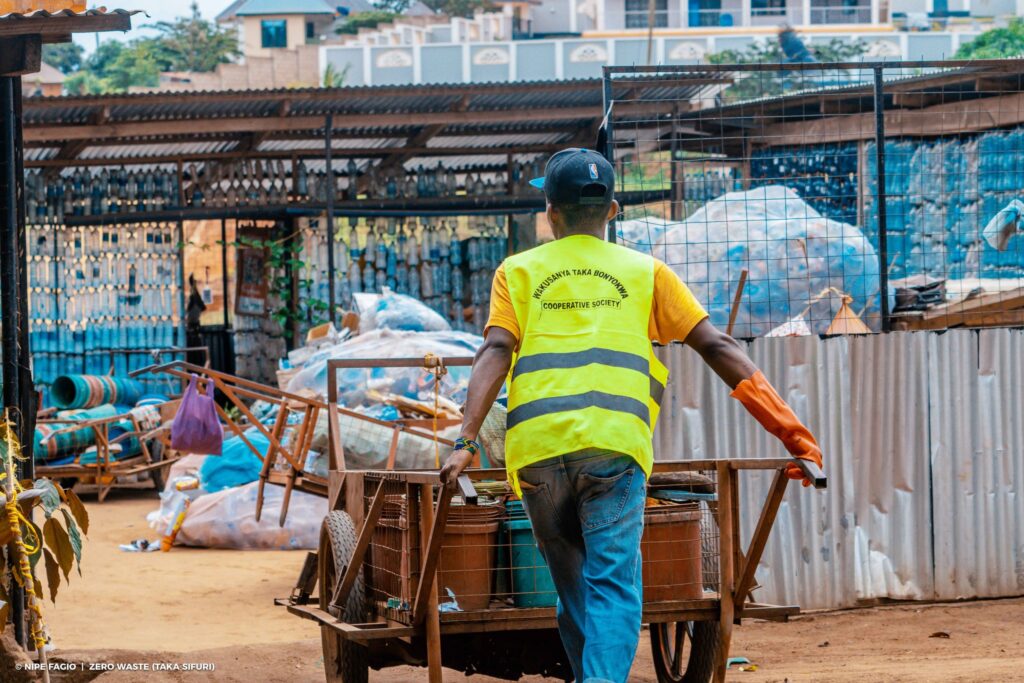
Despite these structural challenges at the municipal level, civil society organizations and community groups in Dar es Salaam are stepping into the vacuum to pioneer innovative local solutions. In the densely populated Kimara neighborhood, the Tanzanian environmental advocacy organization Nipe Fagio (Swahili for "Give Me a Broom") has mobilized women-led cooperatives to collect household waste, meticulously separating organic matter, recyclable plastics, and hazardous materials at the source. This community-based model not only provides sustainable livelihoods for local residents but significantly reduces the aggregate volume of waste transported to overloaded dumpsites like Pugu.
Nipe Fagio actively supports "Zero Waste" cooperatives composed of informal waste pickers, women, and youth. These groups generate income by commercializing recyclables, practicing vermiculture and maggot farming for organic waste conversion, and promoting urban agriculture. "Our community initiatives prove conclusively that sorting waste at the household level is entirely viable, but municipal-scale investments are desperately needed to bridge the infrastructure gap," said Wilyhard Shishikaye, a program coordinator with Nipe Fagio.
Charting a Path Forward: Making Clean Air a Public Health Priority
Public health and urban policy experts agree that mitigating Dar es Salaam’s environmental crisis requires a multi-pronged, systemic overhaul. Key recommendations include expanding the city’s network of continuous air quality monitoring stations and ensuring that real-time pollution data is made publicly accessible to empower citizens to take protective measures.
Furthermore, structural reforms must prioritize upgrading open dumpsites into fully engineered sanitary landfills equipped with proper leachate management and methane gas capture systems. Achieving this transformation necessitates enhanced inter-agency collaboration among environmental regulators, municipal councils, and public health authorities. Institutions such as the National Environmental Management Council require expanded operational budgets, technical staffing, and advanced enforcement tools to penalize illegal open burning. Simultaneously, local health clinics must be equipped with clear clinical protocols and emergency drug stockpiles to manage surges in respiratory distress during extended pollution crises.
Ultimately, residents living in the shadow of the city’s massive waste sites need reliable early warning systems when fires break out, alongside actionable guidance on minimizing smoke inhalation. For families like Ester Kayombo and her daughter Eliza, however, long-term structural reforms cannot materialize quickly enough. As long as urban waste management across Sub-Saharan Africa remains chronically underfunded and neglected, the heavy burden of toxic industrial and municipal smoke will continue to fall disproportionately on those who are least equipped by circumstance to escape it.