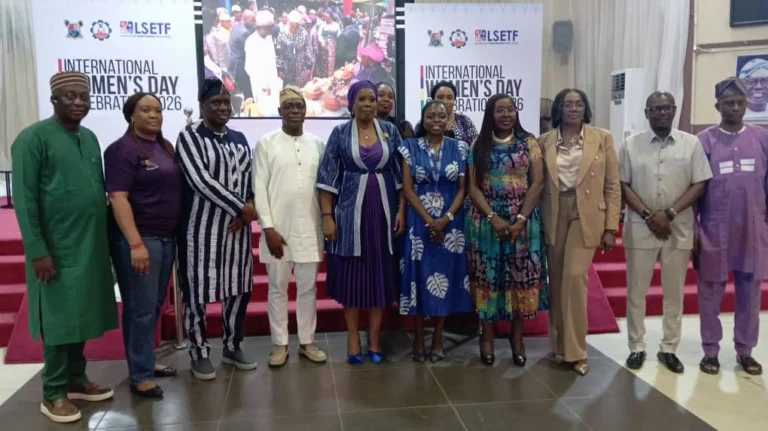
The Lagos State Government has emphatically reiterated its unwavering resolve to position women at the vanguard of its comprehensive economic development agenda, strategically identifying female entrepreneurs as indispensable catalysts for achieving inclusive growth across a multitude of critical sectors. This declaration underscores a sustained commitment by the state administration to foster an environment where women are not merely participants but primary drivers of economic prosperity and societal advancement. The assertion was made by the Commissioner for Commerce, Cooperatives, Trade and Investment, Folashade Ambrose-Medebem, during the recent International Women’s Day (IWD) celebration, an event specifically dedicated to women operating Micro, Small and Medium Enterprises (MSMEs) and nano businesses. The significant gathering, held at the Adeyemi Bero Auditorium in Alausa, Ikeja, served as a powerful platform to reaffirm the government’s strategic priorities.
Celebrating Resilience and Economic Contribution
The event, meticulously organised by the Ministry of Commerce, Cooperatives, Trade and Investment (MCCTI), resonated with the compelling theme: “Accelerating Women’s Economic Empowerment for Inclusive Growth in Lagos State.” This theme is not only a nod to the global observance of International Women’s Day but also a sharp focus on the unique context and ambitious goals of Lagos, Nigeria’s economic powerhouse. International Women’s Day, celebrated annually on March 8th, serves as a global focal point for commemorating the cultural, political, and socioeconomic achievements of women, while simultaneously advocating for accelerated gender equality. For Lagos, this year’s observance was strategically leveraged to highlight the tangible contributions of women to the state’s burgeoning economy, particularly within the MSME sector, which forms the bedrock of grassroots economic activity.
Commissioner Ambrose-Medebem elaborated on the visionary stance of Governor Babajide Sanwo-Olu’s administration, asserting that it consistently prioritises the formulation and implementation of policies designed to advance women’s economic empowerment. She unequivocally described this empowerment as foundational to achieving sustainable development objectives within the state. Her remarks underscored a deep understanding that true empowerment transcends mere access to financial resources. It encompasses a holistic approach that enables women to consistently earn a living income, accumulate and own assets, confidently invest in their futures, and actively engage in the decision-making processes that profoundly impact their lives and communities. This broader definition moves beyond traditional welfare approaches, advocating for systemic changes that grant women genuine agency and control over their economic destinies.
From Policy Declarations to Tangible Interventions
The Commissioner highlighted the crucial progression made by the Lagos State Government, transitioning from mere policy declarations to the vigorous implementation of practical, impactful interventions. This shift is evident in the strategic deployment of targeted programmes and the proactive forging of strategic partnerships. These initiatives are specifically designed to significantly increase women’s active participation and leadership across a diverse array of key economic sectors. Among the sectors specifically identified for enhanced female engagement are trade, technology, manufacturing, agriculture, and the vibrant creative industry. This multi-sectoral approach reflects an understanding of the varied talents and opportunities available within Lagos’s dynamic economy, ensuring that empowerment efforts are broad-based and inclusive.
A central tenet of the government’s strategy, as articulated by Ambrose-Medebem, is the indispensable importance of capacity building. She stressed that while access to funding is undoubtedly critical, its efficacy is greatly amplified when complemented by the acquisition of the right skills, relevant knowledge, and robust professional networks. Recognising this, the state government is making substantial investments in initiatives specifically tailored to equip women entrepreneurs with essential business management expertise, proficiency in utilising modern digital tools, and improved access to broader markets. These targeted investments aim to systematically dismantle the various barriers that traditionally limit women’s full economic participation, thereby fostering an ecosystem conducive to their growth and success. Such barriers often include lack of technical skills, limited market information, and inadequate access to distribution channels.
Advocacy for Greater Political Representation and Leadership
Beyond economic initiatives, Commissioner Ambrose-Medebem also lent her strong advocacy to the passage of the Reserved Seats Bill for women. She posited that greater political representation for women is not merely a matter of fairness but a strategic imperative that would substantially strengthen ongoing efforts aimed at achieving comprehensive economic inclusion. The argument here is that increased female presence in legislative and governance structures would ensure that policies are more gender-responsive, better reflecting the unique needs and aspirations of women, and thus creating a more equitable playing field for their economic ventures. This connection between political voice and economic empowerment highlights a holistic approach to gender equality.
She further assured the audience that Lagos State is firmly committed to continually building robust systems that not only prepare women for active economic participation but also strategically groom them for influential leadership roles across all sectors of the economy and society. This forward-looking vision underscores a desire to cultivate a new generation of female leaders who can drive innovation, create employment, and contribute significantly to policy formulation and implementation, ensuring a sustainable trajectory for the state’s development.
Historical Context and Evolution of Support for Women in Lagos
Lagos State has, over the years, progressively deepened its commitment to women’s empowerment. This journey is marked by various initiatives launched by successive administrations, building a framework for the current comprehensive approach. Historically, the Lagos State Employment Trust Fund (LSETF), established in 2016, has been a pivotal institution, offering accessible loans and training to MSMEs, with a significant focus on women-led businesses. Through various programs like the MSME Loan Programme and the Lagos Innovates scheme, LSETF has provided critical financial lifelines and skill development opportunities. Similarly, the Ministry of Women Affairs and Poverty Alleviation (WAPA) has been instrumental in coordinating gender-focused programs, ranging from vocational training to entrepreneurial support, often targeting vulnerable women and those in nano-businesses. These preceding efforts laid the groundwork for the more integrated and strategic approach currently being championed by the Sanwo-Olu administration, which seeks to formalize and scale up these interventions, making them more impactful and sustainable.
Data-Driven Imperatives for Women’s Economic Empowerment
The emphasis on women’s economic empowerment in Lagos is not merely a social imperative but also a sound economic strategy, strongly supported by compelling data. Micro, Small, and Medium Enterprises (MSMEs) are the lifeblood of the Nigerian economy, collectively contributing over 48% to the national Gross Domestic Product (GDP) and accounting for 96% of all businesses and 84% of total employment, according to surveys by the Small and Medium Enterprises Development Agency of Nigeria (SMEDAN) and the National Bureau of Statistics (NBS). Within this crucial sector, women-owned businesses constitute a significant proportion, estimated to be between 40-50% of MSMEs, though many operate in the informal sector or at the nano-business level, often facing greater challenges in accessing formal credit and market opportunities.
Globally, the International Finance Corporation (IFC) estimates that women-owned SMEs face an annual credit gap of approximately $320 billion. In Nigeria, this disparity is particularly acute, with women-led businesses receiving a disproportionately small share of formal credit compared to their male counterparts, often due to stringent collateral requirements, lack of financial literacy, and inherent biases within the financial system. Furthermore, data indicates that enhancing women’s access to digital tools and literacy can significantly boost their entrepreneurial success and integration into the formal economy. Studies by organisations like UN Women consistently demonstrate a direct correlation between women’s economic empowerment and broader societal benefits, including reduced poverty rates, improved child health and education outcomes, and overall enhanced community resilience. For a mega-city like Lagos, which is one of Africa’s largest sub-national economies and a significant contributor to Nigeria’s GDP, leveraging the full economic potential of its female population is critical for sustaining its rapid growth and ensuring inclusive prosperity for all its residents.
Collaborative Efforts and Optimism for the Future
In his welcome address, the Permanent Secretary of MCCTI, Babatunde Onigbanjo, underscored the intrinsic value of the event, describing it as a vital platform to celebrate the indomitable resilience, innovative spirit, and invaluable entrepreneurial contributions of women across Lagos. He eloquently articulated that the empowerment of women creates a powerful ripple effect, translating directly into stronger family units, more sustainable businesses, and ultimately, more resilient and prosperous communities. Onigbanjo further elaborated on the ministry’s proactive approach, highlighting its ongoing collaborations with key stakeholders including private sector players, development partners, and financial institutions. These strategic partnerships are crucial for expanding opportunities and providing robust support mechanisms to enable women to successfully scale their enterprises, moving beyond survivalist ventures to growth-oriented businesses.
Adding to the chorus of optimism, the Senior Special Assistant to the Governor on Commerce, Cooperatives, Trade and Investment, Hausa Adeeyo, expressed her profound hope that the participants would derive substantial practical knowledge from the event, knowledge that would directly enhance their business operations and strategic planning. She reaffirmed the state’s unwavering commitment to facilitating the crucial transition of women entrepreneurs from informal to formal business structures. This critical objective is being pursued through simplified registration processes, reduced bureaucratic hurdles, and improved regulatory awareness, ensuring that women can navigate the formal business landscape with greater ease and confidence, thereby unlocking access to a wider range of financial products, government contracts, and market opportunities.
Broader Impact and Implications for Sustainable Development
The intensified focus on women’s economic empowerment in Lagos carries profound implications for the state’s broader development trajectory. Economically, empowering women is a proven catalyst for diversification, fostering innovation, and driving overall economic expansion. As women gain greater economic agency, they are more likely to invest in their businesses, hire more staff, and contribute to the tax base, thereby strengthening the state’s fiscal health. Socially, the ripple effects are equally significant. Increased incomes for women often translate into better nutrition, improved healthcare, and higher educational attainment for their children, breaking intergenerational cycles of poverty. This directly contributes to the achievement of several Sustainable Development Goals (SDGs), particularly those related to gender equality, poverty eradication, quality education, and economic growth.
The comprehensive policy framework being articulated by Lagos State, which integrates financial access, capacity building, market access, and advocacy for political representation, sets a commendable precedent. It positions Lagos as a potential model for other states within Nigeria and indeed across Africa, demonstrating how a targeted and holistic approach can yield transformative results. While significant strides are being made, acknowledging persistent challenges such as inadequate infrastructure, inconsistent power supply, continued difficulties in accessing patient capital for very small businesses, and lingering cultural biases is crucial. However, the consistent political will and the strategic multi-stakeholder approach championed by the Lagos State Government signal a strong commitment to overcoming these hurdles, paving the way for a more equitable, inclusive, and prosperous future for all its citizens, with women at the forefront of this transformative journey. The commitment to building robust systems that prepare women for leadership roles across sectors underscores a long-term vision for sustainable progress and gender parity in the economic landscape of Lagos.