The Lagos State Government has announced comprehensive plans for a new industrial policy, slated for formal unveiling by April 2026, designed to significantly accelerate economic growth and firmly establish the state as a pivotal engine for Nigeria’s ambitious goal of achieving a $1 trillion economy. This landmark initiative aims to strategically diversify the state’s economic base, foster value-added production, and enhance its competitiveness within both national and international trade landscapes.
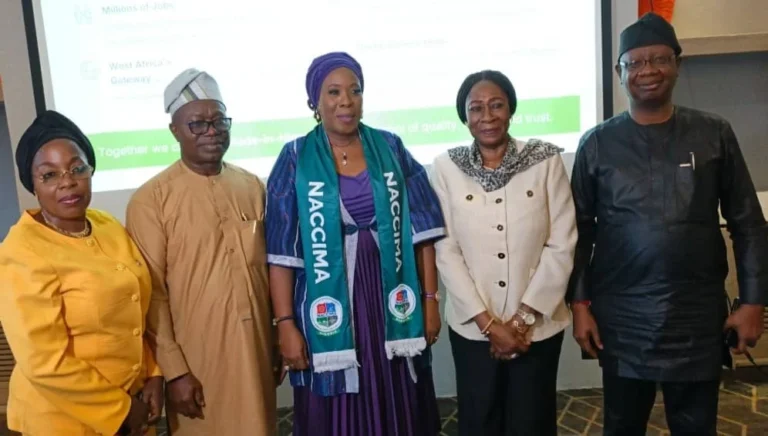
The announcement was made by Mrs. Folashade Ambrose-Medebem, the Commissioner for Commerce, Cooperatives, Trade and Investment, during a high-profile roundtable discussion on trade and export competitiveness. Hosted by the Nigerian Association of Chambers of Commerce, Industry, Mines and Agriculture (NACCIMA) in Lagos on Tuesday, the event served as a critical platform for stakeholders to deliberate on strategies to unlock Nigeria’s vast export potential. The Commissioner highlighted that the forthcoming Lagos State Industrial Policy will be meticulously aligned with national economic aspirations and major international trade frameworks, most notably the African Continental Free Trade Area (AfCFTA), underscoring a commitment to regional integration and global market access.
Strategic Sector Focus and Support Mechanisms
A core tenet of the new policy will be the targeted strengthening of key strategic sectors identified for their significant growth potential and capacity for value addition. These include vital agricultural commodities and minerals such as cocoa, shea, and lithium, alongside industrial powerhouses like textiles, petrochemicals, and agro-processing. To stimulate investment and growth within these chosen sectors, the government plans to implement a robust suite of support mechanisms. These are expected to include attractive tax incentives, access to subsidised power, and the establishment of dedicated industrial clusters.
Mrs. Ambrose-Medebem emphasized the urgent need for Nigeria to transition from merely exporting raw materials to engaging in sophisticated value-added production. "These sectors should be supported through tax incentives, subsidised power, and dedicated industrial clusters. Nigeria must move beyond raw material exports into value-added production," she asserted, articulating a vision for a more robust and resilient industrial base.
She further elucidated this point using the example of the shea industry, where Nigeria currently contributes a substantial share of global raw shea nut supply but captures only a fraction of the global value due to underdeveloped processing capabilities. "This challenge is not about resources, but about coordination," she remarked, indicating that the new policy would address systemic bottlenecks and foster better collaboration across the value chain. The global shea butter market, valued at over $1.5 billion, presents a significant opportunity for Nigeria to capture greater economic benefits through enhanced local processing and product development.
AfCFTA Readiness and Intra-African Trade
Beyond domestic industrialization, Lagos is actively preparing for increased participation in continental trade. The Commissioner disclosed that the state is diligently working towards achieving full readiness for the Intra-African Trade Fair in 2027. This preparatory phase involves not only infrastructure development but also the establishment of dedicated trade desks at the state level. These desks will be crucial for driving effective policy execution related to the AfCFTA, ensuring that Lagos businesses are well-positioned to leverage the opportunities presented by the world’s largest free trade area.
"Readiness is not a slogan; it is a system," Mrs. Ambrose-Medebem stated, underscoring the necessity for robust policy alignment and regulatory harmonisation across various government agencies. This integrated approach is vital to streamline processes, reduce administrative burdens, and create a more conducive environment for trade and investment. The AfCFTA, encompassing a market of 1.3 billion people and a combined GDP of approximately $3.4 trillion, offers unprecedented opportunities for Nigerian businesses to access new markets and integrate into regional value chains, provided the necessary domestic frameworks are in place.
Financial Support for MSMEs: The ₦10 Billion Loan Scheme
Recognizing the critical role of Micro, Small, and Medium-sized Enterprises (MSMEs) in economic development and job creation, the Lagos State Government has also introduced a significant financial intervention. A ₦10 billion non-collateralised loan scheme has been launched, specifically targeting cooperative-based MSMEs. This initiative is designed to provide crucial access to finance for small producers, offering up to ₦10 million in funding at single-digit interest rates. This addresses a long-standing challenge for MSMEs in Nigeria, which often struggle to access conventional credit due to collateral requirements and high-interest rates. By de-risking lending for these vital economic actors, the state aims to stimulate local production, foster innovation, and expand export capabilities from the grassroots level.
NACCIMA’s Call for Coordinated Export Growth
The NACCIMA roundtable, themed "Unlocking Nigeria’s Export Potential: Policy Alignment, Private-Sector Readiness, and Trade Facilitation," provided a comprehensive overview of the national export landscape and the challenges that must be overcome. Engr. (Dr.) Jani Ibrahim, the National President of NACCIMA, represented by Alhaji Yaya Oladimeji, National Vice President of NACCIMA and President of the Badagry Chambers of Commerce, delivered a welcoming address that highlighted the timeliness and relevance of the discussions.
Dr. Ibrahim noted that Nigeria’s export narrative is undergoing a significant transformation, evolving from a heavy reliance on crude oil to a more diversified trade footprint. This shift, he stated, reflects the growing ingenuity and resilience of the nation’s private sector. Recent trade data underscores this positive trend, with Nigeria’s non-oil exports climbing to approximately $6.1 billion in 2025, marking an impressive 11.5% year-on-year growth. This figure represents the highest non-oil export value ever recorded in the nation’s history, signaling robust progress in diversification efforts.
In naira terms, non-oil exports reached a record ₦9.2 trillion in the first nine months of 2025, a substantial 48% increase compared to the same period in 2024. These gains, according to NACCIMA, reflect concrete progress in sectors such as agriculture, processed goods, and solid minerals. The export volumes have also expanded significantly, with over 280 products contributing to total non-oil export volumes climbing to over 8 million metric tonnes.
Shifting Export Demographics and Regional Trade
The geographical profile of Nigeria’s exports is also undergoing a notable shift. While traditional markets in Europe and Asia remain important, African markets have emerged as increasingly significant destinations for Nigerian goods. In 2024, Africa collectively accounted for approximately ₦8.74 trillion in exports, with intra-ECOWAS trade representing a growing share of this activity. Exports to African countries further climbed by 14% in the first half of 2025, with West Africa absorbing over 62% of these goods. This trend reflects strengthening regional trade momentum and the early positive impacts of AfCFTA implementation, which seeks to dismantle trade barriers across the continent.
Dr. Ibrahim stressed that sustained export growth is contingent upon stable, predictable, and coordinated policies across various domains, including trade, finance, taxation, customs administration, standards, infrastructure, and industrial development. He warned that "fragmentation slows progress; alignment accelerates it," advocating for harmonized national strategies, efficient regulatory processes, and business-friendly environments.
Pillars for Enhanced Competitiveness
To enhance export competitiveness, NACCIMA identified several critical areas requiring attention. Businesses, particularly MSMEs, must be equipped to meet stringent international standards in quality, packaging, certification, and traceability. Crucially, they require access to affordable finance, reliable infrastructure, up-to-date market intelligence, and comprehensive capacity-building support. "Export competitiveness is not accidental; it is built through deliberate investment in knowledge, innovation, and productivity," Dr. Ibrahim stated.
Furthermore, he emphasized the importance of trade facilitation, noting that "time is money in global commerce." Efficient ports, simplified customs procedures, digitalized documentation systems, and seamless border operations are paramount to reducing the cost of doing business. He urged that if Nigerian products are to compete globally, domestic bottlenecks that erode profit margins and discourage exporters must be urgently addressed.
NACCIMA reiterated its commitment to advancing these three pillars – policy alignment, private-sector readiness, and trade facilitation – by creating platforms for constructive engagement between government and business, aligning priorities, and translating export opportunities into tangible socio-economic impact. The organization also highlighted the immense potential of regional frameworks like the AfCFTA, advocating for deeper Nigerian participation to secure preferential market access, diversify export products, and build stronger value-chain linkages across the continent.
Federal Government Initiatives and Challenges
Mr. Taiwo Ajetunmobi, Head of Investment and Management for the Nigerian China Trade Partnership at the Office of the President, elaborated on the broader federal context in his presentation titled "The Three Pillars of Transformation." He echoed the sentiment that Nigeria’s export ambitions hinge on clear, predictable, and coordinated policy signals, noting that the country is already making strides in the right direction.
Ajetunmobi specifically pointed to the gazetting of the AfCFTA Provisional Schedule of Tariff Concessions, which enables preferential continental trade and effectively unlocks a market of 1.5 billion people with a combined GDP of $3.4 trillion. This crucial step signifies Nigeria’s commitment to leveraging the AfCFTA for economic advantage.
He also detailed the 2026 Fiscal Policy and Tariff Amendments, designed to boost local production. These amendments include the imposition of tariffs ranging from 0% to 400% on a list of 197 imported goods. Conversely, the National List features 127 items, with import duties reduced for 125 of them, specifically to stimulate critical sectors of the economy. Further demonstrating the government’s forward-looking approach, a "Green Tax Motor" has been introduced for electric vehicles, promoting sustainable transportation. Additionally, import prohibitions now cover 115 items across 17 categories, reflecting a strategic effort to protect domestic industries and encourage local manufacturing.
However, Ajetunmobi also candidly addressed persistent hindrances to trade and SME growth. He identified weak access to working capital and short-term finance as significant constraints for SMEs. Poor aggregation and logistics, fragmented supply chains, the absence of robust warehouse receipt systems, and low export scale were also highlighted as major barriers. Furthermore, weak market intelligence, characterized by limited access to digital market insights and sector-specific guidance, remains a critical necessity for Nigerian exporters to effectively navigate global markets.
Implications and Future Outlook
The new industrial policy from Lagos State, coupled with ongoing federal initiatives and private sector advocacy, signals a concerted effort to transform Nigeria’s economic landscape. By focusing on value addition, providing targeted support to key sectors, and facilitating access to finance for MSMEs, Lagos aims to not only stimulate local production but also significantly enhance its contribution to Nigeria’s non-oil export revenue.
The success of this policy hinges on rigorous implementation, consistent regulatory enforcement, and sustained collaboration between government, the private sector, and international partners. Should these efforts bear fruit, Lagos is poised to solidify its position as a central hub in Nigeria’s industrial transformation agenda, fostering job creation, attracting foreign direct investment, and ultimately driving the nation closer to its ambitious $1 trillion economy target. The coming years will be critical in observing how these strategic interventions translate into tangible economic impact and cement Nigeria’s role as a leading economic force on the African continent and beyond.