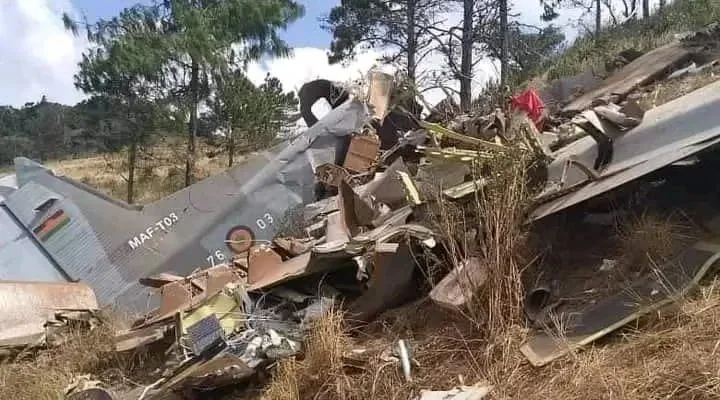
Malawi’s parliament has initiated a third, profoundly extensive formal investigation into the tragic military aircraft crash of June 2024 that claimed the lives of former Vice-President Saulos Chilima and eight other individuals. This renewed scrutiny, nearly two years after the devastating incident, intensifies the focus on aviation oversight, maintenance protocols, and lingering questions left unanswered by two prior investigations. The parliamentary inquiry, formally announced last month, represents the most ambitious and far-reaching attempt yet to unravel the full circumstances surrounding the disaster, promising a deep dive into technical, operational, and institutional failures.
The Catastrophic Flight and Initial Aftermath
The fateful journey began on June 10, 2024, when a Dornier 228-202(K) twin-engine turboprop, operated by the Malawi Defence Force (MDF), departed from Kamuzu International Airport in the capital, Lilongwe. Its destination was Mzuzu, a northern city, carrying a high-profile passenger: Vice-President Saulos Chilima. Accompanying him were eight other individuals, including his security detail and staff. The aircraft, manufactured in 1987 and a common fixture for government transport, was expected to complete a routine flight. However, it never reached its destination. The plane mysteriously disappeared from radar screens, prompting immediate national alarm and a large-scale search operation.
Malawian authorities, supported by international partners, launched an intensive search across the rugged terrain of northern Malawi. Days of anxious waiting gripped the nation as hopes dwindled. The wreckage was eventually located on June 11, 2024, deep within the dense Chikangawa Forest Reserve, near a hillside. The grim discovery confirmed the nation’s worst fears: the aircraft had crashed into rising terrain, killing everyone on board instantly. The loss of Vice-President Chilima, a popular and influential political figure, plunged Malawi into a period of national mourning and profound shock. His death not only represented a personal tragedy but also created a significant political vacuum, given his stature and potential future roles within the country’s governance.
Saulos Chilima: A Political Legacy Cut Short
Saulos Klaus Chilima was a prominent and dynamic figure in Malawian politics. Born in 1973, he rose through the ranks of the corporate world, holding senior positions in various multinational companies before entering politics. His charismatic personality and perceived technocratic competence quickly made him a formidable force. In 2014, he was chosen as the running mate for Peter Mutharika of the Democratic Progressive Party (DPP) and subsequently became Vice-President. His political trajectory, however, was not without its complexities.
Chilima later broke away from the DPP, forming his own party, the United Transformation Movement (UTM), and contested the 2019 presidential elections. Following the annulment of the 2019 election results by the Constitutional Court due to widespread irregularities, Chilima forged a crucial alliance with Lazarus Chakwera of the Malawi Congress Party (MCP). This Tonse Alliance ultimately triumphed in the fresh 2020 presidential election, with Chakwera becoming President and Chilima returning as Vice-President.
His tenure as Vice-President was marked by efforts to promote good governance, fight corruption, and drive economic reforms. However, he also faced legal challenges, including allegations of corruption, which he vehemently denied and were ongoing at the time of his death. Regardless of these controversies, Chilima commanded significant public support, particularly among the youth, who saw him as a symbol of hope for a new generation of leadership. His untimely death was thus not just a national tragedy but also a profound blow to the country’s political landscape, leaving many questions about his legacy and the future direction of Malawian politics. The circumstances surrounding his death, therefore, became imbued with national significance, fueling a demand for clear and unambiguous answers.
The Initial Investigations: Technical Findings and Persistent Doubts
In the wake of the crash, Malawi sought international assistance to ensure a thorough and impartial investigation. Given that the aircraft was German-manufactured, technical assistance was requested from Germany’s Federal Bureau of Aircraft Accident Investigation (BFU), the authority typically responsible for investigating accidents involving German-made aircraft. The BFU’s final report, published in October 2025, concluded that pilot error was the primary cause of the crash.
BFU investigators determined that the crew continued flying under visual flight rules (VFR) despite encountering instrument meteorological conditions (IMC). In IMC, reduced visibility due to weather phenomena like fog or heavy clouds necessitates navigation solely by reference to cockpit instruments, rather than external visual cues. The report indicated that the crew lost situational awareness in these challenging conditions, ultimately leading the aircraft to strike terrain. A separate Malawian government commission of inquiry, established concurrently, reached largely similar conclusions. Its findings also cited adverse weather conditions and pilot judgment as the principal factors behind the tragic accident.
While these two investigations provided a technical explanation for the crash, attributing it to human factors and environmental conditions, they conspicuously left broader, systemic questions unresolved. Public skepticism persisted, particularly concerning the adequacy of aircraft equipment, the standards of maintenance within the military aviation fleet, and the overall institutional oversight mechanisms. The lack of clarity on these broader issues fueled a persistent demand for a more comprehensive inquiry, one that would delve beyond immediate causation to address underlying vulnerabilities.
The ‘Black Box’ Conundrum and Maintenance Lapses
A critical deficiency highlighted by the BFU investigation was the absence of modern flight recorders on the ill-fated Dornier 228. The aircraft was not equipped with a cockpit voice recorder (CVR) or a flight data recorder (FDR), commonly known as "black boxes." These devices are indispensable in aviation accident investigations. CVRs capture cockpit conversations, ambient sounds, and radio transmissions, offering crucial insights into crew actions, decisions, and any warnings received. FDRs, on the other hand, record a vast array of aircraft performance data, including speed, altitude, heading, engine parameters, and control surface positions, providing a detailed second-by-second account of the aircraft’s operation.
The absence of these standard recording devices severely hampered the BFU’s efforts to reconstruct the aircraft’s final moments with full precision. Investigators were forced to rely largely on information recovered from a Garmin navigation unit found in the wreckage, which provided limited data compared to a dedicated flight recorder. This reliance on fragmented data inevitably leaves gaps in understanding, contributing to the public’s lingering doubts. Malawian aviation regulations, at the time, did not mandate such recorders for aircraft in that specific category, particularly military aircraft, which often operate under different regulatory frameworks than commercial passenger planes. However, for a state aircraft routinely transporting high-ranking officials, the lack of such vital safety equipment raised significant concerns about the robustness of the country’s aviation safety standards, especially when measured against international best practices.
Furthermore, the BFU report uncovered another alarming deficiency: the aircraft’s emergency locator transmitter (ELT) contained a battery that had expired in 2004 – a full two decades before the crash. An ELT is designed to automatically broadcast a distress signal upon impact, aiding search and rescue teams in quickly locating wreckage. An inoperative ELT, therefore, significantly prolongs the search effort, potentially delaying rescue and recovery operations, though in this case, all on board perished instantly. Investigators were reportedly informed that replacement parts or adequate funding for maintenance had not been available. While search teams eventually located the wreckage in the dense forest, the revelation about the expired ELT battery underscored broader concerns about the maintenance practices and the general state of readiness within Malawi’s military aviation fleet. The Malawi Air Force has not publicly responded directly to this specific finding attributed to the BFU report, leaving a critical gap in official accountability.
The Genesis of the Third Parliamentary Inquiry
The persistent public skepticism, coupled with the unresolved broader questions from the earlier investigations, ultimately compelled Malawi’s lawmakers to establish an unprecedented parliamentary inquiry. The decision reflected a national sentiment that the previous probes, while technically sound in their immediate conclusions, failed to address the systemic issues that might have contributed to the tragedy. The call for a new, more transparent, and comprehensive investigation grew louder, driven by a desire for complete closure for the victims’ families and a commitment to preventing future recurrences.
The parliamentary ad-hoc committee, chaired by Walter Nyamilandu Manda, a respected figure, was formed with a mandate to conduct a fresh and exhaustive inquiry into what is now widely known as the Chikangawa plane crash. Manda confirmed that the committee had successfully completed all preparatory processes, including establishing its terms of reference, securing resources, and outlining its investigative methodology. "The parliamentary ad hoc committee established to conduct a fresh inquiry into the Chikangawa plane crash has successfully concluded its preparatory work and is now ready to commence investigations," he stated, signaling the official start of what promises to be a complex and sensitive undertaking.
An Unprecedented Scope: Exhumations, Witnesses, and Forensic Challenges
The scope of this parliamentary inquiry is truly unprecedented in Malawian history. According to parliamentary statements, the investigation will proceed along three primary tracks, each designed to uncover previously overlooked evidence and address systemic failures. These tracks include:
- A Health, Safety, Security, and Environmental Audit: This comprehensive audit will scrutinize the operational environment, safety protocols, security measures, and environmental factors pertinent to military aviation operations in Malawi. It will look at everything from airfield conditions to flight planning procedures.
- A Forensic Review: This track aims to identify and analyze any previously overlooked physical or digital evidence related to the crash. Given the passage of time, this will be a particularly challenging endeavor, relying on advanced forensic techniques and expert analysis.
- Post-Mortem Examinations of the Crash Victims: This is perhaps the most contentious and sensitive aspect of the new inquiry. The committee has decided to exhume the remains of all nine victims for detailed post-mortem examinations. Crucially, no such examinations were conducted when the bodies were initially recovered in June 2024.
Under international aviation investigation practices, post-mortem examinations are vital. They can help determine if medical or toxicological factors, such as sudden incapacitation or exposure to harmful substances, may have affected a pilot’s ability to operate an aircraft. However, nearly two years have passed since the crash, raising significant questions about the potential degradation of forensic evidence. The effectiveness of toxicology tests or the identification of subtle medical conditions may be severely compromised by the passage of time.
Furthermore, the decision to exhume bodies carries immense cultural sensitivity in Malawi. Burial practices hold deep spiritual and social significance within Malawian communities, and the disturbance of graves can be profoundly distressing for families and communities. Parliament has acknowledged these sensitivities and indicated that consultations with the affected families would be paramount. While families may experience renewed grief, the promise of definitive answers could also offer a form of closure, albeit through a painful process.
The inquiry also plans to summon an extensive list of witnesses – more than 150 individuals – reflecting the committee’s intent to cast a wide net. This list is expected to include officials from aviation authorities, the military high command, government departments responsible for flight authorization, air traffic control, and potentially even individuals involved in the initial search and rescue operations. The sheer scale of the witness list suggests that decisions related to aircraft readiness, weather assessment, operational approval, and post-crash response may have involved multiple institutions and layers of bureaucracy. The committee has set an ambitious timeline, aiming to present its findings within 90 days, underscoring the urgency and national importance attached to this investigation.
Political Undercurrents and Institutional Trust
The parliamentary investigation has not been immune to political complexities. The Malawi Congress Party (MCP), which was the governing party when the crash occurred, initially declined to participate in the parliamentary inquiry. Leaders of the MCP, including opposition leader Simplex Chithyola Banda, argued that their involvement could compromise the independence and perceived impartiality of the investigation, particularly given that the two earlier inquiries were conducted under the MCP-led administration. This initial stance sparked debate about political interference and the credibility of such an inquiry.
However, after consultations with the Speaker of Parliament, Sameer Suleman, regarding the committee’s composition and terms of reference, the MCP reversed its position by March 27. The party ultimately agreed to participate, recognizing the national significance of the inquiry and perhaps the political imperative of being seen as cooperative in the search for truth. This shift underscored the delicate balance between political allegiances and the collective desire for accountability.
The plane crash, and the subsequent investigations, have become symbolic of deeper concerns about aviation oversight and institutional accountability within Malawi. The BFU report, for instance, issued several safety recommendations to Malawian aviation and defense authorities. Whether these recommendations have been effectively implemented has not been publicly confirmed and is likely to become a central question for the parliamentary committee. The outcome of this inquiry will undoubtedly influence public trust in government institutions, particularly the military and aviation regulatory bodies, and could shape future political discourse.
Broader Implications for Aviation Safety and Oversight in Malawi
Military aviation in many lower-income countries often operates under regulatory frameworks that differ significantly from those governing commercial airlines. These differences can sometimes lead to disparities in safety standards, maintenance practices, and equipment modernization. The case of the Dornier 228, an older aircraft lacking modern flight recorders and operating with an expired ELT battery while transporting a sitting Vice-President, has brought these disparities into sharp focus. It raises fundamental questions about the level of investment in aviation safety, the rigor of maintenance schedules, and the effectiveness of institutional oversight within the Malawian context.
The parliamentary inquiry’s findings could have far-reaching implications. Beyond identifying the immediate causes of the crash, it has the potential to expose systemic weaknesses that require urgent attention. This might include:
- Regulatory Reform: A need to update and strengthen aviation regulations, particularly for military and state-operated aircraft, to align them more closely with international best practices.
- Investment in Modernization: Prioritizing funding for the acquisition of modern aircraft equipped with essential safety features like flight recorders, and ensuring adequate budgets for ongoing maintenance and spare parts.
- Enhanced Oversight: Strengthening independent oversight mechanisms to ensure compliance with safety standards across all aviation sectors.
- Training and Capacity Building: Investing in continuous training for pilots, maintenance crews, and air traffic controllers to ensure they meet the highest professional standards.
- Transparency and Accountability: Establishing clear channels for public reporting on aviation safety incidents and ensuring that recommendations from accident investigations are implemented and publicly tracked.
Nearly two years after the crash, Malawi’s institutions are still grappling with the challenge of providing a definitive, universally accepted account of what happened on June 10, 2024. The third investigation offers a critical opportunity for a comprehensive reckoning. If this parliamentary investigation proceeds without undue political interference, maintains its independence, and produces credible, evidence-based findings, it could provide the most comprehensive explanation yet of the accident and, crucially, highlight the systemic weaknesses it exposed. For the families of the nine victims who perished on a remote hillside in northern Malawi, the fundamental question that first emerged after the crash remains agonizingly unresolved: What truly happened, and why? The country’s third investigation has begun. Whether it will finally provide the answers needed for closure, and whether it will be the last, remains uncertain. The nation watches, hopeful that this exhaustive inquiry will pave the way for a safer future for all who fly within Malawi’s skies.