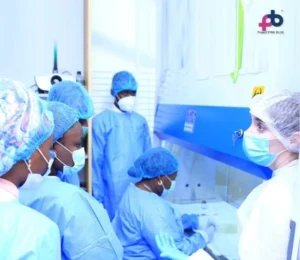
The Nigerian healthcare landscape stands at a critical crossroads where the traditional reliance on public funding and the perception of healthcare as a purely social service are no longer sufficient to meet the growing demands of a burgeoning population. Mazi Sam Ohuabunwa, the former President of the Pharmaceutical Society of Nigeria (PSN) and a distinguished fellow of the West African Post-graduate College of Pharmacists, recently issued a clarion call for a fundamental paradigm shift within the industry. Speaking at the 2026 AfriHealth Expo held in Lagos, Ohuabunwa asserted that long-term sustainability and improved service delivery in the health sector can only be achieved if practitioners embrace value creation and a robust entrepreneurial mindset. The expo, themed "Healthcare Entrepreneur and Mentorship: Guiding the Next Generation of Health Innovators," served as a platform for veteran practitioners and young innovators to converge and discuss the future of medical and pharmaceutical enterprises in West Africa.
Ohuabunwa’s thesis centers on the idea that the historical "social service" model of healthcare, while noble in intent, often lacks the structural resilience required to survive economic volatility. He argued that for healthcare enterprises to become profitable and sustainable, they must be managed with the same strategic rigor as any other commercial venture. This does not imply a disregard for patient care or ethics; rather, it suggests that professional excellence must be paired with business acumen to ensure that health facilities and pharmaceutical companies can reinvest in technology, retain talent, and expand their reach. By moving beyond traditional perceptions, healthcare professionals can transform their practices into "professional entrepreneurships" that solve societal problems while remaining financially viable.
The Shift from Social Service to Professional Entrepreneurship
For decades, the Nigerian healthcare system has been characterized by a heavy dependence on unpredictable public funding and international donor support. According to data from the World Bank, Nigeria’s public health expenditure has historically hovered around 3% to 5% of its Gross Domestic Product (GDP), significantly lower than the 15% target set by the 2001 Abuja Declaration. This funding gap has led to dilapidated infrastructure, a chronic shortage of essential medicines, and a continuous "brain drain" of skilled medical professionals to Europe and North America. Ohuabunwa pointed out that this dependence on public coffers weakens service delivery because government income is often tied to volatile oil revenues and shifting political priorities.
In contrast, a business-oriented approach offers predictability and growth. Ohuabunwa noted that healthcare and education, once viewed strictly as government responsibilities, have globally transitioned into thriving sectors of the economy. He argued that every profession today has a business component because sustainability is the byproduct of economic value. By viewing healthcare through an entrepreneurial lens, practitioners can identify inefficiencies and create market-based solutions that do not rely solely on the state. This "professional entrepreneurship" involves applying clinical expertise to business strategies, ensuring that the delivery of care is both high-quality and cost-effective.
The AfriHealth Expo 2026: Context and Objectives
The 2026 AfriHealth Expo in Lagos provided a timely backdrop for these discussions. As one of the premier healthcare gatherings in the region, the expo aims to showcase innovations in medical technology, pharmaceuticals, and healthcare delivery systems. The 2026 edition specifically focused on mentorship, recognizing that the next generation of health innovators requires more than just technical training; they need guidance on how to navigate the complex regulatory and economic environment of the Nigerian market.
Ohuabunwa emphasized that the primary purpose of such exhibitions is twofold: to create awareness of local products and services and to secure "buy-in" from stakeholders and consumers. In a market often dominated by imported pharmaceuticals and medical equipment, creating a strong local brand is essential. He encouraged participants to use the expo as a launching pad for products that solve local problems, noting that the ultimate goal is to see healthcare enterprises become profitable entities that contribute to the national GDP.
Defining Value Creation through Problem Solving
At the heart of Ohuabunwa’s message was the concept of value creation. He simplified entrepreneurship into a mindset that constantly asks three pivotal questions: Is there a problem to be solved? Is there a need to be met? Is there value to be created? According to him, if a practitioner can answer these questions effectively, an exchange of value—and subsequently, an economic return—is inevitable.
To illustrate this, Ohuabunwa used a practical analogy involving raw materials. He explained that a tree standing in a forest has minimal market value. However, once that tree is cut, processed, and crafted into furniture, its value increases exponentially. This process of transformation is the essence of entrepreneurship. In the healthcare context, this could mean transforming raw chemical components into life-saving medications, or taking fragmented patient data and turning it into a streamlined diagnostic service. Value creation in healthcare is about taking "raw" medical knowledge and packaging it in a way that is accessible, effective, and superior to existing alternatives.

The Strategic Framework: The Five Ps of Business Success
To provide a roadmap for aspiring healthcare entrepreneurs, Ohuabunwa outlined what he calls the "Five Ps of Business Success." This framework is designed to guide a venture from its initial conception to long-term sustainability:
- Purpose: This defines the "why" of the business. A healthcare venture must have a clear mission that goes beyond just making money. Whether it is reducing maternal mortality or improving access to affordable insulin, a strong purpose drives the passion and resilience of the entrepreneur.
- Planning: Sustainability requires deliberate strategy. Ohuabunwa stressed the necessity of a formal business plan, including cash flow projections and profit-and-loss statements. He noted that such documentation is vital for attracting investors or securing bank loans. Without a plan, a healthcare provider is merely reacting to crises rather than building a legacy.
- Perspiration: This represents the combination of hard work and smart work. The healthcare sector is demanding, and building a business from scratch requires immense dedication. Ohuabunwa reminded young innovators that there are no shortcuts to excellence.
- Principle: Ethics and values are the bedrock of healthcare. Ohuabunwa warned that any business—especially one dealing with human lives—that lacks ethics is destined to fail. Integrity in clinical trials, transparency in pricing, and honesty in patient interactions are non-negotiable.
- Profit: Finally, for a business to be sustainable, it must generate returns. Profit is not a "dirty word" in healthcare; it is the fuel that allows a clinic to buy better equipment, a lab to conduct more research, and a pharmacy to stock a wider range of medications.
Branding, Competitiveness, and Strategic Partnerships
A significant portion of Ohuabunwa’s address focused on the concept of branding. He argued that branding does not begin with a logo or fancy packaging; it begins with the core value a product brings to the table. In a competitive market, a brand is defined by its ability to solve a problem differently or better than the competition. For Nigerian healthcare innovators, this means focusing on local challenges that international corporations might overlook.
Furthermore, he underscored the importance of collaboration. The Nigerian business environment can be harsh, with high interest rates and infrastructure deficits. Ohuabunwa suggested that partnerships can mitigate these risks. Collaborative ventures build trust and credibility, making it easier to access funding. "If I come alone to ask for investment, it is different from coming with partners," he remarked, noting that institutional investors are more likely to fund a diverse team with a track record of cooperation than a solo practitioner.
Broader Implications for the Nigerian Healthcare Economy
The adoption of an entrepreneurial mindset in healthcare has far-reaching implications for Nigeria’s socio-economic development. By fostering a culture of "professional entrepreneurship," the country can begin to address the systemic issues that have plagued the sector for decades.
Firstly, a profitable healthcare sector can help reverse the "brain drain." If medical professionals can find financial fulfillment and professional growth within Nigeria, the incentive to emigrate diminishes. Secondly, increased entrepreneurship in the pharmaceutical sector can reduce Nigeria’s over-reliance on imported drugs, which currently account for approximately 70% of the market. This would not only improve national health security but also stabilize the naira by reducing the demand for foreign exchange.
Moreover, the emphasis on mentorship at the AfriHealth Expo suggests a long-term vision for the industry. By pairing experienced veterans like Ohuabunwa with young health-tech innovators, the industry can ensure that the mistakes of the past are not repeated and that new ventures are built on a foundation of both innovation and institutional wisdom.
Conclusion: A Vision for a Resilient Future
Mazi Sam Ohuabunwa’s insights at the 2026 AfriHealth Expo serve as a vital reminder that the health of a nation is intrinsically linked to the health of its economy. By urging healthcare practitioners to think like entrepreneurs, he is not calling for the commercialization of suffering, but for the professionalization of sustainability. The "Five Ps" framework provides a clear path for practitioners to transition from being mere service providers to becoming value creators who can drive the sector forward.
As Nigeria continues to navigate economic challenges, the healthcare sector must evolve. The transition from a social service mindset to a business-driven approach is not just an option; it is a necessity for survival. Through planning, ethics, and a relentless focus on solving problems, the next generation of Nigerian healthcare innovators has the potential to build a resilient system that provides world-class care while contributing significantly to the nation’s economic prosperity. The message from the 2026 AfriHealth Expo is clear: when healthcare is treated with the strategic importance of a business, everyone—practitioners, patients, and the nation—stands to gain.