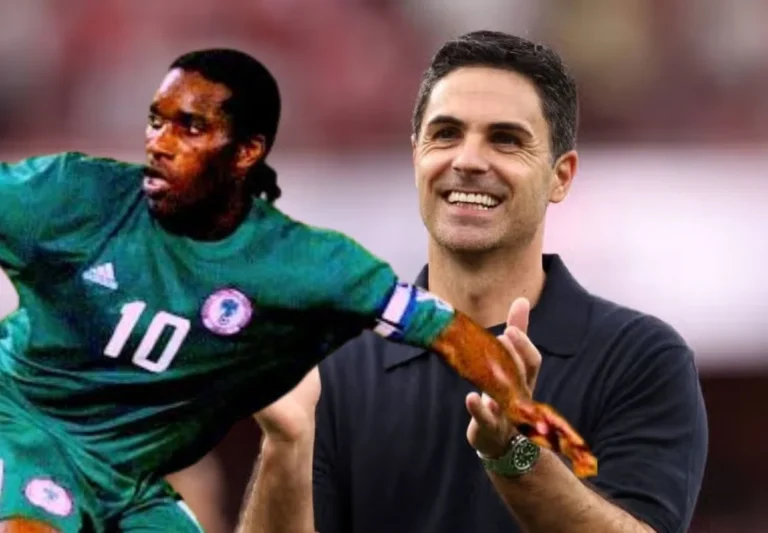
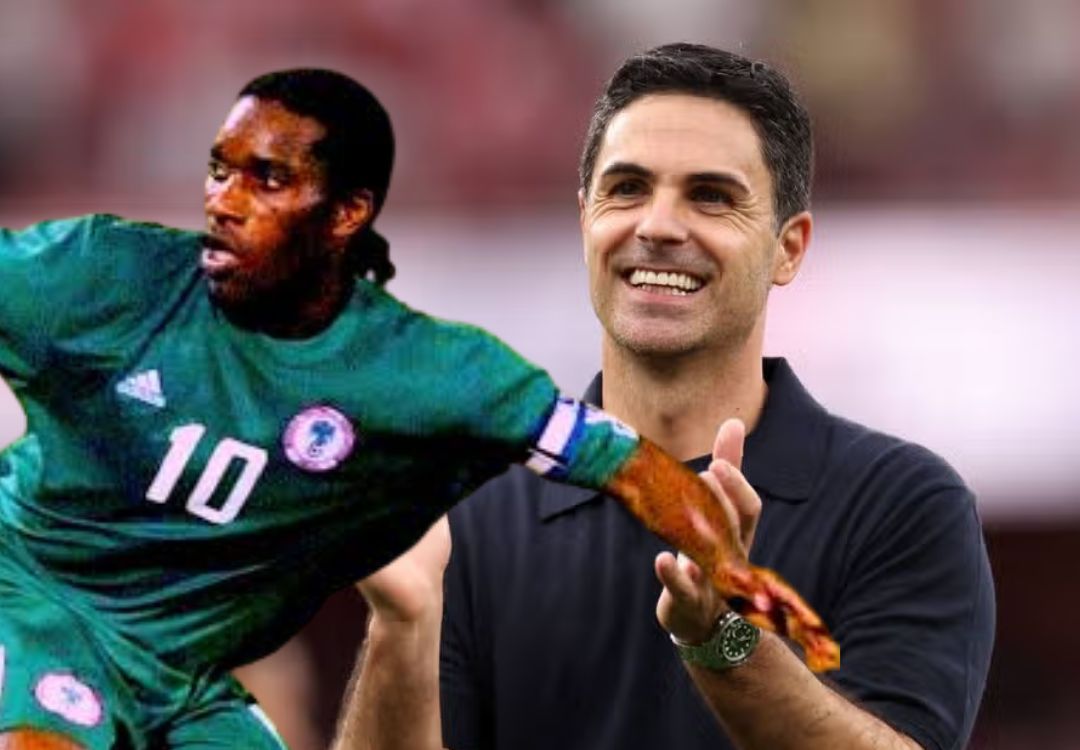
The world of professional football is often defined by the tactical discipline and strategic frameworks imposed by managers, yet even the most meticulous coaches like Arsenal’s Mikel Arteta occasionally look back with awe at the raw, unbridled talent they encountered during their formative years. In a recent, candid interview with SportBible, the Spaniard reflected on his journey from the youth ranks of FC Barcelona to the global stage, identifying Nigerian icon Jay-Jay Okocha and Brazilian maestro Ronaldinho as the most technically gifted individuals he ever shared a dressing room with.
For football enthusiasts and historians of the game, this admission offers a rare glimpse into the early 2000s era of Paris Saint-Germain (PSG), a period when the Parc des Princes served as a laboratory for some of the most inventive and electrifying talent in European football. Arteta, who arrived at PSG on loan from Barcelona during the 2001/02 season, found himself in a unique position: a young, disciplined midfielder tasked with anchoring a team that featured two of the most flamboyant attackers to ever grace the pitch.
The PSG Connection: A Formative Crucible
The 2001/02 campaign was a pivotal moment in the history of Paris Saint-Germain and a defining chapter for a teenage Mikel Arteta. The club had secured the services of the Nigerian playmaker Jay-Jay Okocha in 1998, following his impressive performances at the FIFA World Cup in France. By the time Arteta arrived, Okocha was already an established star, revered for his step-overs, audacious long-range goals, and an uncanny ability to turn defenders inside out.
Simultaneously, the club brought in a young Ronaldinho Gaúcho from Grêmio. The combination of Okocha’s flair and Ronaldinho’s improvisational genius created a spectacle that often defied traditional tactical logic. For Arteta, who was then developing his own understanding of the game’s rhythm and structure, playing alongside these two legends was a challenging, if occasionally exhausting, experience.
"The most skilful? Ronaldinho or JJ Okocha, both of them. Very difficult to pick one of those two," Arteta admitted during the interview. His recollection of the era highlights the sheer burden of playing in midfield behind such creative geniuses. Arteta has frequently joked in past interviews about the physical toll of covering the defensive gaps left by these two maestros, who were far more focused on the creative phase of play than defensive transitions.
Chronology of a Rising Manager
To understand the significance of Arteta’s assessment, one must examine the timeline of his professional trajectory. Born in San Sebastián, Spain, in 1982, Arteta’s career began in the esteemed La Masia academy of FC Barcelona. His progression was marked by the following key milestones:
- 2001–2002: The loan spell at PSG. This period provided him with 53 appearances and served as his first taste of senior professional football in a major European league.
- 2002–2004: A move to Rangers FC in Scotland, where he won the Scottish Premier League and the Scottish League Cup.
- 2004–2005: A brief return to his home country with Real Sociedad.
- 2005–2011: A successful tenure at Everton, where he became a Premier League standout under David Moyes.
- 2011–2016: A high-profile move to Arsenal, where he captained the side and secured two FA Cups.
- 2016–2019: Transitioning to coaching as an assistant under Pep Guardiola at Manchester City.
- 2019–Present: Appointed as the manager of Arsenal, culminating in the historic 2025/26 Premier League title victory.
Personality and Locker Room Dynamics
Arteta’s reflections extended beyond mere technical ability. He provided a fascinating breakdown of the personalities that populated the dressing rooms of his career, offering a human perspective on the legends he played alongside.
When asked about the "funniest" character he encountered, Arteta did not hesitate to name Ronaldinho. He described the Brazilian as a constant source of amusement, noting his penchant for intricate pranks that included hiding teammates’ belongings and even attempting to pull jokes on the managerial staff. This sense of playfulness, Arteta suggested, was an extension of how Ronaldinho approached the game itself—with joy and a lack of fear.
The manager also shed light on other colleagues:
- The Smartest: Thomas Rosický, whom Arteta played with at Arsenal, was cited as the most intelligent reader of the game.
- The Most Superstitious: Gabriel Heinze, who later joined Arteta’s coaching staff at Arsenal, was described as having the most elaborate and non-negotiable pre-match rituals.
- The Biggest Spender: Nicolas Anelka was identified as the teammate most likely to be found indulging in luxury, standing out as the biggest spender in the dressing room.
- The Most Diligent: Mauricio Pochettino, a veteran leader during his playing days, was noted as the last to leave the training ground, foreshadowing his own transition into a highly respected manager.
Tactical Implications and Coaching Philosophy
The contrast between the players Arteta admired for their individual brilliance and the team he has built at Arsenal is significant. As a manager, Arteta is known for his emphasis on tactical rigidity, positional play, and high-intensity pressing. His appreciation for Okocha and Ronaldinho underscores a deep respect for the "X-factor" in football—the ability of an individual to break a defensive line through pure technical superiority.
However, his experience at PSG likely informed his own coaching philosophy. Witnessing the defensive instability caused by having two "free-roaming" creators on the pitch may have influenced his preference for a more disciplined, collective approach. His success in winning the 2025/26 Premier League title—a feat that ended a 22-year drought for the Gunners—demonstrates a fusion of the creative freedom he witnessed in his youth and the tactical structure he refined under Pep Guardiola.

Broader Impact: The Legacy of Okocha and Ronaldinho
The mention of Jay-Jay Okocha in such high esteem by a Premier League-winning manager serves to validate the Nigerian’s lasting impact on European football. Despite his often-understated trophy cabinet compared to some of his contemporaries, Okocha’s influence on the culture of the game remains profound. He is widely considered one of the greatest African players of all time, and his ability to combine entertainment with efficacy remains a benchmark for attacking midfielders.
Ronaldinho’s legacy, of course, is globally cemented with a Ballon d’Or and a FIFA World Cup title. Yet, Arteta’s inclusion of both players in the same category of "most skilful" places them on an equal pedestal, acknowledging that while their paths diverged, their technical ceiling was similarly extraordinary.
Conclusion: A Legacy of Excellence
Mikel Arteta’s reflections serve as a bridge between the flamboyant football of the early 2000s and the modern, data-driven game. By highlighting the qualities of players like Okocha and Ronaldinho, he reminds the footballing public that behind the complex tactical diagrams and advanced analytics that define his current role, the heart of the game remains the individual talent capable of producing a moment of magic.
As Arteta continues to lead Arsenal at the highest level, his ability to draw from his diverse experiences—ranging from the pragmatic lessons of the Scottish league to the creative chaos of the French capital—remains one of his greatest assets as a manager. Whether discussing the tactical brilliance of Rosický or the light-hearted pranks of Ronaldinho, Arteta provides a humanizing look at the icons who helped shape his understanding of what it takes to succeed at the very top of the professional game.