The Circumstances of the Arrest
The operation took place in the early hours of November 3, 2026, around 2:00 am. SWAT operatives descended upon a residence in the Kajola area of Elega, Abeokuta, acting on what authorities described as actionable, credible intelligence provided by a local community leader. The clandestine nature of the arrest highlights the police force’s increasing reliance on community-based policing and surveillance to identify and neutralize threats before they escalate into more violent criminal enterprises.
According to the official statement released by the Ogun State Police Command spokesperson, DSP Oluseyi Babaseyi, the suspect had been under discreet surveillance for a significant period. This period of observation allowed investigators to map out the suspect’s movements and verify the intelligence reports suggesting that Damilare was regularly masquerading as a military official to intimidate, harass, or potentially deceive the public.
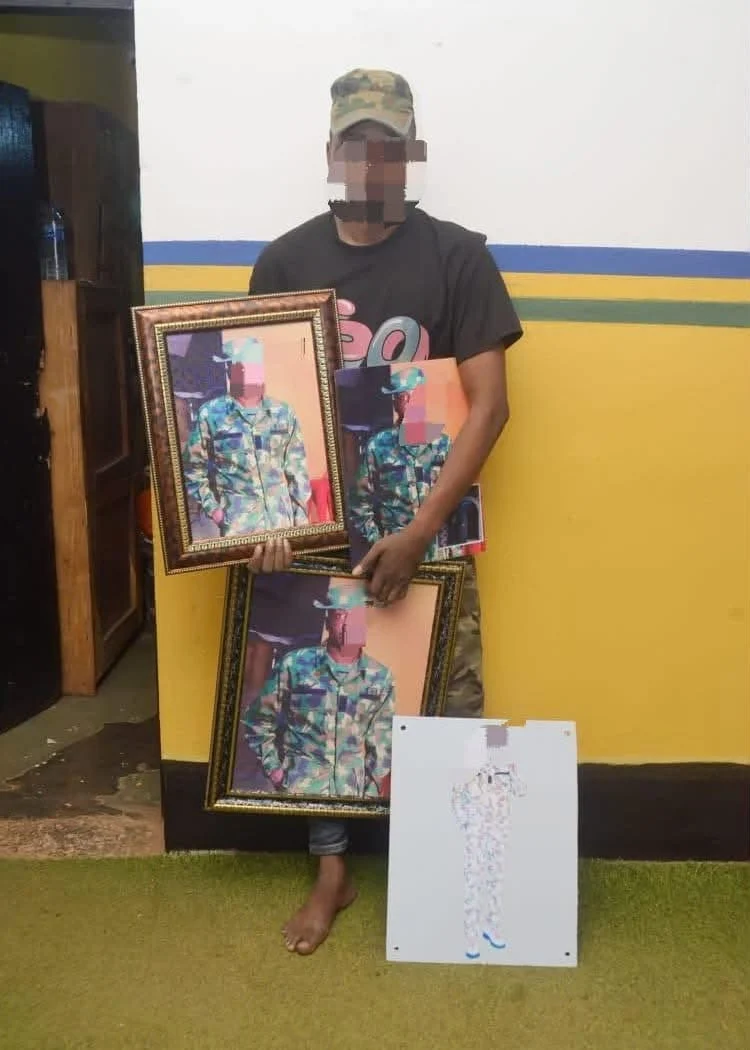
Upon executing the search warrant at the premises, officers recovered a cache of items used to sustain the suspect’s facade. These included a military-grade face cap, three-quarter military-pattern trousers, and a collection of four high-resolution photographs that depicted Damilare dressed in full military camouflage. These artifacts are now being processed as key evidence to establish the duration and scope of his impersonation activities.
A Growing Trend of Impersonation
The arrest of "General Don" is not an isolated incident but rather a symptom of a broader, persistent security challenge facing Nigeria. Impersonation of security personnel—specifically members of the Nigerian Army, Navy, or Air Force—has become a preferred tactic for criminals aiming to evade security checkpoints, intimidate civilian populations, or gain illicit access to restricted areas.
Across the federation, police reports frequently feature arrests of individuals found wearing camouflage or carrying fake identification cards. In many instances, these imposters utilize their fake status to perform illegal "stop-and-search" operations, extorting money from motorists and commuters who fear the repercussions of defying a person in uniform. The psychological weight of the military uniform in the Nigerian context grants an immediate, albeit false, air of authority that criminals exploit to bypass the rule of law.
The Legal and Ethical Implications
The legal ramifications for impersonating a member of the Armed Forces are severe under Nigerian law. Section 109 of the Criminal Code Act explicitly prohibits the unauthorized wearing of military uniforms or the use of badges and decorations that are intended to deceive members of the public. Conviction for such offenses can lead to significant terms of imprisonment, depending on whether the impersonation was used to commit a felony.
Beyond the immediate legal consequences, the act of impersonation deeply erodes the relationship between the citizenry and the military. When civilians encounter imposters who abuse their power, the trust placed in the genuine armed forces is diminished. This "stolen valor" phenomenon complicates the work of legitimate military personnel who are tasked with maintaining national security. When members of the public are unable to distinguish between a genuine officer and a criminal, they may become hesitant to cooperate with legitimate security efforts, thereby compromising the overall safety of the community.
Chronology of the Operation
The timeline of the operation reveals a calculated approach by the Ogun State Police Command:
- Pre-October 2026: Intelligence gathering begins following complaints from residents in the Elega and Kajola districts regarding an individual who claimed to be a military general and displayed erratic, authoritative behavior.
- Late October 2026: SWAT operatives initiate formal, discreet surveillance of Akinola Damilare to confirm the veracity of the reports.
- November 3, 2026, 02:00 am: The SWAT team executes a tactical raid on the suspect’s residence in Kajola. The suspect is taken into custody without incident.
- November 3, 2026, Daytime: Evidence, including military-style clothing and photographs, is cataloged and secured for the upcoming legal proceedings.
- November 5, 2026: The Ogun State Police Command formally announces the arrest to the public, signaling a firm stance against such criminal activities.
Official Response and Future Investigations
The Commissioner of Police for Ogun State, Bode Ojajuni, has taken a firm stance on the matter. Following the arrest, Commissioner Ojajuni reiterated the command’s absolute commitment to eradicating the menace of impersonation within the state. He emphasized that the police would not tolerate any individual or group attempting to compromise the integrity of the Nigerian security architecture.
"Our commitment to tackling impersonation is absolute," Commissioner Ojajuni stated in the official press release. "We urge the residents of Ogun State to remain vigilant and to report any suspicious conduct involving individuals posing as security personnel immediately. The public is our most valuable partner in this effort."
As of the latest reports, the case remains under active investigation. The police are currently working to determine the extent of Damilare’s activities. Crucially, investigators are looking into whether "General Don" acted as a lone wolf or if he was part of a larger syndicate that specializes in the production of fake military paraphernalia or the coordination of organized crime under the guise of military authority. If accomplices are identified, the police have indicated that they will be prosecuted with the full weight of the law.
Broader Socio-Economic Impact
The prevalence of such criminal activities has an underlying socio-economic impact on the state. Small business owners, transporters, and market participants often fall victim to these imposters, who demand "levies" or "protection fees" under the threat of military discipline. By removing figures like "General Don" from the streets, the police are essentially clearing the path for legitimate economic activity to flourish without the burden of extortion.
Furthermore, the intelligence-led approach demonstrated by the Ogun State SWAT team suggests a shift in policing strategy. By moving away from reactive measures and toward a model that prioritizes intelligence and community partnership, the police are better equipped to dismantle criminal networks before they reach a critical mass.
Conclusion and Next Steps
The arrest of Akinola Damilare serves as a stern warning to other individuals who may be contemplating the misuse of military regalia for criminal purposes. The state’s ability to track, monitor, and ultimately capture individuals who hide behind false identities is improving, thanks to better inter-agency cooperation and increased public engagement.
As the legal proceedings against the suspect move forward, the Ogun State Police Command expects that the trial will serve as a deterrent to others. For now, the residents of Kajola and the wider Abeokuta area can find a measure of relief knowing that the individual who masqueraded as "General Don" is no longer operating in their community. The command continues to encourage citizens to verify the identity of any person claiming to represent state security agencies, reminding the public that genuine personnel are required to carry official identification and are subject to strict professional protocols.
The case of "General Don" is a reminder that while the shadow of criminal impersonation remains a persistent threat, the vigilance of the community, coupled with the rapid response of specialized police units, remains the most effective tool for ensuring public safety and maintaining the rule of law. The investigation continues, and further updates are expected as the police piece together the full history of the suspect’s activities.