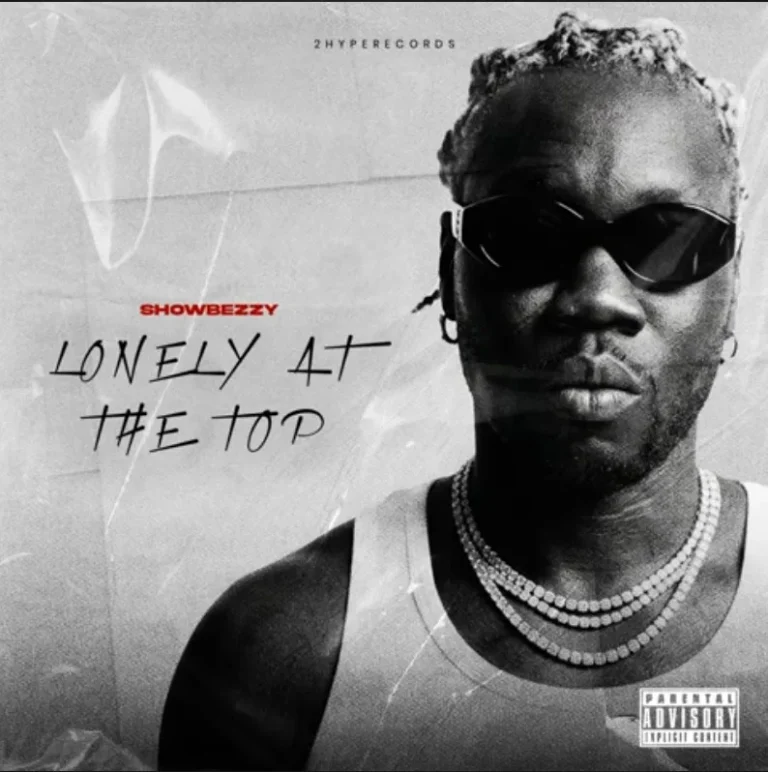
The contemporary Ghanaian music landscape has officially welcomed a formidable new voice with the arrival of Showbezzy, a dedicated recording artist and prominent member of the 2Hype Gang collective. Demonstrating both artistic maturity and lyrical depth, Showbezzy—also widely known as Showboy—has formally stepped into the spotlight with his ambitious debut studio album, Lonely at the Top. Spanning fourteen meticulously crafted tracks, the long-form project serves as an uncompromising, unfiltered auditory chronicle designed for West African street-hop aficionados and hip-hop purists alike. Rather than chasing fleeting commercial trends, the artist has chosen to anchor his debut in themes of relentless tenacity, survival codes, and the psychological toll of navigating solitude while on the relentless climb toward success.
The release of Lonely at the Top comes at a pivotal moment for the Ghanaian music industry, where listeners increasingly demand cohesive, thematic bodies of work rather than isolated singles. Showbezzy successfully bridges the gap between harsh street realities and triumphant claims of supremacy, delivering an authentic soundtrack for dreamers, hustlers, and underdogs. Through fourteen explosive compositions, the album offers a rare glimpse into the psyche of an artist who has weathered the storms of the underground circuit to claim his rightful place on a larger stage.
Sonic Architecture and Production Quality
From a technical standpoint, Lonely at the Top is defined by a vibrant and immersive mid-tempo sonic architecture. The production team behind the album has meticulously engineered an atmosphere that is both gritty and polished, relying on hammering kick drums, snappy hi-hats, and rolling 808 sub-bass lines that anchor the rhythm section. Producers across the project have demonstrated exceptional restraint and spatial awareness, deliberately leaving ample headroom in their final mixes. This engineering choice ensures that every punchline, rhythmic cadence, and textured vocal delivery cuts through the instrumentation with absolute clarity.
The sonic landscape moves effortlessly between traditional West African street-hop sensibilities and modern hip-hop production standards. Melodic synthesizer hooks intertwine with atmospheric vocal chops, creating a moody, introspective backdrop that matches the album’s thematic explorations of isolation and ambition. Rather than overwhelming the listener with excessive noise, the minimalist yet heavy-hitting beats provide the ideal canvas for Showbezzy’s distinct vocal delivery.
Lyrical Content and High-Profile Collaborations
At the core of the album’s success is Showbezzy’s signature textured rasp, a vocal asset that immediately commands attention and lends profound authenticity to his storytelling. His delivery throughout the fourteen tracks is characterized by a raw urgency, reflecting the genuine struggles and triumphs of his journey. However, the artist does not shoulder the weight of the project entirely alone. Lonely at the Top is significantly elevated by a carefully curated roster of guest features, bringing together some of the most respected and formidable lyricists and vocalists in the Ghanaian music ecosystem.
The album features powerhouse performances from Eno Barony, Strongman, Larruso, Ypee, and Lyrical Joe. Each collaborator brings a distinct flavor to the project, seamlessly blending with Showbezzy’s artistic vision. Eno Barony injects her trademark lyrical dexterity and fierce confidence into her designated tracks, while Strongman reinforces the hip-hop credibility of the project with his intricate rhyme schemes and razor-sharp wordplay. Dancehall and reggae dynamism are injected by Larruso, adding a vibrant rhythmic shift to the tracklist. Meanwhile, Ypee and Lyrical Joe contribute their respective prowess in storytelling and metaphorical mastery, ensuring that the album remains diverse, engaging, and devoid of sonic monotony from start to finish.
Background Context and Chronology of the 2Hype Gang Movement
To fully understand the significance of Lonely at the Top, one must examine the broader historical and cultural context of Showbezzy’s rise within the Ghanaian underground and mainstream music circuits. As a core member of the 2Hype Gang, Showbezzy has spent years operating within a tight-knit collective known for fostering resilience, brotherhood, and a distinct street aesthetic. The 2Hype movement has historically served as a launching pad and incubator for diverse creative talents in Ghana, emphasizing authenticity, loyalty, and relentless hard work in the face of systemic industry challenges.
The journey leading up to this debut album spans several years of behind-the-scenes recording, collaborative networking, and strategic single releases designed to build a dedicated grassroots following. While many contemporary artists opt for rapid-fire EP releases to capitalize on short-term streaming trends, Showbezzy and his management team deliberately took a methodical approach. The planning, recording, and mastering phases of Lonely at the Top took months of intense studio sessions, with the artist refining his pen game and experimenting with vocal textures to ensure that his official introduction to the market would be nothing short of definitive.
The official rollout campaign began gathering significant momentum in the weeks preceding the release, marked by strategic social media teasers, behind-the-scenes studio footage, and promotional artwork that highlighted the album’s central theme of isolation at the summit of success. By engaging directly with street-hop communities and hip-hop enthusiasts across digital platforms, Showbezzy successfully cultivated high levels of anticipation, culminating in the widespread availability of the album across all major digital music stores and streaming platforms.
Industry Implications and Cultural Impact
The release of Lonely at the Top carries notable implications for the current state of Ghanaian hip-hop and street-hop music. In recent years, debates surrounding the commercial viability and structural support of authentic hip-hop in West Africa have frequently surfaced among industry stakeholders, critics, and artists. Commercial pressures often push creators toward softer, globally digestible afrobeats formulas. By doubling down on gritty lyricism, heavy 808s, and uncompromising storytelling, Showbezzy’s debut acts as a bold reaffirmation of the enduring power and relevance of street-hop and rap culture in Ghana.
Furthermore, the collaborative spirit demonstrated on the project underscores the importance of synergy within the local music industry. By bridging regional and stylistic divides—bringing together hardcore rap stalwarts like Strongman and Lyrical Joe with dynamic contemporary acts—Showbezzy has positioned Lonely at the Top not merely as a solo introduction, but as a collaborative milestone for the broader Ghanaian hip-hop community. Industry analysts note that projects of this nature are vital for stimulating healthy competition, encouraging lyrical excellence, and expanding the domestic market share for rap music.
As listeners and critics continue to dissect the fourteen-track journey, initial feedback from digital streaming audiences and underground tastemakers has been overwhelmingly positive. The album’s ability to balance introspective vulnerability with aggressive street anthems has struck a chord with fans who value substance alongside replay value.
With Lonely at the Top now streaming globally across all digital music platforms, Showbezzy has firmly established his credentials as an artist of substance and vision. As he transitions from a promising underground affiliate to a recognized album-holding recording artist, the broader music community will undoubtedly be watching closely to see how his unique brand of street-hop continues to shape the evolving contours of the West African soundscape.