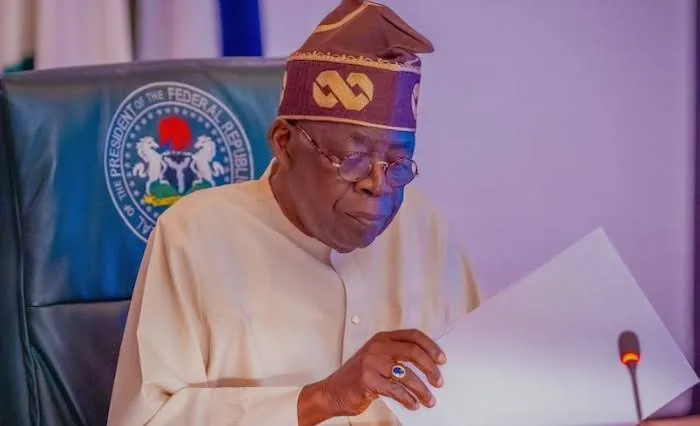
The debate surrounding the educational background of Nigerian leadership has taken a fresh turn following definitive statements from the federal cabinet. The Minister of Education, Tunji Alausa, has strongly defended President Bola Tinubu’s academic records from Chicago State University (CSU), asserting that the Nigerian leader graduated with a prestigious first-class degree in accounting. Speaking during a television interview on Tuesday, the minister maintained that he possesses firsthand knowledge of the American institution, having resided in Chicago for nearly three decades.
Mr. Alausa’s declaration adds a notable voice to the long-standing public conversation regarding the President’s academic history. During the media engagement, the education minister dismissed lingering public skepticism, emphasizing his personal familiarity with the university environment and noting that he had met several individuals who shared classrooms with President Tinubu during his undergraduate years.
While the minister’s remarks offer an unequivocal endorsement of the President’s academic achievements, they also intersect with a broader historical and legal narrative that has followed Mr. Tinubu throughout his political career. The renewed public interest comes in the wake of updated electoral filings submitted to the Independent National Electoral Commission (INEC) ahead of the 2027 general elections, bringing once again into focus the intersection of political leadership, credential verification, and transparency in Nigerian public life.
Minister Alausa’s Personal Testimony and Defense
Elaborating on his assertions during the television broadcast, Minister Alausa expressed absolute confidence in the authenticity of President Tinubu’s qualifications. Drawing from his long-term residency in the United States, the minister stated that his proximity to Chicago State University allowed him to verify the factual basis of the President’s education.
"I’m telling you hardcore facts. I lived in Chicago for almost 30 years. I’ve been to that university so many times," Mr. Alausa stated. When pressed by the interviewer on whether he had interacted with individuals who actually studied alongside Mr. Tinubu, the minister replied affirmatively, noting that he had met numerous classmates in person.
Addressing the specific class of degree obtained, the minister stated that the President completed his studies with top honours in accounting. Furthermore, Mr. Alausa described the President’s intellectual capacity in glowing terms, characterizing him as a genius and pointing to his administration’s economic policies as proof of exceptional problem-solving abilities. He credited the President with reversing a struggling macroeconomic environment over the past three years.
However, the minister’s claims regarding academic classification contrast with previously published institutional records from Chicago State University. While official documents released during past legal challenges confirm Mr. Tinubu’s attendance and graduation with a major in accounting, they do not explicitly denote a first-class degree classification, making the minister’s statement a notable point of discussion among political analysts and education commentators.
Electoral Submissions and the 2027 Political Horizon
The ongoing discourse regarding the President’s academic background gained renewed momentum in August 2026, when the Independent National Electoral Commission commenced the public display of personal particulars and academic credentials submitted by aspirants for the upcoming 2027 general elections.
According to Form EC9 sighted by media correspondents, President Tinubu submitted documentation indicating the completion of a Bachelor of Science degree in Business Administration from Chicago State University, awarded on June 22, 1979. The form also detailed his mandatory National Youth Service Corps (NYSC) discharge records, which show that he completed his service year in Oyo State between December 1982 and November 1983.
Nevertheless, the publication of these forms triggered renewed public scrutiny because the specific fields allocated for primary and secondary school educational history were filled with zeros ("0000"), leaving only the tertiary qualification visibly documented in the electoral commission’s public release. This anomaly immediately sparked widespread debates across traditional media platforms and digital spaces, with opposition figures and political analysts questioning the omission of foundational educational levels, while administration supporters maintained that the higher degree supersedes preliminary educational documentation under existing legal frameworks.
Chronology of the Chicago State University Controversy
The scrutiny surrounding President Tinubu’s academic records is not a recent phenomenon but rather a protracted saga with deep roots in Nigeria’s electoral jurisprudence. A comprehensive timeline highlights the major milestones of this educational verification process:
- June 1979: Bola Ahmed Tinubu officially graduates from Chicago State University, earning a degree with a primary focus on accounting and business administration.
- December 1982 – November 1983: Mr. Tinubu undertakes and completes the mandatory National Youth Service Corps programme in Oyo State, Nigeria.
- 2022 – 2023: As the campaigns for the 2023 general elections gather momentum, political opponents raise questions regarding various credentials submitted by candidates to the electoral commission, setting the stage for subsequent legal battles.
- September 2023: Following intense legal applications brought forward by political opposition figures—most notably former Vice-President Atiku Abubakar—Chicago State University releases official academic transcripts and documents pursuant to a United States federal court order. Caleb Westberg, the university registrar, testifies under oath, confirming that Mr. Tinubu indeed attended the institution and graduated in 1979.
- October 2023: Independent journalistic organizations, including the BBC, conduct thorough fact-checking investigations into the released academic diplomas and conclude that there is no factual evidence supporting claims that the certificates submitted to INEC were forged.
- August 2026: INEC publishes Form EC9 credentials for the upcoming 2027 general elections, prompting renewed public discourse due to the "0000" entries recorded for primary and secondary schooling.
- October 2026: Minister of Education Tunji Alausa publicly defends the President’s academic record during a media appearance, asserting that Mr. Tinubu graduated with first-class honors in accounting and describing him as a intellectual genius.
Institutional Verification and Legal Precedents
The historical verification of President Tinubu’s credentials involved unprecedented legal maneuvers during the aftermath of the 2023 presidential election. Legal teams representing former Vice-President Atiku Abubakar petitioned a United States District Court in Illinois to subpoena Chicago State University records to uncover discrepancies between documents submitted across different election cycles.
The deposition of university registrar Caleb Westberg provided definitive institutional clarity. Mr. Westberg confirmed that the university holds records showing that a student named Bola Ahmed Tinubu was admitted, attended, and successfully graduated in 1979. The documents provided during the U.S. deposition corroborated the dates of attendance, the awarding of the bachelor’s degree, and the field of study.
Despite this official closure by the institution itself, public debates have frequently pivoted on minor discrepancies in administrative paperwork, reissue procedures by foreign universities, and the specific grading terminologies utilized by American institutions during the late 1970s. While university records have consistently authenticated the core fact of graduation, the recent assertion by Minister Alausa regarding a first-class distinction introduces a new dimension that goes beyond the previously unsealed transcript details.
Broader Implications for Governance and Public Trust
The persistent focus on the academic records of Nigerian political leaders underscores a deeper societal demand for transparency, accountability, and institutional integrity. In emerging democracies like Nigeria, the educational credentials of public officeholders often transcend administrative requirements, serving instead as symbolic benchmarks for leadership capability and moral authority.
Political analysts suggest that while legal hurdles regarding the Chicago State University certificate were largely settled following the 2023 election petitions and subsequent court rulings, the re-emergence of these debates in electoral cycles demonstrates how deeply polarized public opinion remains. For the current administration, defenders argue that relentless focus on decades-old academic paperwork serves as a political distraction from pressing national issues, including economic reform, infrastructural development, and social welfare programs.
Conversely, civil society organizations emphasize that absolute transparency in public documentation is vital for strengthening democratic institutions. They maintain that clear, unambiguous disclosures by political aspirants help mitigate public mistrust and prevent protracted legal controversies that can consume valuable legislative and judicial bandwidth.
As Nigeria looks ahead to the 2027 general elections, the discourse surrounding candidate qualifications will likely remain a prominent feature of the political landscape. Whether official clarifications from government officials like Minister Alausa will successfully quell persistent skepticism or merely fuel further political debate remains to be seen as the electoral timeline progresses.