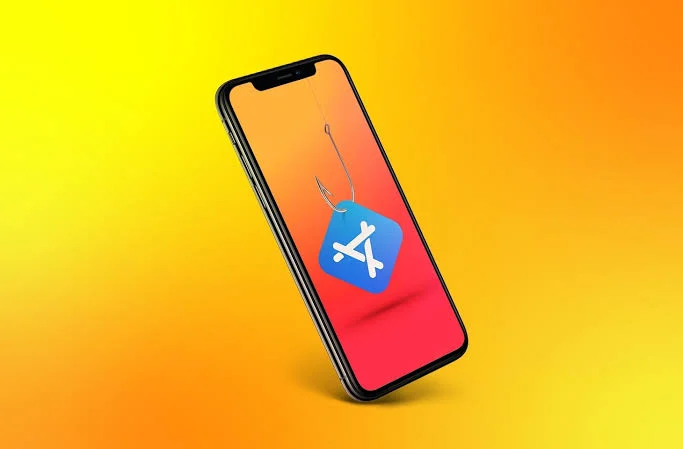
The perception that downloading an application from the official Apple App Store or Google Play Store is a guarantee of absolute safety has become one of the most significant security vulnerabilities for mobile users in 2026. While both tech giants have implemented increasingly sophisticated vetting processes, involving a combination of artificial intelligence, heuristic analysis, and manual human review, the sheer volume of submissions—numbering in the millions annually—ensures that malicious software continues to bypass these barriers. Security researchers emphasize that the threat landscape has shifted from blatant malware designed to "brick" a device to more insidious forms of deception, including data harvesting, subscription fraud, and social engineering. As the digital ecosystem grows more complex, the risk is no longer just about what an app does to your phone, but what it does with your identity, your finances, and your privacy.
The Evolution of Mobile Threats: A Contextual Overview
To understand the risks of 2026, one must look at the trajectory of mobile security over the last decade. In the early 2010s, "dangerous apps" were largely characterized by trojans that attempted to gain root access to operating systems. However, as Android and iOS hardened their kernels and improved sandboxing, cybercriminals pivoted toward the "path of least resistance": the user. By 2020, the rise of "fleeceware"—apps that provide basic functionality but charge exorbitant, hidden subscription fees—became a multi-million dollar illicit industry.
By 2026, the threat has evolved further. We are now seeing "delayed-action" malware, where an app remains dormant and benign for weeks after installation to evade initial detection, only to download malicious payloads through over-the-air updates. Furthermore, the integration of artificial intelligence has allowed scammers to create highly convincing "clone" apps that mimic legitimate banking or productivity tools with startling accuracy. This chronology of escalation demonstrates that app store "approval" is merely a snapshot in time, not a permanent certificate of safety.
Identifying the Primary Risk Categories in 2026
Security experts have identified several specific categories of applications that frequently serve as conduits for cybercrime or privacy violations. Rather than focusing on a static list of app names, which change daily as developers rebrand or re-upload their software, users are encouraged to recognize the behavioral patterns of these high-risk categories.
1. Fraudulent Financial and Investment Platforms
The most financially devastating category in 2026 involves fake cryptocurrency wallets and investment platforms. These apps often utilize "Pig Butchering" tactics—a form of long-term social engineering where users are encouraged to deposit small amounts, shown fake gains via a manipulated dashboard, and then prompted to invest life savings before the app and the developers vanish. These apps often bypass store filters by masquerading as simple "educational" or "news" tools during the review process, only to activate their trading interfaces once a user is logged in.
2. Redundant Utility and "Zombie" Tools
Despite modern smartphones having built-in features for almost every basic utility, third-party "Flashlight," "QR Code Scanner," and "Battery Booster" apps remain prevalent. These are often categorized as "Zombie" apps because they serve no functional purpose other than to act as a vessel for aggressive adware or data trackers. A QR scanner that requests access to your contacts or microphone is a primary indicator of a "dangerous" app. In 2026, there is virtually no legitimate reason to download a standalone flashlight or QR app, as these are native to every major mobile operating system.
3. The AI "Gold Rush" and Subscription Traps
The explosion of generative AI has led to a flood of apps offering AI-enhanced photo editing, chatbots, and writing assistants. While many are legitimate, a significant portion are designed as subscription traps. These apps often offer a "free three-day trial" that requires credit card information upfront. Once the trial expires, the user is automatically enrolled in weekly or monthly plans that can cost upwards of $50 per week. These developers often make the cancellation process intentionally labyrinthine, banking on the fact that many users will not check their bank statements until several billing cycles have passed.
4. Compromised Virtual Private Networks (VPNs)
While a VPN is a tool intended to enhance privacy, "free" VPNs are frequently the most dangerous apps a user can install. In 2026, researchers have found that many free VPN services monetize their users by intercepting unencrypted traffic, injecting advertisements into web sessions, or selling user browsing logs to third-party data brokers. A compromised VPN essentially creates a "man-in-the-middle" attack where the user voluntarily hands over their data to the attacker.
Data and Statistical Insights into App Store Security
Recent industry reports from 2025 and early 2026 highlight the scale of the challenge facing Apple and Google. According to data from cybersecurity firms, approximately 15% of all apps submitted to major stores are flagged for "suspicious behavior" during their first 90 days of life. Furthermore, it is estimated that nearly $3.5 billion was lost globally to mobile-based subscription fraud and fraudulent investment apps in the previous fiscal year.
The "Time-to-Detection" (TTD) metric is also a cause for concern. On average, a malicious app remains available on an official store for 18 days before being purged. During this window, an app can be downloaded hundreds of thousands of times. This data suggests that the "walled garden" approach, while effective at stopping mass-market viruses, is less effective against targeted, high-value scams that prioritize stealth over volume.
The Mechanisms of Deception: How Apps Evade Review
The persistent presence of dangerous apps raises the question: how do they get past Apple and Google? The answer lies in technical obfuscation. Developers use "dynamic code loading," where the app’s primary functions are not contained within the initial download but are fetched from a remote server after the app is installed. Because the app store’s automated scanners only see the initial, "clean" package, the app passes inspection.
Additionally, "social engineering reviews" have become common. Developers buy thousands of fake five-star reviews from "click farms" to drown out legitimate warnings from users who have been scammed. In 2026, the presence of a 4.8-star rating is no longer a reliable indicator of safety; indeed, a high volume of generic, short reviews ("Great app!", "Very good!") is often a red flag for a fraudulent operation.
Official Responses and Regulatory Pressure
In response to these escalating threats, regulatory bodies such as the Federal Trade Commission (FTC) in the United States and the European Commission have increased pressure on platform holders. Under the Digital Services Act (DSA) in Europe, platforms are now under stricter obligations to vet sellers and remove illegal content promptly.
Apple and Google have responded by introducing "Privacy Nutrition Labels" and "App Tracking Transparency" frameworks. In 2026, Google has integrated "Live Threat Detection" into Play Protect, which uses on-device AI to monitor app behavior in real-time. Apple has similarly tightened its "Developer Program" requirements, requiring more stringent identity verification to prevent "serial scammers" from opening new accounts after being banned. However, as one cybersecurity analyst noted, "The platforms are playing a perpetual game of cat-and-mouse. As soon as a new detection method is deployed, the attackers find a way to simulate ‘normal’ behavior to bypass it."
Analysis of Implications: The Future of Mobile Trust
The implications of this ongoing battle are profound for the future of mobile computing. We are seeing a shift from a "permission-less" download culture to one of "extreme skepticism." The broader impact includes a decline in the "App Economy" for independent developers, as users become increasingly hesitant to download software from brands they do not recognize.
Furthermore, the rise of dangerous apps is driving a push toward "Progressive Web Apps" (PWAs) and browser-based services, which do not require the same level of system-deep permissions as native applications. For the consumer, the burden of security has shifted back to the individual. The "dangerous app" of 2026 is rarely a virus that destroys the phone; it is a tool that quietly drains a bank account or harvests a location history for sale on the dark web.
Proactive Defense: A Strategic Checklist for 2026
To mitigate these risks, security professionals recommend a multi-layered approach to mobile safety. First, users should adhere to the "Principle of Least Privilege," denying any app permission that is not essential to its core function. If a photo editor asks for access to your location, the request should be denied. Second, the "Developer Reputation" check is vital; users should click on the developer’s name in the store to see what other apps they have published and how long they have been active.
Third, the "Update Recency" is a key health indicator. Apps that have not been updated in over 12 months are significantly more likely to contain unpatched vulnerabilities that can be exploited by other malicious software on the device. Finally, the "Trial Trap" check is essential: before starting any free trial, users should immediately navigate to their "Subscriptions" settings in the OS to see the actual cost and ease of cancellation.
In conclusion, the search for "dangerous apps 2026" should not be a search for a list of names, but a commitment to digital literacy. As malicious actors continue to refine their methods, the only truly effective firewall is an informed and cautious user. By understanding the categories of risk and the tactics of evasion, mobile users can continue to enjoy the benefits of the app ecosystem without falling victim to its increasingly sophisticated predators.