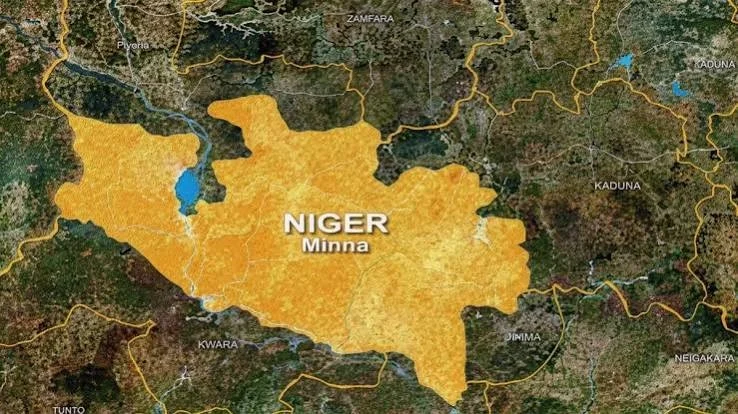
The Niger State Police Command has confirmed the arrest of a 26-year-old security guard, Godwin Dauda, following the tragic death of an 11-year-old girl in Suleja. The case, which has sent shockwaves through the Suleja community, involves allegations of sexual assault, homicide, and an attempt to conceal evidence. The suspect, who was employed at the Apostolic Church in Suleja, was apprehended after a multi-day manhunt that spanned across state lines into the Federal Capital Territory (FCT).
SP Wasiu Abiodun, the spokesperson for the Niger State Police Command, addressed the press in Minna on Friday to outline the grim details of the investigation. The case highlights significant concerns regarding the safety of minors in public spaces and the screening processes for private security personnel operating within local communities.
Chronology of the Tragedy
The events leading to the discovery of the crime began on September 19, when the victim left her family home to attend a birthday celebration for a relative within the Suleja metropolis. When the child failed to return home by nightfall, her family initiated a search, eventually filing a formal missing-person report at the Suleja Police Division on September 20.
For several days, the family and local community members canvassed the area, hoping for the girl’s safe return. The search took a devastating turn when the pastor of the Apostolic Church, Suleja, discovered a body submerged in a well located on the church premises. Upon receiving the report, police officers and officials from the Suleja Local Government Council arrived at the scene to recover the remains. The body was subsequently transported to the Suleja General Hospital, where family members identified the victim as the missing girl.
Following the discovery of the body, the primary suspect, Godwin Dauda, fled the area. Investigators immediately identified him as a person of interest due to his role as the security guard at the church. A tactical operation was launched, and after a four-day search, Dauda was arrested at approximately 8 p.m. on September 23 in the Kuje area of the Federal Capital Territory, where he had been hiding to evade law enforcement.
Confession and Preliminary Findings
During custodial interrogation, Dauda allegedly provided a chilling account of the events. According to the police report, the suspect confessed to luring the young girl into his security room within the church premises on the day she disappeared. He reportedly admitted to sexually assaulting the victim, an act that resulted in the girl’s death.
In an effort to obfuscate the evidence of his crime, Dauda allegedly moved the body from the security quarters and disposed of it in the church’s well. Forensic experts are currently processing the scene to confirm the timeline and the nature of the injuries sustained by the victim, while the suspect remains in custody.
Broader Implications and Public Safety Concerns
This incident has ignited a wider conversation in Niger State and beyond regarding the vulnerability of children in the hands of those entrusted with security. The fact that the crime occurred within a religious institution—a place often considered a sanctuary—has particularly unsettled the local population.
Sociologists and child protection advocates have pointed out that the lack of standardized vetting processes for private security guards, especially those working for non-corporate entities like churches, mosques, or private residences, creates significant safety gaps. In Nigeria, the security industry is heavily fragmented. While the Nigeria Security and Civil Defence Corps (NSCDC) is tasked with regulating private security firms, a vast number of guards are hired informally without background checks, psychological evaluations, or formal training in conflict resolution or child safety protocols.
"The tragedy in Suleja is a stark reminder of the urgent need for a more robust oversight mechanism for security personnel," said a legal analyst familiar with the investigation. "When someone is placed in a position of authority or perceived safety, such as a security guard, there is a level of trust that, if betrayed, can lead to devastating consequences."
Data and Contextual Trends in Nigeria
The prevalence of gender-based violence (GBV) and crimes against minors in Nigeria remains a critical public health and security issue. According to data from the National Bureau of Statistics (NBS) and various international humanitarian organizations, cases of defilement and domestic violence have seen a marked increase in reported figures over the last five years. However, experts suggest these numbers are likely under-reported due to social stigma, fear of retaliation, and perceived inefficiencies in the justice system.
The Niger State Police Command has reiterated its commitment to ensuring that the suspect faces the full weight of the law. SP Abiodun stated that the case file is being transferred to the State Criminal Investigation Department (SCID) in Minna. This transfer is a standard procedure for high-profile criminal cases, allowing for a more specialized team of investigators to gather evidence that will withstand the scrutiny of the judiciary.
Official Response and Legal Procedures
The police command has called for calm within the Suleja community, urging residents to remain patient as the judicial process unfolds. The transfer of the case to the SCID is expected to expedite the investigative phase, with the aim of filing formal charges of rape and murder against the suspect.
Under the Nigerian legal framework, specifically the Violence Against Persons (Prohibition) Act (VAPP), which has been domesticated in many states, the crimes alleged against Dauda carry severe penalties, including life imprisonment or, in cases involving the death of the victim, capital punishment.
The Apostolic Church, where the incident occurred, has not yet issued an official statement regarding the conduct of their employee. However, local observers note that institutions are increasingly being held liable for the actions of their staff under the principle of vicarious liability, particularly if it can be proven that the institution was negligent in its hiring or supervision processes.
Community Reaction and Mental Health Support
The incident has left the Suleja community in mourning. Community leaders have organized meetings to discuss how to enhance local security and ensure that children are better protected when attending social gatherings. Psychological support services for the victim’s family have been recommended by local non-governmental organizations (NGOs) to assist them in navigating the trauma of the loss.
Furthermore, the case has prompted calls for the Niger State government to mandate that all private security personnel undergo mandatory periodic training and criminal record verification. "It is not enough to simply hire someone to watch a gate," said a community advocate. "We must ensure that those we trust with our gates and our institutions are vetted, monitored, and held to the highest standards of integrity."
Looking Ahead: The Path to Justice
As the investigation proceeds to the SCID in Minna, the focus will shift to the collection of forensic evidence, including DNA samples and autopsy reports, which will be essential in building a solid prosecution case. The police have expressed confidence that the evidence gathered during the initial investigation, combined with the suspect’s alleged confession, will lead to a successful prosecution.
For the residents of Suleja, the memory of the 11-year-old girl will serve as a painful catalyst for change. The incident underscores the fragility of child safety and the importance of vigilance at the household and community levels. As the legal system begins its work, the eyes of the public remain fixed on the authorities to ensure that justice is not only served but seen to be served in a transparent and efficient manner.
The Niger State Police Command has promised to keep the public informed of any new developments as the investigation continues. In the meantime, the arrest of Godwin Dauda marks the first step toward accountability in a case that has left a community devastated and searching for answers. The authorities emphasize that the protection of the vulnerable remains a top priority, and they have vowed to root out those who exploit their positions to commit such heinous acts.