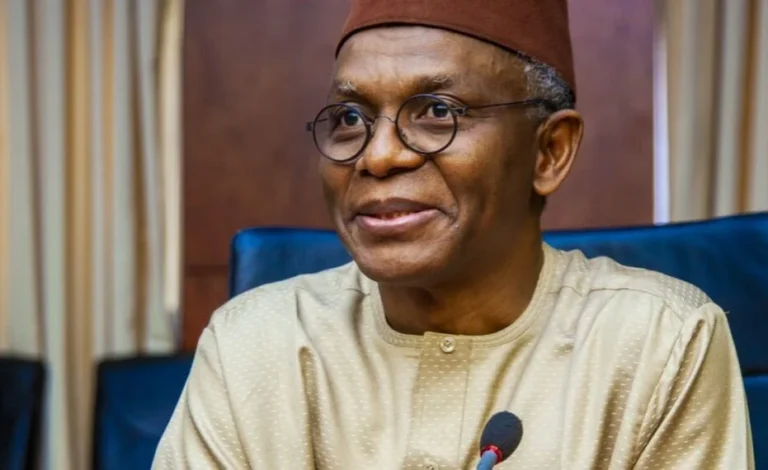
The Kaduna State High Court, presided over by Justice Dariyus Khobo, has announced an adjournment in the much-anticipated ruling on the bail application for former Kaduna State Governor, Malam Nasir El-Rufai. This decision, initially slated for April 14, 2026, has now been deferred to April 21, 2026, due to the unexpected bereavement of the trial judge. The development prolongs the legal suspense surrounding the high-profile case instituted by the Independent Corrupt Practices and Other Related Offences Commission (ICPC) against the former governor, who is facing a nine-count amended charge bordering on alleged fraud, abuse of office, and corruption during his tenure.
Chronology of Court Proceedings and the Adjournment
Malam Nasir El-Rufai, a prominent figure in Nigerian politics, arrived at the court premises on the scheduled date, April 14, 2026, at approximately 9:00 AM. He was reportedly escorted by operatives of the ICPC in a white Hilux vehicle, a standard protocol for high-profile defendants in custody. The proceedings, which lasted less than 30 minutes, primarily focused on the announcement of the adjournment rather than substantive arguments or the delivery of the awaited bail ruling. This brief session left many in the courtroom, including journalists and legal observers, with a sense of anticipation further extended.
Counsel to the defendant, Mr. Ubong Akpan, addressed members of the press immediately following the truncated proceedings. He clarified the reason for the adjournment, stating, "His lordship was bereaved and he was unable to put the ruling together. So, we understand these things happen. The ruling has been adjourned to Tuesday next week, April 21, 2026, on the motion for bail." This explanation provided clarity on the procedural delay, attributing it to a personal tragedy affecting the judge, a circumstance often respected within the judicial system to ensure fair and well-considered rulings. The adjournment underscores the human element often at play even in high-stakes legal battles, reminding stakeholders that judges, like all individuals, are subject to personal circumstances that can impact official duties.
Background of the Charges and El-Rufai’s Political Career
Malam Nasir El-Rufai served as the Governor of Kaduna State from May 2015 to May 2023. His tenure was marked by significant policy reforms, controversial urban renewal projects, and a reputation for being a decisive, albeit sometimes authoritarian, leader. Prior to his governorship, El-Rufai held the position of Minister of the Federal Capital Territory (FCT) from 2003 to 2007 under President Olusegun Obasanjo, where he gained national prominence for his efforts to restore the Abuja Master Plan. His political career has consistently placed him in the national spotlight, making any legal challenges against him subjects of intense public interest and scrutiny.
The ICPC’s charges against El-Rufai are particularly significant given his past roles and his vocal stance on governance and accountability. The nine-count amended charge broadly covers alleged fraud, abuse of office, and corruption. While specific details of these charges have not been extensively publicized in the initial report, such allegations in Nigeria typically involve various forms of financial misappropriation, contract inflation, unlawful enrichment, favoritism in public appointments, or the unauthorized diversion of public funds. Abuse of office often refers to using one’s official position for personal gain or to unfairly disadvantage others, while fraud encompasses deliberate deception to secure unfair or unlawful gain. The "amended charge" suggests that the prosecution may have refined or expanded the scope of their initial accusations as investigations progressed, a common practice in complex financial crime cases to strengthen the evidentiary basis.
The Role of the ICPC in Combating Corruption
The Independent Corrupt Practices and Other Related Offences Commission (ICPC) is one of Nigeria’s primary anti-graft agencies, established in 2000 by the administration of President Olusegun Obasanjo. Its mandate is to prohibit and prescribe punishment for corrupt practices and other related offences. The ICPC investigates reports of corruption, prosecutes offenders, and educates the public on the dangers of corruption. It operates alongside the Economic and Financial Crimes Commission (EFCC), with both agencies playing crucial roles in Nigeria’s ongoing battle against corruption, which remains a significant impediment to national development and good governance.
The decision by the ICPC to press charges against a former governor underscores the agency’s commitment to holding public officials accountable, regardless of their political standing. High-profile cases like El-Rufai’s are often viewed as litmus tests for the independence and effectiveness of anti-graft bodies. The public and international community closely monitor such prosecutions to assess Nigeria’s resolve in tackling corruption at all levels of government. The ICPC’s investigative process typically involves gathering evidence, interviewing witnesses, analyzing financial records, and then filing charges based on the findings. The legal battle that ensues is often protracted, involving numerous court appearances, motions, and appeals.
Understanding Bail Applications in Nigerian Law
A bail application is a fundamental aspect of criminal justice, allowing an accused person to be temporarily released from custody while awaiting trial or the conclusion of legal proceedings. In Nigeria, the granting of bail is largely at the discretion of the court, guided by constitutional provisions and statutory laws. Key considerations for a court in deciding on a bail application include:
- Nature of the Offence: The severity of the alleged crime.
- Severity of Punishment: The potential penalties if convicted.
- Likelihood of Flight: Whether the accused is likely to abscond and not appear for trial.
- Interference with Investigation/Witnesses: Whether the accused might tamper with evidence or intimidate witnesses.
- Previous Criminal Record: Any prior convictions.
- Health of the Accused: Exceptional health circumstances.
- Sureties: The availability of reliable persons to guarantee the accused’s appearance in court.
In cases involving alleged financial crimes and abuse of office, especially for high-profile individuals, courts often scrutinize bail applications rigorously due to concerns about potential flight risk, the accused’s influence over potential witnesses, or the possibility of asset dissipation. The adjournment of the bail ruling means El-Rufai remains in the custody of the ICPC or under supervised conditions until the next scheduled court date. The outcome of the bail application is critical, as it determines whether the former governor will continue the legal battle from detention or as a free individual, which can significantly impact his legal strategy and public image.
Defense Counsel’s Perspective and Broader Implications
Mr. Ubong Akpan’s statements following the adjournment offered insights into the defense’s strategy and their perception of the ongoing legal battle. His remark, "So, fingers crossed, gentlemen. We are heading to the federal court, which is stage two of the theatre of operations, as the ICPC has decided to charge us in phases," is particularly revealing. This suggests that the defense anticipates a multi-pronged legal offensive from the prosecution, potentially involving different courts or agencies. The reference to "theatre of operations" implies a strategic and perhaps politically charged approach by the prosecuting agencies, a common sentiment expressed by defendants in high-profile corruption cases in Nigeria.
Akpan further elaborated on this perceived multi-agency approach, stating, "So, maybe Plant Quarantine will join the charge and charge us for importing plants from Egypt. Since the ICPC has decided that it will charge us in different arenas. We are expecting other ones from the Customary Court, the Native Court, and then maybe charges by Plant Quarantine. Since everybody is looking for El-Rufai’s hype. Have a lovely day, gentlemen." While seemingly sarcastic, these comments highlight a concern that various government agencies might be mobilized to pursue charges against El-Rufai, possibly in what the defense views as an attempt to overwhelm him legally or politically. The mention of "Plant Quarantine" and "Customary/Native Court" might be a hyperbolic expression of this concern, suggesting a belief that any available legal avenue might be exploited, regardless of the perceived triviality or jurisdictional fit, simply to maintain public attention or pressure on the former governor. This narrative, if widely believed, could fuel debates about the political independence of anti-graft institutions and the fairness of the legal process.
The defense’s characterization of the situation as "everybody is looking for El-Rufai’s hype" suggests a belief that the prosecution is partly driven by a desire for public attention or to capitalize on El-Rufai’s high profile. This line of argument is often employed by defendants in politically sensitive cases to frame the charges as persecution rather than legitimate prosecution.
The former governor is reportedly also currently at the Federal High Court for the continuation of proceedings on his bail ruling application, indicating parallel or sequential legal processes unfolding across different judicial tiers. This multi-jurisdictional aspect adds another layer of complexity to the case, requiring a coordinated defense strategy across various legal fronts.
Broader Impact and Implications
The ongoing legal proceedings against Malam Nasir El-Rufai carry significant implications for Nigerian governance, the fight against corruption, and the political landscape.
- Accountability of Public Officials: The case reinforces the principle that no public official, however high-ranking, is above the law. Successful prosecution in such cases can serve as a deterrent to future corrupt practices.
- Public Trust in Institutions: The handling of this case by the ICPC and the judiciary will heavily influence public trust in these institutions. Transparency, fairness, and adherence to due process are crucial for maintaining public confidence.
- Political Repercussions: El-Rufai remains an influential figure within the All Progressives Congress (APC) and beyond. The outcome of these charges could significantly impact his political future, potentially sidelining him or, if acquitted, even strengthening his political standing as someone who withstood state prosecution.
- Precedent for Future Cases: The legal arguments and rulings in this case could set precedents for how similar allegations against other high-profile individuals are handled in the future.
- Media Scrutiny and Public Discourse: The case will continue to attract extensive media coverage and public debate, contributing to the national discourse on corruption, governance, and justice.
The adjournment, while a procedural matter, adds to the prolonged nature of high-profile corruption cases in Nigeria. These delays can sometimes test the patience of the public and raise questions about the efficiency of the judicial system. However, in this instance, the reason cited – the judge’s bereavement – is a universally accepted ground for such a delay, emphasizing the need for compassion and understanding within the legal framework. As the legal battle unfolds, all eyes will remain on the Kaduna State High Court for the rescheduled bail ruling on April 21, 2026, and the subsequent trajectory of the ICPC’s case against the former governor. The case is a stark reminder of the intricate and often arduous path to justice in the ongoing struggle against corruption in Nigeria.