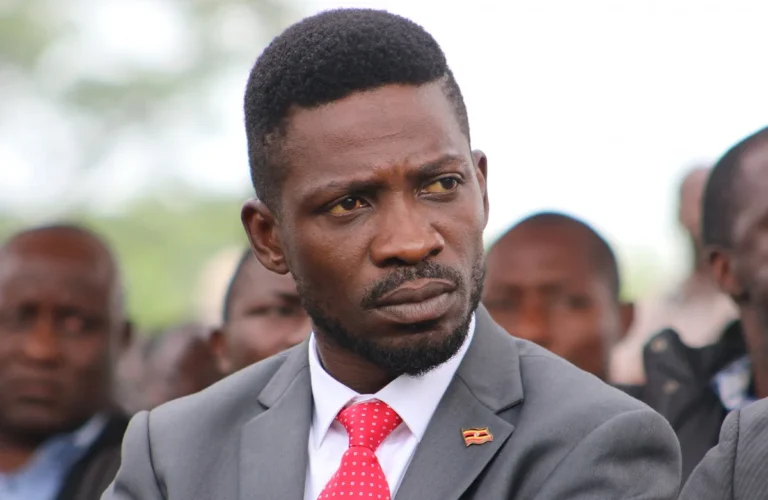
Ugandan opposition leader Robert Kyagulanyi Ssentamu, popularly known by his stage name Bobi Wine, has confirmed his flight to the United States, asserting that the move was a necessary measure to preserve his life. Despite seeking temporary refuge abroad, Ssentamu affirmed his unwavering commitment to return to Uganda to continue his challenge against President Yoweri Museveni’s government. Speaking from Washington D.C. to the Mail & Guardian, Ssentamu articulated his rationale: "I had to save my life to be able to speak to the world and later, I will return to my country for the regime to do whatever they want to me in the full glare of the world. My fight is in Uganda." This declaration underscores a potent blend of strategic retreat and defiant resolve, signaling an ongoing struggle for political change in the East African nation.
The Genesis of Defiance: From Music to Political Activism
Bobi Wine’s trajectory from a celebrated reggae artist to a formidable political figure is central to understanding the current political climate in Uganda. Born in 1982, Kyagulanyi Ssentamu rose to fame in the early 2000s as a popular musician, using his music to address social injustices, poverty, and corruption. His stage name, Bobi Wine, became synonymous with the "Ghetto President" persona, resonating deeply with Uganda’s youth and urban poor. This grassroots appeal eventually translated into political action. In 2017, he successfully ran for a parliamentary seat representing Kyadondo County East constituency. His victory marked a pivotal shift, transforming him from a cultural icon into a vocal critic of President Museveni’s long-standing administration.
His political movement, initially dubbed "People Power," rapidly gained momentum, drawing large crowds and inspiring a generation weary of the status quo. In 2020, he formally launched the National Unity Platform (NUP) party, positioning himself as the primary challenger to President Museveni in the upcoming general elections. His platform focused on democratic reforms, human rights, and an end to what he described as a repressive and corrupt regime.
The Contested January 2021 General Election
The general election held on January 15, 2021, was a focal point of intense national and international scrutiny, culminating in widespread allegations of irregularities and repression. Bobi Wine, under the banner of the National Unity Platform, was one of ten opposition candidates who contested the presidency against incumbent Yoweri Museveni. The Electoral Commission officially declared Museveni the winner with 58.64% of the vote, securing his sixth elected term (and seventh overall, including his initial period in power after seizing control in 1986). Bobi Wine was credited with 34.83% of the vote, placing him second. However, these results were immediately and vehemently disputed by Bobi Wine and his supporters.
The electoral period was marred by significant state-sponsored violence, widespread arrests of opposition supporters, and severe restrictions on campaigning, particularly for the opposition. Human rights organizations, local observers, and international bodies documented numerous abuses. Security forces, including the police and military, were widely accused of using excessive force to break up opposition rallies, often resulting in deaths and injuries. There were also extensive internet blackouts and social media restrictions imposed by the government, which critics argued were designed to hinder the opposition’s ability to organize and communicate, as well as to prevent the dissemination of information about electoral malpractice.
Bobi Wine himself faced constant harassment throughout the campaign. His rallies were frequently dispersed with tear gas and live ammunition, and many of his campaign staff and supporters were arrested, detained, or allegedly tortured. He described the election not as a democratic exercise but as "a military operation," a sentiment echoed by numerous observers who noted the heavy militarization of the electoral process.
Allegations of Repression and Threats
Following the contentious election, Bobi Wine and his family were placed under house arrest for several days, with security forces surrounding his home, preventing anyone from entering or leaving. He reported that his wife, Barbara Itungo Kyagulanyi, and other family members were subjected to torture during this period, an allegation that drew international condemnation. The exact nature and extent of the alleged torture were not fully detailed in the immediate aftermath, but reports from various human rights organizations consistently highlighted a pattern of abuse against opposition figures and their families in Uganda.
Adding to the climate of intimidation, Major General Muhoozi Kainerugaba, the commander of Uganda’s land forces and President Museveni’s son, used social media to issue direct and inflammatory threats against Bobi Wine and his associates. Kainerugaba, who is widely seen as a potential successor to his father, made public statements suggesting violent reprisals, including threats to "behead" Bobi Wine and "castrate" his associates. These threats, emanating from a high-ranking military official and the president’s son, underscored the severe dangers faced by political opponents in Uganda and raised serious concerns about the rule of law and the independence of the military from political influence. Such remarks are not only deeply disturbing but also indicative of a political culture where dissent is met with the specter of extreme violence.
The Covert Escape and Its Implications
Bobi Wine’s escape from Uganda was, by his account, facilitated by a network of sympathetic individuals within the military and police. He described these individuals as "oppressed men and women in uniform" who, like many Ugandans, felt stifled by the Museveni establishment. "There are many oppressed men and women in uniform and these are the people who helped me to escape," he stated. "That’s why, to me, the issue is about the Ugandan people versus their oppressor."
This revelation, if accurate, suggests a deeper level of discontent and potential fractures within Uganda’s security apparatus than is publicly acknowledged. It implies that even within the institutions designed to uphold the regime, there are elements that harbor grievances and perhaps even actively seek change. Such internal assistance highlights the complex dynamics of power and dissent in authoritarian contexts, where outward loyalty can mask underlying resentment. The act of escape itself, under such circumstances, can be seen as a testament to the risks involved in opposing the government, as well as the desperation felt by those seeking to escape its reach. It also positions Bobi Wine as a figure who can rally support from unexpected quarters, transcending traditional political divides.
An Appeal for International Intervention and Sanctions
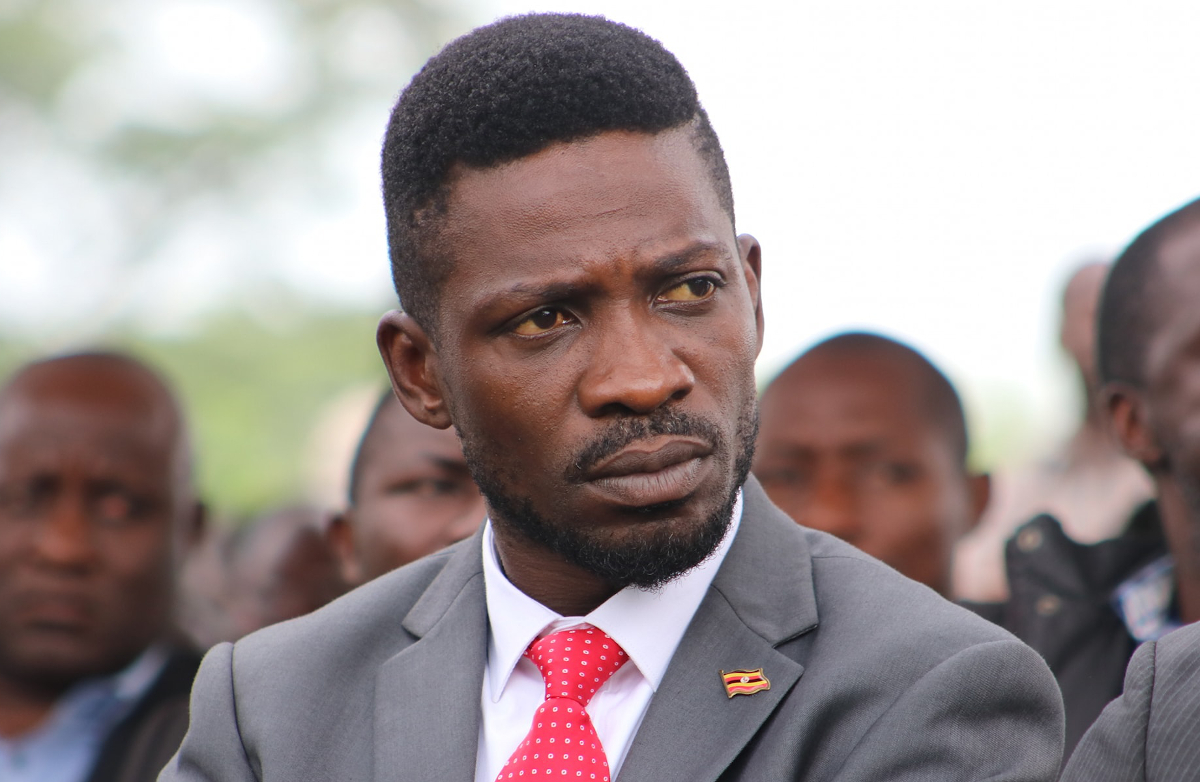
Now in the United States, Bobi Wine has embarked on a mission to galvanize international support for his cause, specifically calling for sanctions against the Ugandan government and its officials. His objective is to leverage external pressure to compel the Museveni regime to respect democratic principles and human rights. Sanctions, which can range from travel bans and asset freezes on specific individuals to broader economic restrictions, are a tool often employed by international actors to pressure governments accused of human rights abuses or undermining democracy.
Bobi Wine’s plea for international intervention is rooted in the belief that domestic avenues for redress have been exhausted or rendered ineffective due to the regime’s control over state institutions. He argues that without external pressure, the government will continue to operate with impunity, further entrenching authoritarianism. The call for sanctions is a strategic move to raise the stakes for the Museveni government, potentially impacting its ability to conduct international business, access foreign aid, and maintain its legitimacy on the global stage.
International Reactions: US Criticism and Aid Review
The United States has been notably critical of the Ugandan general elections. US officials described the electoral process as a "hollow exercise" that was "marred by violence, intimidation, and irregularities," ultimately failing to meet fundamental democratic standards. This strong condemnation came alongside calls for accountability for those responsible for human rights abuses and electoral fraud.
The US response has also included discussions among lawmakers regarding a potential review of security aid to Uganda. Uganda is a significant recipient of US security assistance, largely due to its role in regional peacekeeping missions, particularly its contributions to the African Union Mission in Somalia (AMISOM). A review of this aid would signal a serious shift in US policy and could have significant implications for Uganda’s military capabilities and its regional standing. Such a move would reflect a growing concern within the US government that continued aid, without sufficient democratic accountability, could be seen as implicitly endorsing a repressive regime. The potential withholding or reduction of aid could exert considerable pressure on the Museveni government, forcing it to reconsider its approach to governance and human rights.
The Quagmire of African Solidarity
Bobi Wine’s decision to seek refuge and advocate from the United States, rather than an African nation, highlights a critical aspect of contemporary African politics: the perceived lack of robust solidarity among African leaders in upholding democratic principles. He lamented that "even those in solidarity with us have found safety in silence and complacency. It’s only the likes of former Botswana president Ian Khama who speak openly about what’s happening in Uganda. Otherwise, many African leaders prefer diplomacy to democracy."
This statement underscores a broader critique of the African Union (AU) and regional blocs like the East African Community (EAC) for their often muted responses to electoral malpractices and human rights abuses by incumbent governments. Critics argue that the principle of non-interference in internal affairs often trumps the commitment to democratic governance and human rights, leading to a climate where strongmen can operate with relative impunity from regional condemnation.
Former Botswana President Ian Khama stands out as an exception. In January, Khama publicly stated that Museveni’s victory "followed a typical authoritarian playbook," a rare direct rebuke from a former African head of state. Khama, known for his outspoken stance on democracy and good governance during his presidency, represents a dwindling voice advocating for principled intervention against anti-democratic tendencies within the continent. The preference for "diplomacy over democracy," as Bobi Wine put it, reflects a complex geopolitical reality where state interests, regional stability, and personal relationships among leaders often take precedence over the collective promotion of democratic values.
A Provocative Comparison: Museveni vs. Idi Amin
In a stark and highly provocative comparison, Bobi Wine asserted that President Museveni is "10 times worse than Amin!" This statement refers to Idi Amin Dada Oumee, Uganda’s brutal dictator who ruled from 1971 to 1979, a period synonymous with widespread human rights abuses, extrajudicial killings, and economic collapse. Amin’s regime is estimated to have been responsible for the deaths of between 100,000 and 500,000 Ugandans, making him arguably the most eccentric and notoriously violent leader in Uganda’s post-independence history.
Bobi Wine’s comparison is not merely rhetorical; it seeks to reframe the narrative around Museveni’s legacy. While Museveni initially came to power in 1986 as a liberator, promising to restore democracy and stability after years of turmoil under Amin and Milton Obote, his critics argue that his prolonged rule has increasingly mirrored the repressive tactics of his predecessors. By drawing such a direct and extreme parallel, Bobi Wine aims to shock the international community and Ugandans into recognizing what he perceives as the true nature of Museveni’s authoritarian grip. While the scale of direct killings under Museveni does not compare to Amin’s era, the accusation speaks to the systematic dismantling of democratic institutions, the suppression of dissent, and the alleged use of state violence to maintain power, which Bobi Wine views as a more insidious and prolonged form of oppression.
The Enduring Legacy of Yoweri Museveni’s Rule
President Yoweri Museveni’s political journey is one of Uganda’s most enduring and complex narratives. He came to power in 1986 after a five-year guerrilla war, promising a fundamental change from the brutal regimes of Idi Amin and Milton Obote. His early years were characterized by significant achievements: restoring peace and stability, implementing economic reforms that spurred growth, and launching innovative campaigns against HIV/AIDS that became a global model. He was initially hailed as a new breed of African leader, a pragmatist committed to good governance and development.
However, over the decades, his rule has increasingly veered towards authoritarianism. A key turning point was the 2005 constitutional amendment that removed presidential term limits, allowing him to seek re-election indefinitely. Later, in 2017, the age limit for presidential candidates (previously 75) was also controversially removed, paving the way for him to potentially rule for life. These changes, enacted amidst protests and parliamentary brawls, solidified his grip on power and systematically dismantled the democratic safeguards that were once lauded.
Since 1996, when he first faced a presidential election, Museveni’s victories have been consistently disputed by the opposition and questioned by international observers. Each election cycle has been characterized by increasing state control, limitations on political freedoms, and a shrinking space for dissent. The judiciary, legislature, and electoral commission, intended as independent bodies, are widely perceived to be under the influence of the executive. The military and police, once seen as instruments of national security, are increasingly viewed as tools for regime protection and suppression of opposition. This erosion of democratic institutions, coupled with allegations of corruption and human rights abuses, forms the backdrop against which Bobi Wine’s struggle is unfolding.
Future Implications and the Path Ahead
Bobi Wine’s flight to the US, his international advocacy, and his resolute promise to return paint a vivid picture of Uganda’s precarious political future. His strategy hinges on mobilizing international pressure, hoping that sanctions and diplomatic condemnation will create sufficient leverage to force democratic reforms. However, authoritarian regimes often prove resilient to external pressure, especially when they maintain strategic importance to powerful international actors.
The domestic landscape remains highly volatile. The NUP, despite facing severe repression, has demonstrated significant popular support, particularly among the youth. Bobi Wine’s return, whenever it occurs, will undoubtedly be a high-stakes event, potentially leading to further clashes with security forces and renewed arrests. The internal dissent within the security forces, as alluded to by Bobi Wine, could also be a critical, albeit unpredictable, factor in future developments.
Ultimately, the confrontation between Bobi Wine and President Museveni represents a broader struggle for the soul of Uganda—a struggle between a long-serving strongman determined to maintain power and a burgeoning opposition movement demanding democratic renewal and respect for human rights. The outcome will not only shape Uganda’s destiny but also send a powerful message across a continent grappling with its own democratic transitions and the persistence of authoritarian rule.