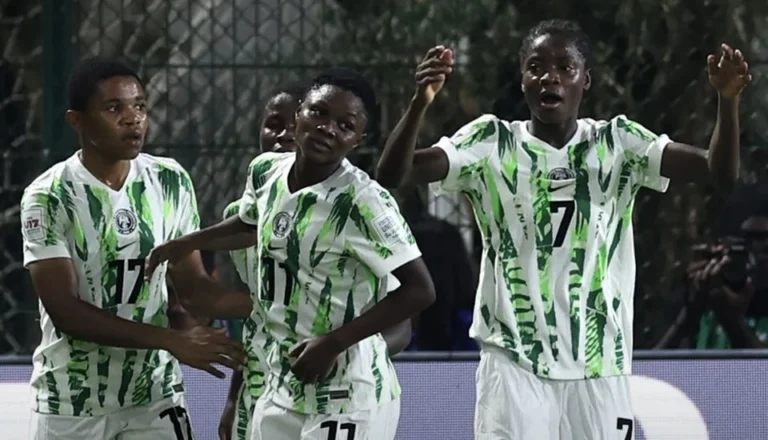
In a watershed moment for African football, Nigeria’s U-17 women’s national team, the Flamingos, have ascended to the pinnacle of global youth football, defeating Japan 2-1 in Saturday’s final to secure the 2026 FIFA U-17 Women’s World Cup title. This landmark victory marks the first time an African nation has claimed the trophy in the history of the competition, which was inaugurated in 2008. By overcoming a formidable Japanese side, the Flamingos have not only etched their names into the annals of sporting history but have also signaled a definitive shift in the balance of power within women’s football, demonstrating that the continent is ready to compete—and win—on the world’s grandest stage.
A Masterclass in Tactical Resilience
The final encounter was a testament to the tactical discipline instilled by head coach Hakeem Busari. From the opening whistle, the Flamingos demonstrated a sophisticated blend of defensive organization and clinical attacking transitions. The breakthrough arrived in the 39th minute through Awawu Bashiru, who capitalized on a meticulously constructed play involving Mary Dunstan to slot the ball home. This goal served as a psychological catalyst, allowing Nigeria to dictate the tempo heading into the halftime interval with a 1-0 advantage.
The second half began with immediate intensity. Just two minutes after the restart, in the 47th minute, Oluebube Umejiaku doubled the lead, finishing a precise delivery from Esther Stephen. While Japan, the 2014 champions known for their technical precision, managed to pull one back in the 80th minute through Fuki Ito, the Nigerian defensive line—which had been the bedrock of their tournament success—remained composed under extreme pressure. The final ten minutes were defined by a series of high-stakes clearances and tactical positioning that thwarted Japan’s desperate search for an equalizer, eventually sealing the 2-1 victory and the world title.
A Tournament Defined by Redemption
The journey to the trophy was far from a straightforward path. The Flamingos’ campaign was defined by an incredible ability to adapt and overcome early adversity. Their tournament opener against Poland ended in a sobering defeat, a result that forced a rigorous internal evaluation of their tactical approach. Rather than succumbing to the pressure of an early exit, the squad displayed mental fortitude, embarking on a winning streak that dismantled several global football powerhouses.
Following the opening loss, Nigeria navigated the group stage with decisive victories over Puerto Rico and Mexico. As the competition transitioned into the knockout phases, the team’s confidence grew. They overcame Venezuela and demonstrated clinical efficiency in their quarter-final and semi-final bouts. The 3-1 victory over Brazil in the semi-finals was arguably their most impressive performance prior to the final, with Awawu Bashiru securing a brace that signaled her emergence as one of the most prolific young talents in the international game.
Japan, meanwhile, reached the final through a more arduous route, requiring a penalty shootout to overcome North Korea in the semi-finals. Their status as former champions and consistent contenders made them the favorites, but the Flamingos’ ability to neutralize Japan’s passing lanes proved to be the decisive factor in the final match.
Historical Significance and Statistical Milestones
This victory carries profound weight beyond the immediate celebration of a trophy. Nigeria is now the first African country to hold FIFA U-17 World Cup titles in both the men’s (Golden Eaglets) and women’s (Flamingos) categories. This dual achievement underscores the efficacy of Nigeria’s youth development pipeline, even amid the logistical and financial challenges often cited in domestic football administration.
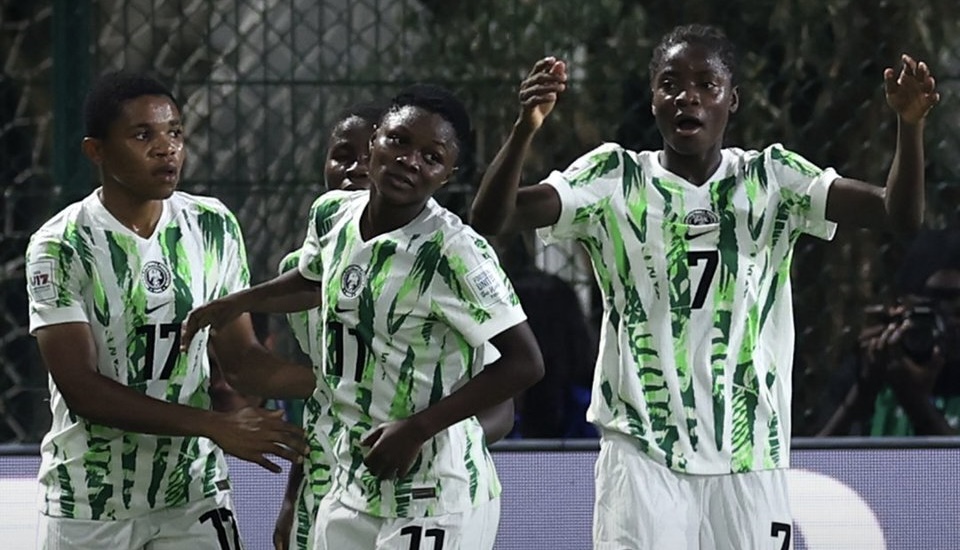
The Flamingos’ performance in 2026 builds upon the foundation laid in 2022, when the team secured a third-place finish. That campaign proved to be a critical stepping stone, providing the necessary international experience for the players who formed the core of the current championship squad. By winning the 2026 edition, Nigeria joins an exclusive list of nations—including Spain, North Korea, and Japan—that have reached the summit of the U-17 women’s game.
Official Responses and National Pride
In the wake of the final whistle, the outpouring of support from across the continent has been unprecedented. The National Sports Commission and several prominent figures in African football have hailed the achievement as a "monumental milestone." The victory is being viewed not merely as a success for Nigeria, but as a validation of the investment in women’s sports across the African Union.
Analysts have noted that the success of the Flamingos is likely to force a reallocation of resources toward grassroots women’s football academies. "This is a blueprint for success," noted one sports commentator. "The discipline shown by the Flamingos is a direct result of improved training standards and a more professional approach to scouting and match preparation."
While official statements from the Nigeria Football Federation (NFF) are expected to focus on the long-term sustainability of this squad, there is an underlying sentiment that these players are the future of the Super Falcons. The transition of these U-17 stars into the senior national team setup will be the next major challenge for the NFF, as they look to maintain this momentum into the 2027 FIFA Women’s World Cup cycle.
Broader Implications for African Women’s Football
The ripple effects of this victory will likely be felt in several areas of the football ecosystem:
- Increased Investment: The high profile of this victory provides a strong leverage point for the NFF to seek enhanced sponsorship and government funding for women’s football, which has historically been under-resourced compared to the men’s game.
- Scouting and Talent Identification: With the global spotlight on the 2026 squad, several players are expected to attract interest from top-tier European and American clubs. This could lead to a surge in international transfers, providing the players with high-level training environments that could further accelerate their development.
- Cultural Shift: The success of the Flamingos acts as a powerful cultural tool, challenging traditional gender norms in sports and encouraging more young girls across Africa to pursue football as a viable and respected career path.
- Tactical Evolution: The success of Coach Busari’s system—based on a high-press, counter-attacking model—may influence the tactical identity of other African youth teams, encouraging a move away from purely physical styles of play toward more nuanced, possession-based, and transitional strategies.
Looking Toward the Future
As the euphoria of the championship win settles, the focus will inevitably shift toward the long-term development of the current roster. FIFA’s U-17 tournaments are designed as incubators for future professional talent. The challenge for the Nigerian football authorities is to ensure that the current generation does not suffer from the "lost generation" phenomenon, where youth champions fail to transition into successful senior careers due to a lack of professional infrastructure or coaching continuity.
The 2026 FIFA U-17 Women’s World Cup will be remembered as the tournament where the Flamingos shattered the glass ceiling. By defeating a seasoned team like Japan, they have proven that the gap between African football and the global elite has not only narrowed but, in this age group, has been bridged entirely.
The squad is expected to return to Abuja to a hero’s welcome, a fitting conclusion to a campaign that has brought immense pride to the nation. For the players involved—from the clinical finishing of Bashiru to the tactical discipline of the defensive unit—this is the beginning of what many hope will be a golden era for Nigerian women’s football. As the global football community reflects on the 2026 final, the name of the Flamingos will undoubtedly be synonymous with resilience, innovation, and the dawn of a new competitive reality on the African continent.