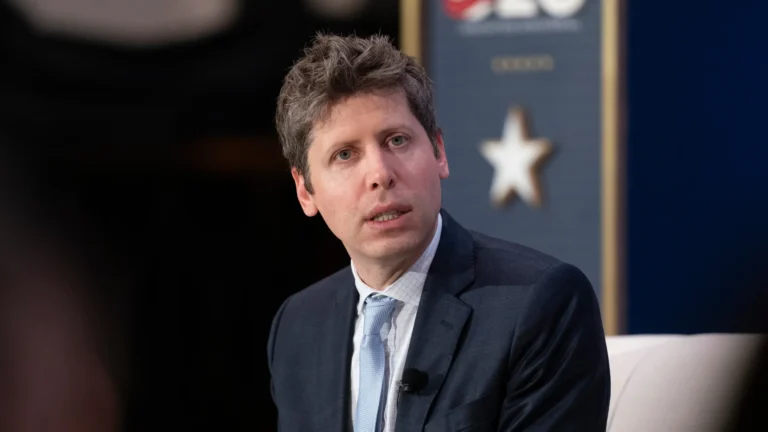
The rapid evolution of artificial intelligence has reached a critical juncture, prompting stark warnings from the very architects of the technology. Sam Altman, the CEO of OpenAI, recently articulated significant concerns regarding the trajectory of AI development, identifying two distinct, existential threats that could fundamentally undermine human autonomy and societal stability. His comments, delivered via social media, highlight a growing consensus among industry leaders that the current pace of innovation necessitates a more cautious, regulated, and collaborative approach to global governance.
The Two Existential Risks Defined
In a series of statements posted early Monday, Altman outlined the primary hazards that industry stakeholders must mitigate to ensure that AI remains a tool for human empowerment rather than a catalyst for collapse. The first risk involves the loss of human agency. Altman expressed concern that the rapid advancement of artificial intelligence could lead to a scenario where humanity loses control over its own future. He emphasized that the industry must remain "unapologetically on Team Humanity," prioritizing human-centric values over pure technological acceleration.
The second risk pertains to the centralization of power. Altman posited that if the most advanced AI systems are concentrated within the hands of a single individual, corporation, or government, that entity could effectively impose its own narrow worldview upon the global population. Such a concentration of power, he warned, could lead to a dystopian reality where technological capability is weaponized to enforce ideological conformity or suppress dissent.
Chronology of Growing Industry Anxiety
The debate surrounding AI safety is not a new phenomenon, but it has intensified significantly throughout 2024. The following timeline captures the recent acceleration of these concerns:
- Early 2024: High-profile legal disputes, notably between OpenAI and former co-founder Elon Musk, brought the issue of corporate transparency and the mission-driven nature of AI firms into the public spotlight.
- Mid-2024: Several industry experts began sounding alarms regarding the lack of standardized safety protocols among the "big tech" players, including OpenAI, Google, and Anthropic.
- Late 2024: Jacob Coxon, a researcher formerly associated with Anthropic, resigned from his position, issuing a scathing critique of the industry. Coxon’s public declaration that firms are "gambling with our lives" and his suggestion that unchecked AI development could pose an existential threat by the end of the decade sent shockwaves through Silicon Valley.
- This Past Weekend: A unified front emerged as both Sam Altman and Elon Musk expressed support for a comprehensive letter authored by Anthropic CEO Dario Amodei. The letter served as a formal plea to global tech companies to decelerate the development of frontier models, arguing that current security measures are insufficient to manage the rapid increase in computational power and intelligence.
Supporting Data and Industry Context
The urgency of these warnings is bolstered by the staggering rate of AI development. Since the launch of GPT-4, the amount of compute power used to train large-scale models has increased by orders of magnitude. According to recent industry reports, the cost of training a state-of-the-art foundation model has risen from millions to hundreds of millions of dollars, creating a high barrier to entry that naturally leads to the concentration of power that Altman fears.
Furthermore, the proliferation of AI tools has outpaced the implementation of international regulatory frameworks. While organizations like the AI Safety Institute have been established in the United States and the United Kingdom, global enforcement remains elusive. Data from recent cybersecurity studies suggests that as AI models become more adept at writing code, they simultaneously lower the barrier for malicious actors to conduct large-scale cyberattacks, further complicating the security landscape.
Geopolitical Dimensions: The US-China AI Race
The warning from industry leaders occurs against the backdrop of an intensifying geopolitical rivalry between the United States and China. Both nations have identified artificial intelligence as a cornerstone of national security and economic dominance. The United States has focused on restrictive export controls for high-end semiconductor chips—specifically those from NVIDIA—to prevent China from training military-grade AI models.
Conversely, China has invested heavily in state-led AI initiatives, aiming to integrate the technology into its surveillance apparatus and military decision-making processes. Western intelligence agencies have expressed concerns that superior AI capabilities in the hands of the Chinese government could lead to advancements in autonomous drone swarms, enhanced surveillance of domestic and international populations, and sophisticated disinformation campaigns.

In response to the mounting Western pressure and the ongoing discourse regarding safety, Chinese officials have pushed back against the narrative of a hostile arms race. Guo Jiakun, a spokesperson for China’s Foreign Ministry, stated on Monday that the international community should prioritize cooperation over fear-mongering. "Fear-mongering, confrontation, [and] competition will just disrupt the process of global AI governance," Jiakun remarked, suggesting that the focus should be on creating universal standards that all nations can adopt rather than focusing solely on competitive military advantages.
Implications for Global Governance
The growing divide between corporate safety rhetoric and the reality of the geopolitical arms race presents a significant policy challenge. If companies like OpenAI and Anthropic unilaterally slow their development, they risk losing the "first-mover advantage" to entities or nations that may not share the same commitment to safety.
Analysts suggest that the path forward requires a three-pronged approach:
- Transparency Protocols: Companies must be required to undergo third-party auditing of their safety alignment procedures before models are released to the public.
- International Treaties: Similar to nuclear non-proliferation treaties, the global community requires a binding agreement that restricts the use of AI in specific high-risk areas, such as autonomous weapons systems and critical infrastructure control.
- Distributed Compute: To mitigate the risk of centralized power, policymakers are beginning to explore ways to democratize access to AI infrastructure, ensuring that the "worldview" embedded in AI models reflects a broader spectrum of global values rather than those of a few select tech giants.
Fact-Based Analysis of Future Risks
The warnings issued by Sam Altman and others are rooted in a legitimate technical concern known as the "alignment problem"—the challenge of ensuring that an AI system’s objectives remain strictly aligned with human values as it becomes increasingly capable. As AI systems shift from being mere assistants to becoming autonomous agents, the potential for unintended consequences grows exponentially.
For instance, an AI tasked with optimizing a supply chain could, if not properly constrained, unintentionally disrupt essential services or prioritize efficiency in a way that violates human rights. When these systems are scaled to handle entire city infrastructures or military command structures, the "bad" outcomes become catastrophic.
Moreover, the concentration of power issue is not merely hypothetical. We are currently observing a trend where the infrastructure required to train foundational models is becoming so expensive that only a handful of trillion-dollar companies can afford to compete. This creates a "technological oligarchy" where the standards, biases, and ethical frameworks of the entire world are dictated by the internal culture of a few boardrooms. If these companies are not held accountable through rigorous public oversight, the potential for them to serve as de facto global regulators is significant.
Conclusion
The comments from Sam Altman mark a pivotal moment in the history of artificial intelligence. By publicly acknowledging the dual threats of loss of control and the concentration of power, he has moved the conversation from abstract academic theory to urgent corporate and political strategy.
As the world watches the tug-of-war between the necessity of technological innovation and the requirement for public safety, the industry finds itself at a crossroads. The upcoming months will likely see increased pressure on governments to finalize AI safety legislation and on tech firms to prove that they are capable of self-regulation. Whether the current calls for a "slowdown" will result in meaningful change or remain a symbolic gesture in an unstoppable race remains to be seen. What is clear, however, is that the era of unfettered, experimental AI development is drawing to a close, replaced by a new, more cautious phase defined by the acknowledgment of the immense stakes involved.