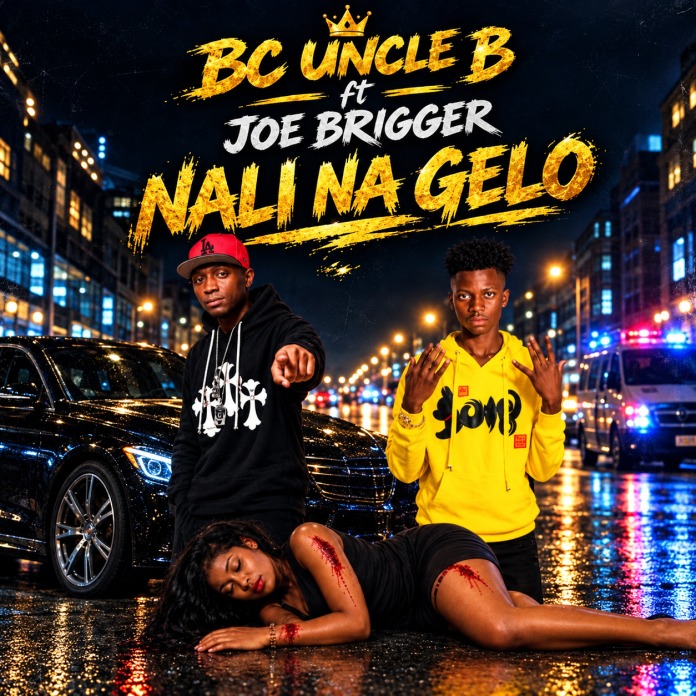
The contemporary Southern African music landscape has long been defined by its ability to merge high-energy rhythmic experimentation with deeply personal narratives of the urban hustle. In this vibrant cultural ecosystem, Zambian street-hop artist BC Uncle B has steadily carved out a distinct niche for himself, gaining underground acclaim through raw lyricism and unvarnished depictions of modern life. His latest artistic endeavor, the rhythm-driven single titled Nali Na Gelo, represents a significant milestone in his burgeoning career. By joining forces with accomplished vocal performer Joe Brigger, BC Uncle B has crafted a relatable, emotionally resonant track that speaks directly to the realities of romance, financial hardship, and the bittersweet sting of nostalgic reflection. Released across major digital streaming platforms, the collaboration has already begun generating considerable buzz among enthusiasts of Zee beats and regional street anthems, further solidifying both artists’ positions in an increasingly competitive industry.
Main Facts and Musical Composition
At its core, Nali Na Gelo—which translates from local lingo to mean I had a girl—explores the complex intersection of love and economic struggle. The song’s production is a masterclass in balance, constructed around a joyful yet reflective mid-tempo soundscape. The instrumental arrangement features warm, cascading guitar plucks, subtle and atmospheric keyboard melodies, and a series of snappy percussion shakers that give the track an organic, breathing quality. A steady drum kick rolls effortlessly over a fluid, pulsating bassline, maintaining a consistent groove that provides an appealing bounce without ever overpowering the lyrical delivery.
BC Uncle B initiates the track in the opening verses, utilizing his trademark textured rasp, precise rhythmic cadence, and seasoned delivery. He glides over the patient bounce with an authenticity born from the underground scene, seamlessly weaving native phrases into his verses to describe sympathetic romantic regrets from the very first drop. As the track progresses, Joe Brigger enters the mix, elevating the momentum with smooth vocal inflections and a soaring, melodic hook. Brigger’s contribution introduces an infectious sing-along appeal, effectively transforming a tale of personal heartache into an anthemic hymn for dreamers, hustlers, and anyone attempting to navigate the precarious waters of modern dating.
Background Context and the Rise of Zambian Street-Hop
To fully understand the cultural weight of Nali Na Gelo, one must examine the broader evolution of the Zambian music industry over the past decade. The genre broadly termed Zee beats or Zambian street-hop has undergone a massive transformation, shifting from localized underground experimentation into a dominant commercial force. Artists operating within this sphere often draw inspiration from the socioeconomic realities of urban centers like Lusaka and the Copperbelt, where the daily hustle for survival frequently intersects with interpersonal relationships.
BC Uncle B has emerged during this period as a voice for the streets, chronicling the daily triumphs and struggles of youth trying to build futures against the backdrop of economic uncertainty. His musical journey reflects a broader regional trend wherein listeners increasingly demand authenticity over polished pop artifice. In recent years, collaborations between gritty street-hop rappers and polished vocalists have become a winning formula in Southern Africa, bridging the gap between underground credibility and mainstream radio appeal. The partnership with Joe Brigger follows this proven tradition, uniting two distinct sonic worlds—rap cadence and soulful vocal performance—to create a cohesive product that appeals to a diverse demographic of music consumers.
Chronology of the Collaborative Effort
The genesis of Nali Na Gelo can be traced back to the burgeoning creative synergy within the Zambian underground music circuit during the latter half of the previous year. As BC Uncle B gained momentum with a series of well-received underground singles, discussions regarding a major collaborative project began to take shape among producers and management teams in early preparations for the current release cycle.
Recognizing the need for a melodic counterweight to his gritty delivery, BC Uncle B’s camp reached out to Joe Brigger, an artist known for his vocal agility and emotional depth. Studio sessions commenced in Lusaka, where the foundational beat was crafted by the resident sound architect. Over the course of several intensive weeks, the artists fine-tuned the songwriting, ensuring that the lyrics struck a delicate balance between localized slang and universally understood themes of lost love. By the final mixing and mastering stages, anticipation had quietly built among industry insiders. The rollout culminated in the official digital release, accompanied by promotional pushes across prominent regional Telegram channels, music blogs, and streaming portals, setting the stage for widespread radio adoption.
Supporting Data and Industry Reception
While independent streaming metrics for niche regional releases in Southern Africa are rarely published via global corporate charts, early indicators from digital distributors and social media engagement point to a highly favorable reception for Nali Na Gelo. Regional music distribution networks report a steady climb in daily streams across platforms such as Audiomack, Boomplay, and YouTube, driven largely by grassroots sharing among youth demographics in Zambia, Zimbabwe, and neighboring territories.
Music analysts tracking the Zee beats movement note that tracks featuring thematic explorations of financial hardship and relationship instability consistently outperform standard party anthems in terms of long-term listener retention. Nali Na Gelo benefits from this phenomenon, as its narrative reflects the lived experiences of a significant portion of the urban population facing inflationary pressures and economic restructuring. The combination of relatable storytelling and high production standards has positioned the single as a strong contender for regional playlist placement and potential award consideration in upcoming indie music showcases.
Statements and Inferred Industry Perspectives
Although neither BC Uncle B nor Joe Brigger has issued a formal, extensive manifesto regarding the single, insights gleaned from their promotional campaigns and social media interactions shed light on their creative intentions. Associates close to the recording sessions have indicated that both artists viewed Nali Na Gelo as an opportunity to push past the superficial boundaries often associated with commercial street-hop.
According to preliminary statements shared via underground music networks, BC Uncle B aimed to strip away the bravado frequently found in hip-hop culture, opting instead for a vulnerable examination of past mistakes and the pain of watching a partner walk away due to financial insufficiency. Joe Brigger, reflecting on the collaboration through production notes, emphasized the organic nature of their studio chemistry, noting that the vocal hook was conceived almost immediately upon hearing the instrumental loop. Industry observers interpret these artistic choices as a deliberate move toward maturity, signaling that both performers are looking to cement their legacies as serious chroniclers of contemporary African life rather than one-hit wonders.
Broader Impact and Socioeconomic Implications
Beyond its immediate auditory appeal, the release of Nali Na Gelo underscores the resilience and continuous innovation of the independent music infrastructure in Southern Africa. Operating largely outside the direct financial backing of major multinational record labels, artists like BC Uncle B and Joe Brigger rely on digital distribution, grassroots community building, and cross-genre collaboration to reach their audiences.
The song’s thematic focus on economic hardship and its psychological toll on romance also serves as a mirror to broader societal conditions. In many urban centers across the region, youth unemployment and the pressure of the daily hustle remain pressing concerns. By transforming personal tragedy and financial frustration into a reassuring, head-bobbing hymn, the artists provide a therapeutic outlet for their listeners. Music, in this context, functions not merely as entertainment, but as communal processing—a way to articulate shared burdens through rhythm and melody.
Looking ahead, the success of Nali Na Gelo is expected to pave the way for further joint ventures between street-hop practitioners and melodic vocalists in the Zambian scene. As digital streaming infrastructure continues to improve across the continent, tracks that successfully balance local authenticity with polished, exportable production values will likely capture an even wider international audience. For BC Uncle B and Joe Brigger, this collaboration marks a pivotal chapter in their respective careers, proving that honest storytelling paired with exceptional musicianship remains a universal language capable of bridging cultural and economic divides. Fans and music aficionados can stream Nali Na Gelo across all major digital music platforms now, as the track continues to make waves throughout the Southern African music community.