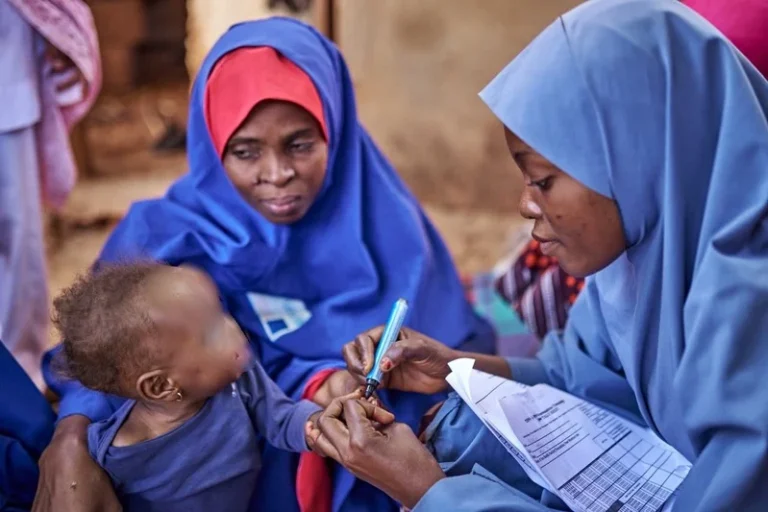
Between January and June 2026, more than 23 million children across more than 205,000 settlements in Nigeria were successfully reached and vaccinated against polio and other vaccine-preventable diseases, according to a comprehensive new impact report released by eHealth Africa. The milestone represents a critical breakthrough in public health delivery within sub-Saharan Africa, driven heavily by coordinated digital mapping, renewable energy integration, and strengthened supply chain logistics.
The mid-year review, titled “Expanding Reach, Readiness and Resilience: Data-Driven Health Systems Across Africa,” outlines a multifaceted strategy deployed during the first half of 2026. The findings illustrate how leveraging localized technology and sustainable infrastructure can fundamentally transform immunization coverage, emergency response capabilities, and supply chain integrity across historically underserved regions.
Background Context: The Persistent Threat of Vaccine-Preventable Diseases in Nigeria
Nigeria, Africa’s most populous nation, has historically faced immense logistical hurdles in achieving universal immunization coverage. Geographic barriers, infrastructural deficits, security challenges in various regions, and unreliable energy grids have historically compromised vaccine storage and distribution. While significant progress has been made toward eradicating wild poliovirus—with the continent officially certified free of the wild virus in 2020—vaccine-derived polio strains, measles, rubella, and diphtheria continue to pose intermittent public health threats.
To combat these vulnerabilities, international organizations and local non-governmental actors like eHealth Africa have increasingly partnered with federal and state ministries of health to overhaul traditional immunization frameworks. Transitioning from paper-based tracking to advanced geographic information systems (GIS) and digital micro-planning has emerged as a cornerstone strategy for reaching zero-dose children—those who have never received routine immunizations.
Digital Innovations and Micro-Planning: Mapping the Last Mile
A major driver of the vaccination success reported in the first half of 2026 was the aggressive expansion of eHealth Africa’s proprietary digital mapping tool, PlanFeld. Developed to eliminate blind spots in immunization campaigns, PlanFeld provides field teams with precise catchment-area maps and digitized micro-plans.
During the reporting period, this technology was scaled across 253 Local Government Areas (LGAs) spanning 10 northern states in Nigeria. The deployment directly supported 33,837 vaccination teams, ensuring they could navigate complex rural terrain and locate remote settlements that traditional planning methods often missed.
Furthermore, the technology proved adaptable outside the northern region. During the peak of the Measles-Rubella vaccination campaign, PlanFeld was deployed across four strategic LGAs in Lagos State, resulting in the production and distribution of 1,980 digitized maps to urban health workers. This hybrid urban-rural digital strategy ensured high-density populations and hard-to-reach rural settlements alike were thoroughly covered.
Securing the Cold Chain: Vaccine Direct Delivery in Sokoto
Beyond digital planning, maintaining the potency of vaccines from central storage facilities down to community-level health posts remains a formidable challenge. Vaccines are temperature-sensitive biological products that require an unbroken cold chain to remain effective. Any disruption can render entire batches useless, wasting precious resources and leaving populations unprotected.
In Sokoto State, eHealth Africa tackled this vulnerability by bolstering the Vaccine Direct Delivery (VDD) intervention. Between January and June 2026, the number of health facilities directly serviced through the VDD program increased from 351 to 407.

To maintain continuous immunization services in these underserved communities, approximately 3.41 million vaccine antigens were successfully delivered directly to the doorstep of these health facilities. By bypassing intermediate, inefficient transit hubs, the program minimized logistical bottlenecks and ensured that health workers had immediate, reliable access to the biological supplies needed for daily inoculations.
Empowering Primary Healthcare Through Solar Energy
A persistent bottleneck plaguing Nigeria’s primary healthcare centers (PHCs) is the chronic unreliability of the national electrical grid. Frequent power outages compromise vaccine storage refrigerators, disrupt nighttime deliveries, and hamper basic clinical procedures.
To address this systemic energy poverty, eHealth Africa, with crucial financial and technical support from UNICEF, advanced the Renewable Energy for Primary Health Care (RE4PHC) initiative. By the end of June 2026, the organization had successfully solarized 238 PHCs distributed across 12 Nigerian states.
The impact of this green transition has been immediate and measurable. Out of the 238 solarized facilities, 226 were integrated into a remote monitoring network. Between January and June alone, these solar installations generated a collective 277,800 kilowatt-hours of clean electricity.
The financial and environmental dividends are profound. The organization estimates that the transition to solar power saved approximately N166 million in fuel costs—money that cash-strapped local health boards can redirect toward patient care and medical supplies. Additionally, the initiative prevented the emission of 240 metric tons of carbon dioxide during the six-month window. Since the inception of the RE4PHC program, cumulative estimated fuel savings have surpassed N414 million, demonstrating a highly sustainable model for healthcare infrastructure in developing economies.
Upgrading Laboratories and Strengthening Regional Health Surveillance
In addition to primary immunization campaigns, the eHealth Africa mid-year report details substantial investments in regional diagnostic capabilities and infectious disease surveillance infrastructure across the broader African continent. Robust laboratory networks are essential for early detection, pathogen sequencing, and rapid containment of emerging health threats.
During the first half of 2026, eHealth Africa provided direct support to 17 diagnostic laboratories across 13 African countries. Simultaneously, its advanced Inventory Management System was expanded to 18 laboratories, optimizing the tracking of reagents, testing kits, and protective equipment.
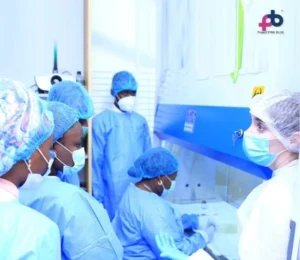
Physical infrastructure also received a significant boost. Comprehensive upgrades to five major laboratories located in Ghana, Zambia, Nigeria, and Cameroon were completed and formally handed over to respective national health authorities. These modernizations are designed to enhance diagnostic precision, elevate biosafety standards, and accelerate cross-border epidemiological surveillance.
Coordination at the Epicenter: Emergency Operations Centres
Public health emergencies require agile, multi-agency coordination to prevent localized outbreaks from escalating into national crises. In Nigeria, eHealth Africa’s network of 11 Emergency Operations Centres (EOCs) continued to function as central command hubs during the first half of the year.
These facilities brought together government officials, epidemiological surveillance teams, immunization officers, and international development partners. Between January and June, the EOCs hosted 546 emergency coordination meetings and facilitated 102 specialized sessions directly linked to ongoing vaccination campaigns. Furthermore, the centers generated 74 detailed public health scorecards, providing decision-makers with real-time data analytics to evaluate performance and dynamically reallocate resources where risks were highest.

Combating Substandard Medicines at the Community Level
Beyond immunizations and infectious disease outbreaks, the safety of everyday therapeutics remains a critical public health concern in developing regions. The proliferation of substandard and falsified (SF) medicines poses a severe threat to patient safety, undermines trust in healthcare systems, and contributes to antimicrobial resistance.
To combat this challenge, eHealth Africa expanded its community-level surveillance network under the Com-WATCH initiative. Operating across Kano, Gombe, Ekiti, Ebonyi, Akwa Ibom states, and the Federal Capital Territory (FCT), the program enrolled 2,512 active surveillance personnel.
The grassroots initiative engaged deeply with the local medical economy: 2,763 medicine vendors and informal retailers received specialized training on product verification and safe storage practices, while educational campaigns reached more than 20,500 community members to raise awareness about the dangers of fake drugs. By June 2026, a total of 977 local medicine outlets were actively reporting real-time inventory and stock data through the Com-WATCH platform, creating an unprecedented layer of transparency within the retail pharmaceutical sector.
Humanitarian Logistics and Food Security Support
In regions affected by protracted humanitarian crises, efficient logistics can mean the difference between survival and starvation. In Borno State—the epicenter of humanitarian operations in northeastern Nigeria—eHealth Africa managed the World Food Programme (WFP) Common Storage facility in Ngala.
During the first half of the year, the strategic warehouse provided vital logistical backing to 16 distinct humanitarian partner organizations operating in the volatile region. The facility handled 691 metric tons and 2,527 cubic metres of essential relief commodities. Rigorous inventory control was maintained through six monthly physical audits, resulting in a zero-loss record for stored humanitarian assets during the reporting period.
Analysis of Implications and Leadership Perspectives
Public health analysts note that the achievements outlined in eHealth Africa’s mid-year report underscore a critical evolution in international development aid: a shift away from short-term, donor-driven vertical programs toward integrated, tech-enabled, and nationally owned health systems. By anchoring interventions in renewable energy, digital mapping, and localized data collection, the initiatives demonstrate long-term viability that traditional emergency models often lack.
Reflecting on the broader significance of the data, eHealth Africa’s Executive Director, Atef Fawaz, emphasized that the organization’s mission transcends mere statistical metrics. He noted that the reported successes were the direct result of harmonious synergy between government institutions, local communities, technological innovators, and frontline health workers.
"The significance of these results goes beyond the numbers," Mr Fawaz stated, stressing that the ultimate goal is not merely to deploy temporary technical fixes, but to construct resilient, self-sustaining health systems that national institutions can fully own, operate, and continuously improve for generations to come.
As Nigeria and its international partners look toward the remainder of 2026 and beyond, the integration of digital health tools, uninterrupted cold chains, and green infrastructure established during this period provides a replicable blueprint for achieving universal health coverage across the African continent.