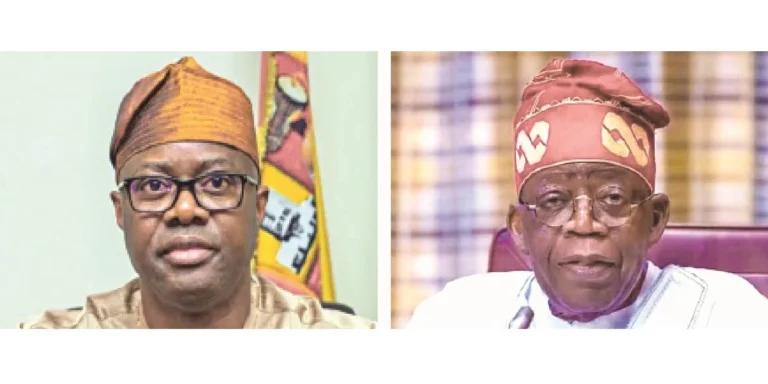
Oyo State Governor, Engineer Seyi Makinde, has brought to public light a significant sequence of events that intertwine political manoeuvring with the operations of a key anti-graft agency, alleging that an unnamed chieftain of the All Progressives Congress (APC) cautioned him against contesting the 2027 presidential election against President Bola Ahmed Tinubu. This disclosure, made in the July 2026 edition of his Monthly Newsletter, was swiftly followed by a broad request from the Economic and Financial Crimes Commission (EFCC) for comprehensive financial records of the Oyo State Government, a move that the state successfully challenged in court as a "fishing expedition."
The Governor’s Allegations and the Unfolding Chronology
The crux of Governor Makinde’s revelation centres on a specific timeline of events that, he suggests, points to an attempt at political intimidation under the guise of an anti-corruption probe. According to the newsletter, the alleged warning from the APC chieftain occurred on June 1, 2025. This warning, Makinde stated, came in the context of President Bola Ahmed Tinubu reportedly being endorsed as the sole candidate for the APC in the upcoming 2027 presidential election. The implication was clear: any aspiration Makinde might harbour for the nation’s highest office would be met with formidable opposition.
Remarkably, just one day after this purported political caution, on June 2, 2025, the Oyo State Government received a letter from the EFCC. The letter, as described by Makinde and subsequently confirmed by his Special Adviser on Media, Sulaimon Olarenwaju, requested an extensive array of documents. Specifically, the anti-graft agency demanded copies of all contracts awarded by the state government and details of payments made to contractors from 2021 to the date of the request. Critically, the EFCC’s demand lacked any specificity; it did not identify any particular contractor, company, transaction, or alleged offence that warranted such a sweeping inquiry.
Governor Makinde articulated his administration’s stance, emphasizing that they did not resist investigation per se. Instead, they sought clarity, requesting the EFCC to specify the contractors or transactions under scrutiny so that the relevant and targeted documents could be provided. However, Makinde asserted that the EFCC did not respond to this request for clarification, leaving the state government in a quandary regarding the scope and legitimacy of the probe. This lack of engagement prompted the Oyo State Government to seek judicial interpretation of whether such a broad and unspecified request was lawful under Nigeria’s constitutional framework.
Judicial Intervention and the Affirmation of Due Process
The matter eventually landed before the Federal High Court sitting in Ibadan, under suit number FHC/IB/CS/61/2025. The state government sought the court’s intervention to delineate the boundaries of the EFCC’s investigative powers, especially when such requests appear to be untargeted and potentially politically motivated. The court’s ruling, which has since been hailed by Makinde as a victory for the rule of law, did not dispute the EFCC’s statutory mandate to investigate financial infractions and crimes. The judgment unequivocally acknowledged the commission’s crucial role in combating corruption.
However, the Federal High Court stressed a pivotal condition: such powers must be exercised strictly in line with the Constitution and the Rule of Law. The court specifically noted that the constitutional rights of the plaintiffs – in this case, the Oyo State Government – to a fair hearing could not be trampled upon under the guise of investigation. In a significant pronouncement, His Lordship described the EFCC’s broad request for information as "speculative" and amounting to a "fishing expedition." The court held that requests for information must be tied to a specific allegation, thereby precluding blanket demands without identified targets or alleged wrongdoing. This ruling effectively curtailed the EFCC’s attempt to launch an untargeted probe into the state’s finances.
Background Context: Nigeria’s Political Landscape and Anti-Corruption Imperatives
The events described by Governor Makinde unfold against a complex backdrop of Nigeria’s political landscape, particularly the often-strained relationship between opposition-led state governments and federal agencies, especially as national elections approach. The EFCC, established in 2003, is mandated to combat financial and economic crimes. Its creation was a response to Nigeria’s pervasive corruption, aiming to bring accountability to public and private sectors. Over the years, the commission has recorded significant successes, prosecuting high-profile individuals and recovering substantial assets.
However, the EFCC’s operations have also frequently attracted criticism regarding its perceived politicization. There have been numerous instances, across different administrations, where opposition figures or critics of the federal government found themselves under the EFCC’s investigative spotlight, leading to accusations that the agency is used as a tool for political vendetta or intimidation. This perception is particularly heightened during pre-election cycles, where the timing of investigations into political opponents often raises eyebrows and fuels suspicions of ulterior motives.
President Bola Ahmed Tinubu’s administration, like its predecessors, has publicly affirmed its commitment to fighting corruption and promoting transparency in governance. However, the practical application of this commitment, especially concerning opposition figures, remains a subject of intense scrutiny and debate. The incident involving Governor Makinde thus taps into a sensitive nerve in Nigerian politics, touching upon the delicate balance between legitimate anti-corruption efforts and the potential for abuse of power for political ends. Oyo State, under Makinde’s leadership, has also been a recipient of federal allocations and has undertaken significant capital projects, making its financial records naturally subject to public and statutory oversight. However, the manner of investigation is what lies at the heart of this controversy.
Broader Implications for Governance and Rule of Law
The Federal High Court’s ruling in the FHC/IB/CS/61/2025 suit carries profound implications for governance, federal-state relations, and the future exercise of investigative powers by anti-graft agencies in Nigeria. By affirming the EFCC’s powers while simultaneously emphasizing the constitutional limitations and the need for specific allegations, the court has reinforced the principle that no institution, however powerful, operates above the law.
Statements and Reactions (Inferred)
While the original article focuses on Makinde’s disclosure, one can logically infer the types of reactions from other stakeholders.
- From the EFCC: The commission, upon such a court ruling, would likely issue a statement reaffirming its commitment to its mandate of fighting corruption and adhering strictly to the rule of law. They might reiterate that their investigations are always evidence-driven and not politically motivated, without necessarily directly addressing Makinde’s specific claims of a political warning. Their public posture would typically emphasize their independence and dedication to due process, even when faced with judicial setbacks on procedural grounds.
- From the APC: Spokespersons for the ruling party might dismiss Governor Makinde’s allegations as mere political theatrics or an attempt to deflect attention from legitimate scrutiny. They would likely emphasize that anti-corruption agencies should be allowed to perform their duties without undue interference and that anyone, regardless of political affiliation, must be held accountable for public funds. They might also deny any knowledge of a political warning being issued by an APC chieftain, portraying the EFCC’s actions as independent of political influence.
- From Civil Society Organizations and Legal Experts: Many civil society groups and legal practitioners would likely welcome the court’s judgment. They would view it as a crucial check on potential overreach by federal agencies and a safeguard for constitutional democracy. Experts would stress that while fighting corruption is paramount, it must never be done at the expense of fundamental rights, due process, and the rule of law. The ruling could be cited as a significant precedent against "fishing expeditions" and for promoting targeted, evidence-based investigations.
- From Other Opposition Figures: Other opposition governors and politicians might express solidarity with Makinde, viewing the incident as emblematic of a broader pattern of federal pressure on dissenting voices. They might use it to galvanize support and underscore concerns about the weaponization of state institutions.
The Precedent Set and Future Scrutiny
Governor Makinde himself described the court’s decision as "a victory for the rule of law, not against the EFCC," stating that it reinforces the principle that all institutions must operate within constitutional and legal boundaries. He further noted that the judgment "underscores the need for leadership that respects due process, constitutionalism and the rule of law." This perspective highlights the critical role of the judiciary in mediating potential conflicts arising from the exercise of executive power and ensuring that democratic norms are upheld.
The ruling sets a significant precedent, reminding anti-graft agencies that while their mission is vital, the method of investigation must always align with constitutional provisions. It implies that broad, untargeted probes, particularly those that appear to follow politically charged warnings, will face judicial scrutiny and likely be overturned if they infringe upon due process and the principle of specific allegation. This could lead to a more refined and focused approach by investigative bodies in their requests for information from state governments, fostering a climate of greater accountability not just for the investigated, but also for the investigators.
As Nigeria moves closer to the 2027 general elections, incidents like this will undoubtedly contribute to the political discourse, shaping public perception of the integrity of state institutions and the fairness of the electoral landscape. Governor Makinde’s decision to publicly disclose these events, especially retrospectively in his newsletter, is a strategic move to draw attention to the perceived intersection of politics and anti-corruption efforts. It puts the onus on federal agencies to demonstrate their independence and commitment to impartial justice, while also compelling political actors to adhere strictly to ethical conduct and respect for the rule of law. The ongoing narrative will revolve around whether accountability can truly be evidence-based and free from political influence, a cornerstone of a robust democratic system.