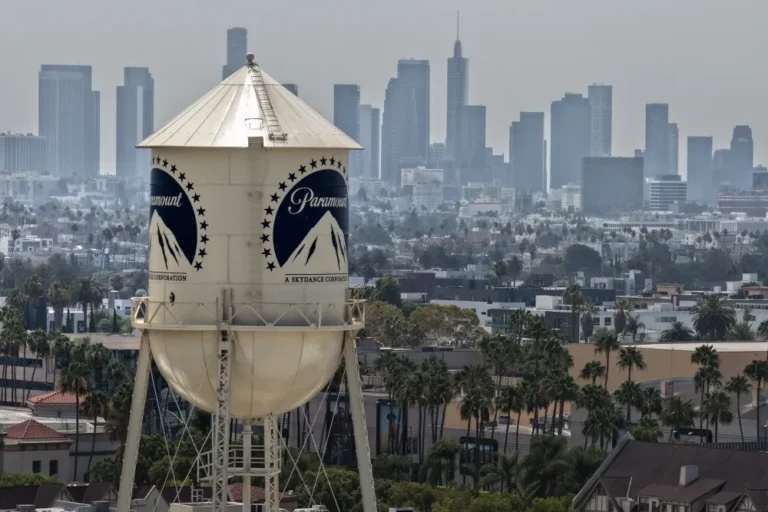
In a significant development that could reshape the landscape of the entertainment industry, Paramount Global and Warner Bros. Discovery (WBD) have agreed to postpone their proposed £111 billion merger. This decision comes as a coalition of 12 state attorneys general, led by California, intensifies its legal challenge, seeking to block the transaction on antitrust grounds. The agreement, filed jointly in federal court, signifies a critical juncture in the ongoing legal battle, pushing the potential completion of the merger well beyond initial expectations and ensuring a thorough judicial review of its competitive implications.
The joint stipulation mandates that Paramount will not finalize the merger until five business days after an antitrust trial concludes, or by June 1, 2027, whichever date arrives first. This effectively places the merger’s fate on hold, subject to the outcome of a legal process that could take years. The court has yet to formally set a trial date, leaving a degree of uncertainty but providing a clear framework for the proceedings to unfold. This postponement is a direct response to the legal pressure exerted by the states, who have argued vociferously that the consolidation of these media giants would stifle competition and harm consumers.
States Secure Temporary Restraining Order, Pushing for Full Antitrust Review
Earlier in the week, the coalition of 12 state attorneys general successfully secured a temporary restraining order, temporarily halting the merger for a period of 28 days. This legal maneuver provided the states with crucial breathing room to build their case and formally present their arguments against the proposed union. Their primary contention centers on the belief that the merger would diminish competition within both the cable television sector and the theatrical film distribution market. By consolidating two of the most significant players in the industry, the states fear a reduction in choices for consumers, a potential increase in subscription costs, and a chilling effect on the diversity of content produced and distributed.
Paramount had initially sought a three-day hearing in late August to contest the states’ preliminary injunction motion. However, the attorneys general opposed this request, citing the need for additional time to meticulously gather evidence, conduct thorough investigations, and adequately prepare for a comprehensive trial. The back-and-forth between the parties culminated in an agreement on the postponement, a testament to the seriousness with which the antitrust concerns are being addressed by both the legal system and the involved companies. Instead of proceeding with the scheduled hearing, both sides engaged in discussions that led to the current stipulation, signaling a more structured approach to resolving the complex legal questions at hand.
Paramount Hails Agreement as "Significant Win," Emphasizes Path to Trial
In the wake of the agreement, Paramount released a statement expressing its satisfaction with the outcome, characterizing it as a "significant win." The company’s spokesperson highlighted that the agreement provides a direct and clear pathway to a trial, which they believe will ultimately vindicate their position. "Today’s agreement is a significant win because the result is exactly what we have sought from the outset: a direct path to a trial based on the evidence," the spokesperson stated.
Paramount’s stance is that the proposed merger is not only permissible but also beneficial for the industry. They assert that the transaction will ultimately prove advantageous for competition, consumers, and creators alike. The company pointed to the fact that numerous competition authorities globally have already reviewed and approved similar deals, suggesting that their concerns are unfounded. "This is the fastest and clearest way to prove that this transaction is good for competition, good for consumers, and good for creators, a conclusion dozens of competition authorities around the world have already reached," the spokesperson added.
Furthermore, Paramount strongly refuted the states’ market definitions, asserting they do not accurately reflect the current realities of the dynamic media marketplace. "Plaintiffs’ market definitions bear no relationship to the realities of today’s marketplace and cannot withstand scrutiny. We look forward to proving our case at trial," the statement concluded. This assertive declaration underscores Paramount’s confidence in its ability to demonstrate that the merger will not have the anti-competitive effects alleged by the states.
August Hearing Cancelled Amidst Shifting Legal Landscape
The agreement to postpone the merger has led to the cancellation of the hearing previously scheduled for August 3 in federal court in Oakland. This hearing was slated to be a crucial venue for both sides to present their arguments regarding the injunction request. The cancellation underscores the shift in strategy and the commitment to a more extended legal process.
Adding another layer to the legal maneuvers, the Writers Guild of America (WGA) has also withdrawn its separate injunction motion. The WGA had planned to present its case during the same August hearing. However, with Paramount’s commitment to await a ruling on the broader antitrust claims, the immediate urgency for the WGA’s challenge has diminished. This withdrawal signifies that the resolution of the states’ antitrust case will likely dictate the future of the merger and, by extension, its impact on various industry stakeholders, including creative unions.
Timeline and Financial Implications
The legal proceedings are now operating under a revised timeline. Both Paramount and the coalition of states are required to submit a joint filing by July 31, outlining their respective positions on trial scheduling. This will be a critical step in setting the pace for the antitrust litigation.
Financially, the postponement carries significant weight. Paramount had initially aimed to close the merger before September 30. Beyond this date, the company would have been liable to pay Warner Bros. Discovery investors a substantial fee of £7 million per day. This looming financial penalty underscores the urgency with which Paramount had pursued the merger. Conversely, the states have previously advocated for the trial to commence as early as April 2027, indicating their desire for a thorough and unhurried review of the antitrust implications. The current agreement, with its June 1, 2027, deadline, aligns more closely with the states’ proposed timeline, suggesting a strategic concession by Paramount under legal duress.
Background and Broader Industry Context
The proposed merger between Paramount Global and Warner Bros. Discovery represents a significant consolidation in an industry undergoing rapid transformation. Both companies are legacy media giants grappling with the seismic shifts brought about by the rise of streaming services, evolving consumer viewing habits, and intense competition from tech giants and agile new entrants.
Paramount Global, formerly ViacomCBS, owns a vast portfolio of assets including CBS, Paramount Pictures, MTV, Nickelodeon, Comedy Central, and the streaming service Paramount+. Warner Bros. Discovery, formed through the merger of WarnerMedia and Discovery Inc., controls a similarly expansive collection of brands and intellectual property, including Warner Bros. film studios, HBO, CNN, Discovery Channel, and the streaming service Max (formerly HBO Max).
The rationale behind such a merger often centers on achieving economies of scale, consolidating content libraries, leveraging combined technological infrastructure, and creating a more formidable competitor in the streaming wars. Proponents argue that a larger entity can better absorb the costs of content creation and distribution, invest in new technologies, and offer a more compelling and diversified product to consumers.
However, such large-scale mergers invariably raise antitrust concerns. Regulatory bodies and state attorneys general are tasked with ensuring that such consolidations do not lead to undue market power, which could result in higher prices, reduced quality, and less innovation. The specific concerns raised by the states – particularly regarding cable television and theatrical markets – reflect a focus on areas where the combined entity could potentially exert significant influence. The cable television market, though evolving, still plays a vital role in content distribution, and the theatrical market remains a crucial avenue for film exhibition and revenue generation.
The involvement of 12 state attorneys general signifies a coordinated and robust effort to scrutinize the merger. This multi-state approach can amplify the legal and political pressure on the companies and demonstrate a broad consensus on the need for careful examination. California, as the lead state, has a history of actively pursuing antitrust actions, particularly in the technology and media sectors.
The Writers Guild of America’s involvement, and its subsequent withdrawal of its injunction motion, highlights the broader ripple effects of such a merger on industry labor and creative professionals. Unions and guilds often scrutinize deals that could impact employment, contract negotiations, and the overall economic health of creative endeavors. Paramount’s commitment to await the antitrust ruling has seemingly alleviated the immediate concerns for the WGA, but the long-term implications for creative talent will remain a point of observation.
Potential Implications and Future Outlook
The postponement of the Paramount-WBD merger, while a setback for the companies’ immediate plans, opens up a period of intense legal scrutiny. The antitrust trial will delve into complex economic arguments regarding market definition, market power, and the potential harm to consumers and competition. The evidence presented and the arguments made will be crucial in determining the ultimate fate of this proposed union.
If the states are successful in their challenge, the merger could be blocked entirely, forcing Paramount and WBD to pursue alternative strategies for navigating the evolving media landscape. This could involve smaller, more targeted acquisitions, strategic partnerships, or a continued focus on organic growth and operational efficiencies.
Conversely, if Paramount and WBD prevail in court, the merger could proceed, albeit with significant delays. The £111 billion figure represents a substantial financial undertaking, and any successful merger would create a media behemoth with immense influence. The regulatory landscape, however, could evolve even during the prolonged legal process, potentially introducing new considerations.
The legal battle also serves as a broader signal to the entertainment industry. It underscores the increased vigilance of antitrust regulators and the willingness of states to challenge large-scale consolidations that could impact market dynamics. As the media industry continues to consolidate and innovate, such antitrust reviews are likely to become more common, shaping the future of content creation, distribution, and consumption for years to come. The outcome of the Paramount-WBD case will undoubtedly be closely watched by industry leaders, investors, and consumers alike.