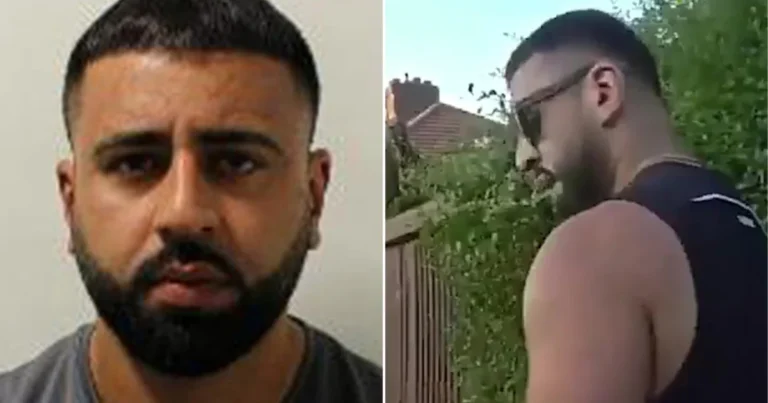
Zafer Dogan, a 32-year-old resident of Enfield, North London, has been sentenced to two years and four months in prison following a harrowing investigation into his systematic targeting of children and women. Dogan appeared at Wood Green Crown Court, where he faced the consequences of a series of heinous offenses involving the production and possession of indecent images, the misuse of artificial intelligence for sexual exploitation, and the obstruction of justice. The sentencing marks the conclusion of a case that has sparked a nationwide debate regarding the efficacy of the judicial system’s bail processes and the urgent need for enhanced safeguards against the weaponization of AI technology.
The scope of Dogan’s criminal activities was described by investigators as both predatory and extensive. Over a period of time, he amassed a digital archive containing over 5,000 photographs, many of which depicted girls playing in public spaces, commuting to school, or walking with their parents. Beyond these targeted minors, Dogan was found to have covertly photographed numerous women in his local area. Utilizing sophisticated artificial intelligence software, Dogan digitally manipulated these images to remove clothing, creating non-consensual intimate material. Forensic analysis confirmed that these manipulated images involved at least 33 adult women and two girls, aged seven and 13.
A Chronology of Deception and Investigation
The investigation into Dogan’s behavior culminated on July 16, when police moved to arrest him. During the apprehension, Dogan attempted to destroy evidence by throwing his mobile phone into a neighbor’s garden. The device was subsequently recovered by police dogs, providing investigators with the "smoking gun" evidence needed to secure his conviction. Upon forensic examination, the phone contained approximately 1,800 indecent images of children, alongside extreme pornography, including material depicting bestiality.
On August 6, Dogan appeared at Highbury Magistrates’ Court, where he entered guilty pleas to a comprehensive list of charges:
- Three counts of making indecent images of a child, covering 653 Category A images, 294 Category B images, and 900 Category C images.
- Two additional counts of making indecent photographs of a child.
- Possession of extreme pornography and prohibited images of a child.
- Creating purported intimate images of an adult.
- Obstruction of a police officer.
Despite the severity of these charges and the active opposition of the Crown Prosecution Service, Dogan was repeatedly granted bail. This decision allowed him to return to his home in Enfield, a residence with a bedroom window that offered a direct, unobstructed view of an area frequently used by local children.
The Human Cost: Victims and Community Impact
The decision to grant bail to an admitted offender who posed an immediate, localized threat to his own neighbors has been met with widespread condemnation. The psychological toll on the victims and their families has been profound. One mother, whose 13-year-old daughter was targeted by Dogan, testified to the court that the ordeal left her feeling as though she had been "punched in the gut."
"I feel like we’re on the run, yet we’re not the sexual offenders," the mother stated during the proceedings. "Dogan is just living the same life while our lives have been changed forever. How can a court put him back so close to his victims?"
The mother of the seven-year-old victim expressed similar anguish, noting the systemic failure that forced her family to seek temporary accommodation to escape the shadow of their tormentor. The stress of living in close proximity to an individual who had already admitted to stalking and photographing their children necessitated a complete uprooting of their lives. For these families, the justice system—intended to be a source of protection—became an additional source of trauma.
Official Responses and Systemic Criticism
The outcry following the sentencing reached the highest levels of law enforcement and government. Metropolitan Police Commissioner Sir Mark Rowley labeled the bail decision "unfathomable," emphasizing that the judicial process had failed to account for the immediate safety of the victims. Rowley noted that the victims were forced into exile, moving to distant, temporary housing to escape the proximity of the offender, while the offender remained in the home where the crimes were committed.
Andrea Simon, the London Victims’ Commissioner, echoed these sentiments, asserting that the victims and their families had been "grossly failed." She raised critical questions about how the justice system balances its legal responsibilities with the moral imperative to protect vulnerable citizens.
"The system has failed to ensure that the safety of the public—specifically the safety of the victims—is the primary consideration in bail decisions," Simon remarked. "When an offender is granted bail to the very location where their crimes were committed, the system loses the trust of those it is sworn to protect."
A government spokesperson responded to the criticism, acknowledging the gravity of the crimes and stating that future bail decisions must better account for the protection of witnesses and the public. The government further highlighted ongoing legislative efforts to curb the use of AI tools in the creation of child sexual abuse material (CSAM).
The Broader Implications of AI-Facilitated Abuse
The Dogan case is a chilling harbinger of the challenges posed by generative AI. While the legal system grapples with traditional definitions of obscenity and abuse, technology is rapidly outpacing current statutes. The ability to create realistic, non-consensual images of children and adults from mundane, public photographs creates a new, pervasive form of victimization.
Metropolitan Police Constable Natalie Scagliarini, who was closely involved in the investigation, described Dogan’s behavior as "predatory and dangerous." The use of AI to "undress" victims adds a layer of violation that persists even if the images are not distributed publicly. The defense’s claim that the AI-generated images had not been shared was little comfort to the victims, as the act of creation itself constitutes a severe breach of privacy and a form of psychological violence.
Sir Mark Rowley has called for a collaborative approach involving technology companies, asserting that firms must implement more robust safeguards to prevent their AI models from being utilized for such illicit purposes. As of now, the ease with which individuals can access these tools remains a significant concern for international law enforcement agencies.
The Road Ahead: Sentencing and Legal Precedent
In passing the two-year and four-month sentence, the judge at Wood Green Crown Court made it clear that a suspended sentence was not an option. "Doing so would amount to utterly failing my public duty," the judge remarked, emphasizing that the "chilling" nature of the imagery and the surreptitious manner in which it was obtained necessitated a custodial term.
While the defense counsel, Joseph Carr, offered apologies on behalf of Dogan and cited his client’s purported remorse, the impact of his actions remains irreversible for the families involved. The case has also had personal consequences for those close to the offender; it was noted that Dogan’s own family has been ordered to vacate the home they have occupied for three decades, a final, tangible consequence of his criminal legacy.
The Dogan case serves as a stark warning to both the judiciary and the tech industry. As the line between digital reality and physical danger blurs, the legal system must adapt to provide swifter, more protective responses to victims of AI-facilitated abuse. For the residents of the Enfield community, the ordeal serves as a painful lesson on the importance of community vigilance and the necessity for a justice system that prioritizes the safety of the innocent over the procedural rights of the predator.
As the investigation into the thousands of images continues, police are urging anyone who may have witnessed suspicious activity, or who suspects they or their children may have been targeted by Dogan, to come forward. The identification of all victims remains a priority, underscoring the long-term, ripple effect of a crime that began with a simple camera and ended with the systematic exploitation of innocent lives.