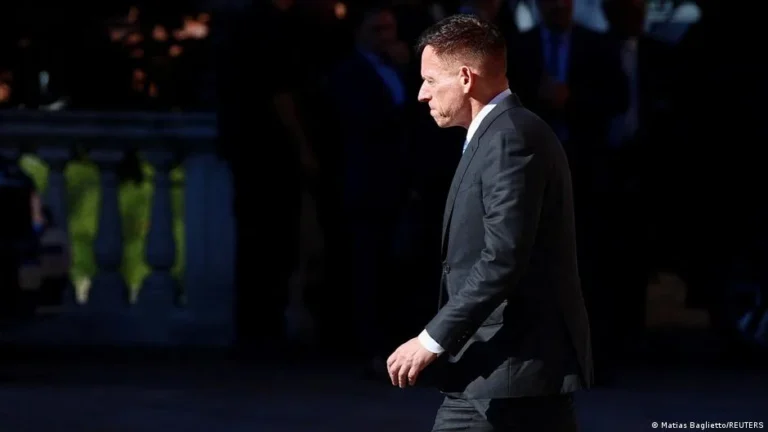
While the global stage is frequently dominated by the boisterous rhetoric of Donald Trump or the omnipresent social media maneuvers of Elon Musk, a quieter, arguably more potent force operates from the wings: Peter Thiel. With a personal net worth estimated by Forbes at $35.7 billion, the German-born venture capitalist has transitioned from a precocious tech entrepreneur into one of the most influential political and ideological architects of the 21st century. His reach extends from the foundational architecture of digital payments and social media to the cutting edge of military-grade artificial intelligence and the upper echelons of Republican political strategy.
Born in 1967 in Frankfurt am Main, Thiel’s early life was defined by mobility; his family relocated to the United States when he was just a year old, and he spent a formative six-year stretch in Namibia between 1971 and 1977. This international perspective, combined with his eventual education at Stanford University, cultivated a worldview characterized by a profound skepticism of traditional democratic institutions and an unwavering faith in the power of disruptive, often autocratic, corporate leadership.
The Genesis of a Techno-Capitalist Empire
Thiel’s rise to prominence began in the late 1990s as a co-founder of PayPal, the digital payment platform that revolutionized online commerce. His partnership with Elon Musk during this period established a network of tech elites often referred to as the "PayPal Mafia." Following the successful acquisition of PayPal by eBay, Thiel demonstrated an uncanny foresight, becoming the first outside investor in Facebook in 2004 with a $500,000 stake that would eventually yield billions.
Today, his portfolio is a testament to the modern tech-security complex. He remains a significant shareholder in Musk’s SpaceX and is a major backer of OpenAI. However, his most consequential venture remains Palantir Technologies. Founded in 2003, Palantir has become a cornerstone of global intelligence, providing data-analytics and AI-driven surveillance software to the US Department of Defense, the CIA, and Immigration and Customs Enforcement (ICE). The company’s influence is so pervasive that it has become a lightning rod for debate; its April 2024 manifesto, which outlined a vision for AI in warfare, prompted widespread accusations of "techno-fascism" from critics who fear the implications of delegating lethal decision-making to algorithms.
A Chronology of Political Intervention
Thiel’s political trajectory marks a departure from the traditional Silicon Valley archetype of the socially liberal executive. His ideological formation can be traced back to his time at Stanford, where he founded the Stanford Review as a platform to challenge what he perceived as the stifling "woke" orthodoxy of academia.
Key milestones in his political influence include:
- 2016: Thiel broke with the majority of the tech establishment to become an early, prominent backer of Donald Trump, donating $1.25 million to his campaign and delivering a primetime address at the Republican National Convention.
- 2022: He solidified his role as a kingmaker by donating $15 million to the Senate campaign of JD Vance, marking the largest single donation ever made to a US Senate candidate at that time.
- 2024-2025: Following a brief period of strategic withdrawal, Thiel has re-engaged with the GOP, positioning himself as a primary architect of the party’s "National Conservative" shift.
- 2026: Reports indicate Thiel has relocated to Argentina, where he has engaged in high-level discussions with President Javier Milei regarding the development of AI data centers and deregulation—an effort to create a "safe haven" for his interests outside the reach of US regulatory scrutiny.
Ideological Underpinnings: Technology as Politics
Thiel’s philosophy is distinctively contrarian. He has famously stated that "technology is the alternative to politics," a sentiment that suggests a fundamental distrust of the slow, deliberative nature of democracy. His writings and lectures reflect a preference for top-down, decisive governance, often citing the efficiency of corporate structures over the messiness of voter-led processes.
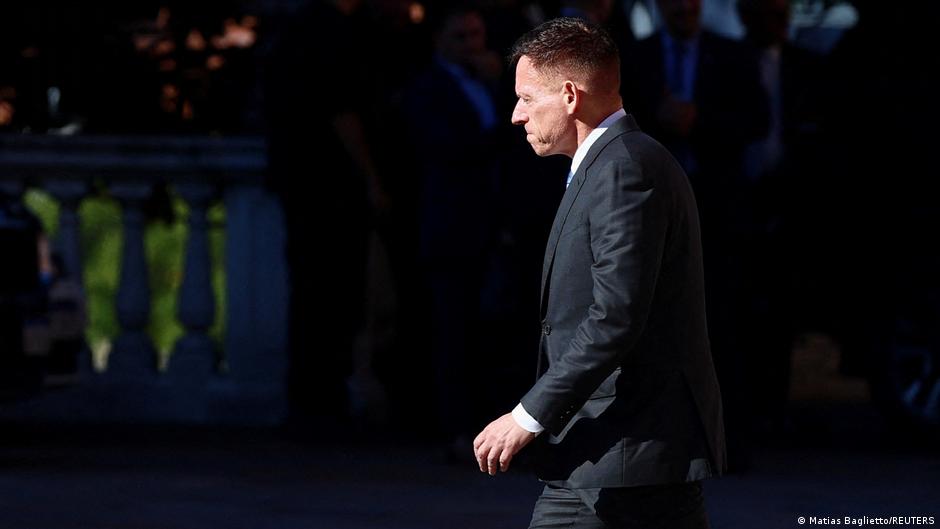
In recent years, his public persona has taken a turn toward the metaphysical. He has engaged in a series of global lectures centered on the concept of the "antichrist"—which he defines not in a strictly biblical sense, but as an entity or movement that uses the promise of "peace and safety" to mask a descent into technological decadence. In this framework, he has frequently targeted figures who advocate for the regulation of technology, including climate activist Greta Thunberg and, more recently, Pope Francis, whom he accused of hindering progress by warning against the dehumanizing risks of AI.
The Palantir Paradox: Security vs. Sovereignty
The global reception of Thiel’s companies has become increasingly bifurcated. While Palantir remains deeply entrenched in US security infrastructure, several European nations—including Germany, France, the Netherlands, and the UK—have begun to distance themselves from the company. These decisions are driven by concerns over data privacy, the lack of transparency in algorithmic decision-making, and the potential for these systems to be used in ways that conflict with European human rights standards.
Despite this, Palantir’s grip on global security remains formidable. The firm’s ability to integrate disparate, massive datasets into actionable intelligence has made it an indispensable partner for many Western governments. This creates a geopolitical paradox: nations that express discomfort with the "techno-fascist" leanings of the company’s leadership find themselves structurally reliant on its software to maintain their own national security posture.
Mentorship and Future-Proofing: The Case of JD Vance
The relationship between Peter Thiel and Vice President JD Vance is perhaps the most significant example of Thiel’s long-term political strategy. Their association began in 2011 at Yale Law School, where Thiel’s intellectual defiance of the prevailing academic consensus deeply influenced the then-developing worldview of the future vice president.
Political analysts observe that Thiel’s support for Vance serves a dual purpose. By backing a candidate who aligns with his nationalist and anti-liberal views, Thiel is effectively "future-proofing" his business interests. If Vance were to ascend to the presidency, the regulatory environment for AI, surveillance, and big tech could shift in ways that favor Thiel’s companies. This strategy of nurturing ideological allies is consistent with Thiel’s long-standing belief that building enduring relationships with powerful individuals is the key to institutional success.
Implications for the Future of Governance
The implications of Thiel’s influence are profound. By operating at the intersection of extreme wealth, advanced surveillance, and nationalistic politics, he has created a model of influence that bypasses traditional lobbying. He does not merely advocate for policy; he funds the candidates who create the policy and provides the technology that the government relies on to execute it.
Critics argue that this fusion of private corporate power and public governance threatens the core tenets of the democratic state. When the companies responsible for national security are managed by individuals who explicitly state their hostility toward democratic decision-making, the risk of "regulatory capture" becomes acute. Conversely, supporters argue that Thiel is a necessary disruptor in an era of stagnant bureaucratic processes, providing the tools and vision required to maintain Western technological superiority against global rivals.
As the debate over the regulation of AI and the future of the digital economy intensifies, Thiel remains at the center of the storm. Whether he is seen as a visionary builder or an existential threat to democratic norms, his actions will continue to shape the trajectory of global politics for the foreseeable future. His transition to Argentina and his continued cultivation of political protégés suggest that his influence is not waning, but rather evolving to meet the challenges of an increasingly volatile geopolitical landscape. As the world grapples with the power of the algorithms he has helped fund and build, Peter Thiel continues to operate with the singular goal of ensuring that the future is shaped by the few, rather than the many.