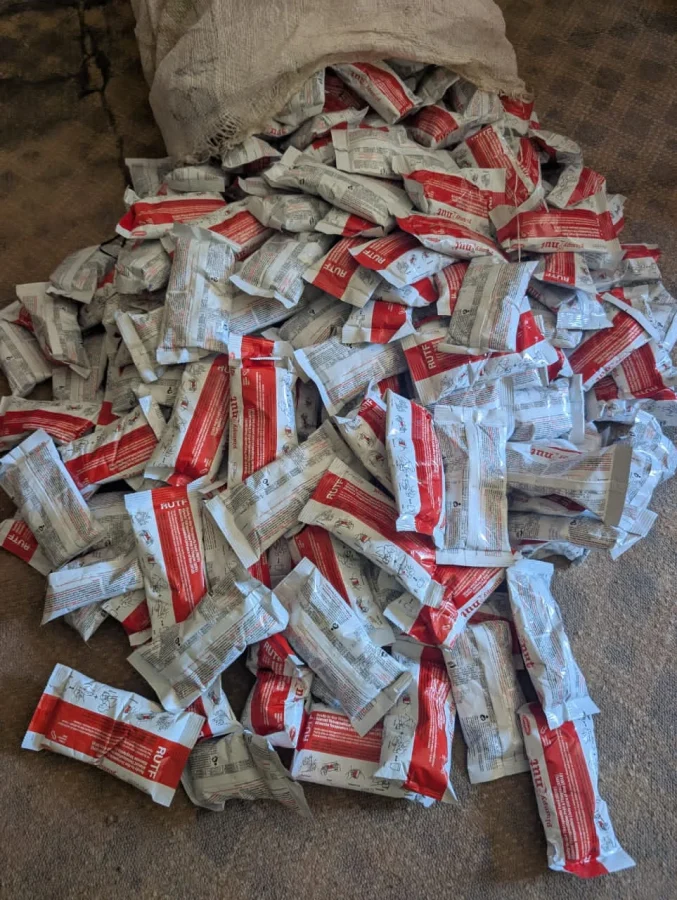
The Katsina State Police Command, acting in close coordination with the Joint Taskforce Committee on Ready-to-Use Therapeutic Food, has successfully apprehended nine suspects in connection with the systematic diversion of vital nutritional commodities meant for vulnerable populations. The operation, which spanned multiple locations across the state, led to the physical recovery of 1,624 sachets of the specialized nutritional product widely known locally as “Yar Kwamaso.” This crackdown highlights ongoing vulnerabilities within the supply chains of public health interventions and underscores the resolve of law enforcement agencies to protect humanitarian and governmental resources designated for malnourished children.
The targeted commodity, Ready-to-Use Therapeutic Food (RUTF), is an essential, life-saving intervention specifically formulated to treat severe acute malnutrition (SAM) among infants and young children. Typically consisting of a dense, nutrient-packed peanut paste enriched with essential vitamins and minerals, RUTF requires no preparation and can be administered safely in community-based settings. Because these supplies are procured through international aid organizations, donor funding, and government healthcare budgets to be distributed free of charge to deserving families, any illegal diversion represents a severe breach of public trust and a direct threat to child survival indices in regions grappling with food insecurity.
Chronology of Operations and Suspect Arrests
The breakthrough leading to the recent arrests began following actionable intelligence gathered by security operatives regarding the illicit commercialization of humanitarian supplies. The enforcement action unfolded over a series of coordinated raids conducted days apart in both urban centers and rural local government areas.
The first phase of the crackdown occurred on the evening of September 3, 2026, at approximately 8:00 p.m. Operatives from the Katsina State Police Command intercepted a primary target within the Mobil Quarters area of Katsina metropolis. During this operation, a 46-year-old woman identified as Amina Abdurrahman was taken into custody. A search of her immediate possession revealed two heavy sacks containing a total of 600 sachets of suspected diverted RUTF. Subsequent preliminary interrogations of the suspect yielded vital leads, with Abdurrahman reportedly confessing that she procured the regulated commodities from an intermediary operating within the Kofar Marusa neighborhood. That primary accomplice has since been declared wanted, with security forces expanding their search parameters to effect his arrest.
Building upon the intelligence gathered from the initial raid, the Joint Taskforce escalated its operations four days later. On September 7, 2026, at around 5:00 p.m., a synchronized multi-location sweep was executed at the bustling Mashi Market situated within Mashi Local Government Area, alongside a parallel raid at Kwado Quarters in Katsina.
This second wave of operations proved highly productive, netting eight additional suspects. The individuals apprehended during these coordinated sweeps were identified as Aisha Rabi’u, Jamila Yahaya, Farida Kabir, Shafa’atu Abubakar, Sabiu Kabir, Rabilu Rabi’u, Maryam Kabir, and Buhari Usman. A meticulous inventory conducted by law enforcement officials following the operations revealed that 888 sachets of the therapeutic food were recovered directly from seven of the suspects operating within the Mashi Market environment. An additional 136 sachets were recovered from Buhari Usman at the Kwado Quarters location. Combined with the initial seizure, the total recovery tally reached 1,624 sachets, all of which have been cataloged as evidence and secured in police custody alongside the nine detained suspects.
Official Responses and Directives from Command Leadership
Addressing the media regarding the magnitude of the recoveries, the Police Public Relations Officer for the Katsina State Command, DSP Abubakar Sadiq, emphasized the gravity of the offenses committed by the suspects. The police leadership made it clear that compromising medical and nutritional supplies intended for public welfare initiatives will not be treated lightly.
In response to the developments, the Commissioner of Police for Katsina State, CP Ali Umar Fage, has issued a directive commanding an exhaustive and comprehensive investigation into the entire supply chain. The primary objective of this expanded inquiry is to trace the exact origin of the diverted commodities, identify institutional or bureaucratic leakages, and dismantle the broader criminal networks facilitating the commercialization of free public health resources.
According to the Command, once the ongoing investigative procedures are concluded, all nine suspects will be formally arraigned before a court of competent jurisdiction to face criminal charges. Furthermore, the Katsina State Police Command has issued a stern, unequivocal warning to traders, local vendors, and commercial intermediaries across the state. The advisory explicitly prohibits the purchase, stocking, resale, or unauthorized handling of any government medical supplies, pharmaceutical products, or public health intervention items. Law enforcement authorities have reiterated that any business owner or individual found culpable of participating in this illicit trade will face the full wrath of the law without exception.
Broader Socio-Economic Implications and Child Nutrition Challenges
The diversion of Ready-to-Use Therapeutic Food in northwestern Nigeria occurs against a backdrop of persistent regional food insecurity and high malnutrition rates. Northern states, including Katsina, have historically faced formidable hurdles regarding agricultural productivity, economic shocks, and displacement, all of which contribute significantly to high rates of wasting and stunting among children under the age of five.
Public health experts note that humanitarian pipelines delivering nutritional commodities operate under stringent donor guidelines and resource constraints. When vital items like RUTF are siphoned off from official health facilities or distribution centers into open markets, the intended beneficiaries—severely malnourished children from impoverished households—are deprived of the exact medical nutrition required for their survival and cognitive development. This disruption not only wastes valuable donor and governmental resources but also directly contributes to preventable morbidity and mortality rates among the state’s most vulnerable demographic.
The involvement of multiple local actors, spanning different demographics and locations from Mashi LGA to the Katsina metropolis, suggests the existence of an organized black-market network rather than isolated incidents of theft. This points to internal vulnerabilities within health facility management, supply chain tracking, or community-level distribution systems. Observers argue that curbing these illegal practices will require systemic institutional reforms, enhanced digital tracking of humanitarian inventories, and stricter oversight by community monitoring committees to ensure transparency from the point of entry down to the final recipient.
As investigations proceed, civil society organizations and health advocates have called for heightened community vigilance. Empowering local communities to report suspicious sales of humanitarian aid in local markets is viewed as a vital complementary strategy to police enforcement. The Katsina State Police Command has reaffirmed its commitment to collaborating with health stakeholders and security partners to safeguard public welfare materials and ensure that every sachet of therapeutic food reaches the children whose lives depend upon it.