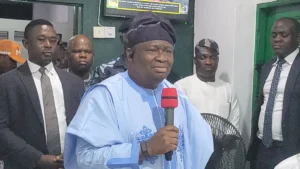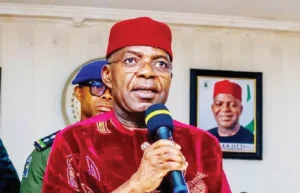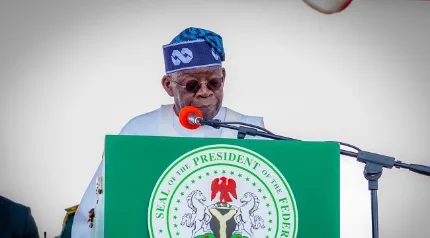
In a significant show of political force in the South-West region, a coalition of high-profile political figures and stakeholders converged in Osogbo, Osun State, on Saturday to formally launch the state and local government structures of the PBAT Door-to-Door Movement. The event, characterized by substantial logistical support and bipartisan participation, signaled the early commencement of grassroots mobilization for President Bola Ahmed Tinubu’s re-election bid in 2027. The primary objective articulated by the leadership of the movement is to secure a minimum of 1.5 million votes from Osun State, a target that represents a substantial portion of the state’s total voting population.
The gathering drew attendance from diverse political interests, underscoring a strategic attempt to transcend the traditional confines of the All Progressives Congress (APC). Key figures present included representatives for the Grand Patron of the movement, Chief Government Ekpemupolo, popularly known as Tompolo, the Governor of Osun State, Ademola Adeleke, and the Minister of Marine and Blue Economy, Adegboyega Oyetola.
Logistical Mobilization and Strategic Infrastructure
A major highlight of the inauguration was the donation of 30 operational vehicles and various campaign materials by Chief Government Ekpemupolo. The donation is intended to facilitate the "door-to-door" strategy, ensuring that the movement’s message reaches the most remote wards and polling units across Osun State.
Representing Ekpemupolo at the event, Kestin Pondi, the Managing Director of Tantita Security Services Nigeria Limited, emphasized that the movement is rooted in a conviction that President Tinubu’s economic policies are the catalyst for national recovery. By deploying significant resources to the South-West, the organizers are signaling that the campaign for 2027 will rely heavily on grassroots penetration rather than traditional, centralized rallies.
Voter Demographics and Electoral Targets
The ambitious target of 1.5 million votes is framed within the context of Osun State’s electoral data. According to official figures cited during the proceedings, the state possesses approximately 2,339,233 registered voters. Of this number, 1,906,390 residents have successfully collected their Permanent Voter Cards (PVCs).
By aiming for 1.5 million votes, the PBAT Door-to-Door Movement is effectively seeking to capture nearly 79% of the total PVC-holding population in the state. Analysts note that this goal is highly ambitious, requiring near-universal voter turnout and a high degree of electoral cohesion among supporters. The organizers argue that the economic stability experienced by the state government, largely attributed to increased federal allocations under the current administration’s fiscal reforms, provides a strong basis for such confidence.
The Rationale Behind the Campaign: Economic Reforms and Federal Allocations
The central theme of the mobilization effort revolves around the "reformation agenda" of the current administration. Proponents of the movement argue that President Tinubu’s bold policy decisions—specifically the removal of fuel subsidies and the unification of the foreign exchange market—have laid the groundwork for long-term economic sustainability.
During the event, speakers pointed to the improved fiscal health of sub-national governments as proof of the President’s effectiveness. The argument posits that since the inception of the current administration, the statutory allocations to states from the Federation Account have seen a marked increase. This, they claim, has empowered state governors to clear backlogs of salaries, pay pensions, and embark on infrastructure projects that were previously stalled due to financial constraints.
The organizers also noted a perceived stabilization in the domestic economy, citing the elimination of long-standing fuel queues and an improved climate for foreign direct investment. By emphasizing these metrics, the campaign is attempting to shift the narrative from the immediate challenges caused by inflation and cost-of-living increases to the long-term structural gains intended by the administration’s policies.
Bipartisan Support and Political Convergence
Perhaps the most notable feature of the Osogbo event was the bipartisan nature of the support. Governor Ademola Adeleke, a prominent member of the opposition Peoples Democratic Party (PDP), was represented by his deputy, Kola Adewusi. The Governor’s endorsement of a coalition promoting a president from the ruling party is a rare occurrence in Nigerian politics, reflecting a pragmatic approach to governance and regional cooperation.
Governor Adeleke’s message to the coalition emphasized a "unity of purpose." By participating in the launch, the state government is positioning itself as a partner in the national project, transcending political party lines to market the President’s continuity. This approach is widely viewed by political observers as an attempt to harmonize state-level governance with federal policy trajectories, ensuring that the state remains in the good graces of the central government for developmental purposes.
Official Perspectives on the 2027 Road Map
Minister of Marine and Blue Economy, Adegboyega Oyetola, who was represented by the 2026 APC gubernatorial candidate for Osun, Munirudeen Bola Oyebamiji, highlighted the necessity of maintaining the current reform trajectory. He stated that the movement’s success would be determined by its ability to translate support into actual votes at the polling units.
"The re-election project of President Bola Ahmed Tinubu has continued to attract support beyond the traditional boundaries of our great political party," Oyetola noted. He emphasized that the focus is on the long-term benefits of the President’s development programs, suggesting that the coalition’s growth is a recognition by the electorate of the importance of policy continuity.
Sunday Asuku, the National Coordinator of the PBAT Door-to-Door Movement, reinforced the message, urging the electorate to view the January 2027 election as a critical junction for Nigeria’s future. He specifically appealed to the residents of Osun to ensure their votes are "in the bag," suggesting that the movement would remain vigilant in its monitoring of electoral participation.
Implications for the 2027 Election Cycle
The launch of this movement in Osun State offers several insights into the likely landscape of the 2027 presidential race:
- Early Engagement: By initiating formal campaign structures well in advance of the election, the movement is attempting to secure "top-of-mind" awareness among voters. This is a strategy designed to build a buffer against the inevitable economic pressures that may arise during the intervening months.
- The South-West Strategy: The focus on the South-West as a core base for President Tinubu is consistent with traditional Nigerian political dynamics. However, the move to incorporate opposition elements suggests that the President’s team is not relying solely on the APC apparatus, but rather on a broader coalition of interests that may benefit from the current federal structure.
- Fiscal Federalism as a Campaign Tool: The reliance on federal allocations as a benchmark for performance provides a powerful, if controversial, campaign narrative. As states continue to receive larger allocations, the administration is effectively making the case that its fiscal reforms are directly benefiting the ordinary citizen through the state government’s ability to pay salaries and execute local projects.
- Coalition Building: The participation of opposition figures, such as those representing the state government, indicates that the 2027 campaign may see a blurring of party lines in regions where regional development and federal patronage take precedence over ideological differences.
Challenges Ahead
While the movement is clearly well-resourced and politically well-connected, it faces significant challenges. The primary hurdle remains the current economic climate in Nigeria, characterized by high inflation and a rising cost of living. While the movement points to long-term stability and increased state revenue, the immediate experience of the average voter is one of economic hardship.
Furthermore, the target of 1.5 million votes in Osun State is an aggressive one. Voter apathy remains a significant issue in Nigerian elections, and the movement will need to do more than just distribute campaign materials to convert this target into reality. Whether the promise of "continuity" and the benefits of federal reform will be sufficient to motivate the electorate remains a central question that will define the success of this mobilization effort as the 2027 calendar approaches.
As the movement expands its operations, it is expected that similar launches will take place in other states across the South-West and beyond. The Osogbo event has set a high bar for logistics and political signaling, establishing the PBAT Door-to-Door Movement as a critical player in the unfolding drama of the next presidential election cycle.