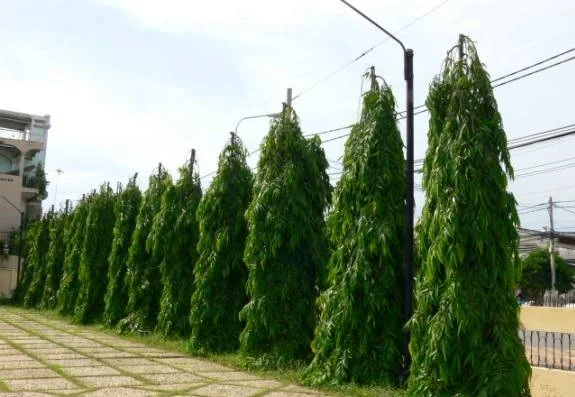
Polyalthia longifolia (Sonn.) Thwaites, a towering evergreen belonging to the Annonaceae family, has long been a fixture of the Indian landscape. Known colloquially as the mast tree, false ashoka, cemetery tree, or masquerade tree, this botanical species has transcended its traditional role as an ornamental urban fixture to become a subject of intense scientific scrutiny. Beyond its capacity to mitigate noise pollution in dense urban environments, recent phytochemical and pharmacological investigations suggest that the mast tree possesses a complex chemical profile with significant potential for the pharmaceutical, agricultural, and industrial sectors.
Botanical Characteristics and Ecological Significance
The mast tree is characterized by its slender, tall, and symmetrical growth habit, which allows it to serve as an effective natural sound barrier in metropolitan areas. While it is native to tropical regions of Asia, its resilience and aesthetic appeal have led to its cultivation in diverse climates across the globe.
Ecologically, the tree is highly valued for its dense foliage, which provides essential carbon sequestration and urban cooling effects. However, it is the internal chemical machinery of the plant that has captured the interest of researchers. The tree acts as a living laboratory of bioactive compounds, housing a complex array of proteins, lipids, dietary fiber, and essential minerals including calcium, magnesium, potassium, and sodium. This mineral density, combined with the presence of secondary metabolites such as clerodane-type diterpenes—specifically incensole, serratol, and neophytadiene—positions the mast tree as a potent source of therapeutic agents.
A Chronology of Traditional and Scientific Utilization
The transition of Polyalthia longifolia from a traditional folk remedy to a validated pharmacological subject has unfolded over several decades. Historically, the plant was utilized in Ayurvedic and Unani medicine, where practitioners employed the bark, leaves, and seeds to address a variety of ailments.
- Early Records: Initial applications focused on the management of fever, skin disorders, and basic digestive complications. The bark, in particular, was frequently prepared as a decoction to treat internal infections.
- Late 20th Century: Botanical studies began to classify the tree’s constituents, moving beyond anecdotal evidence to identify specific alkaloids and flavonoids.
- 2020 to Present: Recent research, including the 2023 review by Shinde, Kokate, and Gawade, has utilized sophisticated chromatographic techniques to isolate the specific bioactivity of the leaf extracts, confirming their efficacy against pathogenic microbial strains and oxidative stress.
Pharmacological Potential and Therapeutic Mechanisms
The medicinal profile of the mast tree is extensive, spanning antimicrobial, anti-inflammatory, and antidiabetic categories. Scientific analysis confirms that the leaf extracts exert inhibitory effects on pathogens such as Escherichia coli and Staphylococcus aureus, as well as the fungal pathogen Candida albicans.
The presence of quercetin derivatives and other flavonoids contributes to the plant’s significant antioxidant activity. These secondary metabolites function by scavenging free radicals, thereby protecting cellular structures from oxidative damage. This mechanism is increasingly being linked to potential gastroprotective applications, specifically in the management of gastric ulcers.
Furthermore, cardiovascular research has highlighted the hypotensive properties of aqueous bark extracts. Clinical observations in experimental models suggest that these extracts can reduce heart rate and blood pressure, making the species a candidate for further investigation in antihypertensive therapeutic development. Perhaps most notably, current research into the apoptosis-inducing capabilities of P. longifolia leaf extracts against various cancer cell lines suggests a future in oncology, though researchers stress that these findings are currently limited to experimental settings and require extensive clinical trials to determine human efficacy and safety profiles.

Economic and Industrial Implications
The economic footprint of Polyalthia longifolia extends well beyond its use as a landscape plant. In regions such as Nigeria, the tree has fostered a micro-economy involving the sale of nursery seedlings and the production of processed health products.
Market Data at a Glance:
- Nursery Seedlings: Live specimens are traded locally for between N1,500 and N5,000, depending on maturity and health.
- Health Supplements: Processed bark powder and encapsulated extracts are sold by specialized health retailers, with market prices reaching N7,000 to N9,000 per 100 g.
Beyond the healthcare sector, the timber industry has long favored the wood of the mast tree for its lightweight, straight-grained properties. While historically essential for the production of ship masts—hence its common name—modern utility includes the manufacture of high-quality plywood, fuelwood, and stationary items like pencil cases.
The Future of Phytobiotics and Sustainable Agriculture
Perhaps the most promising development for the mast tree lies in the agricultural sector. As the global poultry and livestock industries face mounting pressure to reduce the use of prophylactic antibiotics—a major contributor to antibiotic resistance—researchers are looking toward plant-based alternatives.
Leaf extracts of P. longifolia are currently under investigation as "phytobiotic" feed supplements. Preliminary studies suggest that these extracts can support the health of broilers and ruminants, potentially replacing synthetic antibiotics. Additionally, the seed extracts exhibit significant potential as organic pesticides, fungicides, and mite repellents. By providing a natural alternative to synthetic agrochemicals, the mast tree offers a pathway toward more sustainable farming practices.
Analytical Outlook: Challenges and Opportunities
Despite the clear benefits identified in current literature, the widespread adoption of P. longifolia derivatives faces significant hurdles. First, the lack of standardized extraction protocols across different geographical populations means that the concentration of bioactive compounds can vary significantly. Second, while traditional use is well-documented, the pharmacological community emphasizes that further toxicity studies are required to establish safe dosage levels, particularly for long-term consumption.
Industry experts suggest that the next phase of research must prioritize the standardization of raw material sourcing. By creating a uniform extraction process, manufacturers can ensure the stability and potency of the active ingredients, such as the clerodane-type diterpenes. If these technical challenges are overcome, the mast tree is positioned to become a cornerstone of both natural medicine and sustainable industrial materials.
Concluding Synthesis
The mast tree serves as a compelling example of how a common, multi-purpose plant can bridge the gap between traditional knowledge and modern scientific inquiry. From its role as an urban air-purifying agent to its potential as a source of novel anticancer compounds and organic agricultural inputs, Polyalthia longifolia represents a multi-faceted asset. As pharmaceutical, agricultural, and timber industries continue to explore its properties, the "masquerade tree" is likely to shed its status as a mere ornamental plant and emerge as a significant contributor to global health and sustainable industry. The path forward remains clear: rigorous, clinical-grade research will be the final arbiter in determining how much of this tree’s promise can be translated into tangible, real-world solutions.