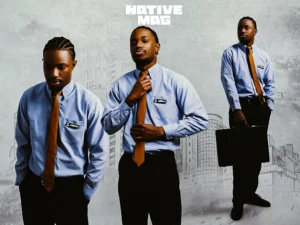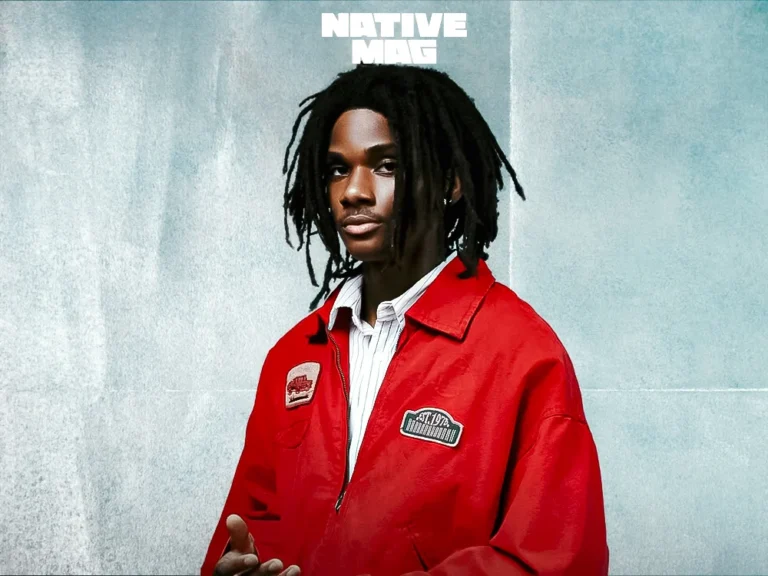
The release of Taves’ latest project, Popstar – Side A, marks a deliberate departure from the frenetic pace of contemporary music consumption. By choosing to split his latest body of work into two distinct halves, the artist has challenged the industry’s prevailing "drop and move on" culture, opting instead for a strategy rooted in patience and narrative cohesion. Released this past July, the project is not merely a collection of singles but a curated, evolving emotional landscape that serves as the opening chapter of a larger, more complex artistic statement.
A Chronology of Artistic Evolution
The genesis of Popstar – Side A dates back to late 2024, a period that saw the artist retreating from the public eye to refine his sound. Unlike many of his contemporaries who rely on rapid-fire content cycles, Taves spent months in the studio, subjecting his material to a rigorous process of selection and refinement. This incubation period was characterized by a high degree of volatility; the tracklist underwent constant revisions, with songs once considered essential being discarded in favor of newer, more resonant compositions.
This creative evolution is perhaps best exemplified by the project’s opening track, "Chaos." While the song serves as the listener’s introduction to the album today, its origins trace back three years. It underwent a profound transformation, with Taves and his team re-engineering the production to align with the specific thematic architecture of the new project. This intentionality—the decision to keep a record that predates the album’s formal conception and rework it to fit a new context—demonstrates the artist’s commitment to internal consistency over mere aesthetic trends.
Thematic Architecture and Self-Perception
Despite the title Popstar, the album is less an exploration of the trappings of fame and more a deep dive into the internal psychology of the man behind the music. Taves clarifies that the title is a reflection of his current self-image. It is a label he wears with intention, signifying his status as an artist operating within the pop sphere while maintaining the creative autonomy of an auteur.
The album’s sonic trajectory is meticulously sequenced. Following the introductory "Chaos," the listener is guided through a series of tracks like "Isn’t It Beautiful," "Simone," "Deliver Me," and "Uche Jumbo." These songs occupy a space of lightness, characterized by themes of romance, social interaction, and fleeting moments of euphoria. However, as the project draws to a close, the energy shifts. Tracks such as "Preaching," "Space," and "Take Me Away" introduce a layer of introspective gravitas, reflecting the artist’s struggle to balance the demands of a public-facing career with the necessity of personal stability. This arc—from the externalized excitement of the beginning to the inward-looking resolution of the end—is intended to mirror the human experience of navigating fame and private life simultaneously.
Technical Craft and Collaborative Dynamics
A defining feature of Popstar – Side A is the absence of featured artists and outside songwriting contributions. Taves wrote every track on the project, a creative decision that preserves the purity of his vision. This solitary writing process, however, is bolstered by a robust production and engineering team. Arieenati, a long-term collaborator, plays a pivotal role in the project’s success, acting as a creative partner who shares an intuitive understanding of the artist’s sonic goals. Their relationship has evolved to the point where, as Taves notes, communication is often non-verbal, allowing for a more fluid and efficient studio workflow.

The broader team—including contributors like Spax, Black Culture, Anoop D’Souza, Omzi, and Michael Synx—worked to ensure that the technical polish of the album matched its emotional depth. Michael Synx, who engineered several tracks, also contributed production work on "Space," further grounding the album in a cohesive sonic identity.
The "Uche Jumbo" Phenomenon: A Case Study in Interpolation
Perhaps the most discussed moment on the album is the track "Uche Jumbo," which features a creative interpolation of Wizkid’s seminal hit, "Don’t Dull." The song’s creation was almost accidental; it was the result of a spontaneous studio session with producer OG Sterling during a moment of artistic boredom.
The decision to integrate elements of "Don’t Dull" was not a marketing ploy or a calculated attempt at nostalgia. Instead, it was born from a genuine appreciation for the rhythmic foundation of the original track. Taves credits his stylist with the initial suggestion, which prompted a return to the studio to refine the integration. The goal was to harness the infectious energy of the original drums without sacrificing the unique identity of the new song. In an era where sampling is often criticized for being derivative, Taves’ approach serves as a masterclass in homage. By isolating the intro of the original song and using it as an entry point rather than a crutch, he managed to bridge the gap between two generations of sound.
Market Context and Industry Implications
The music industry in 2026 is defined by the pressure to maintain relevance through consistent social media engagement and high-frequency releases. By intentionally withholding "Side B" and insisting that the project be viewed as a singular, two-part whole, Taves is bucking this trend. His approach mirrors the shift seen in artists like Post Malone or The Weeknd—whose Dawn FM Taves cites as a personal favorite—who utilize albums as long-form narratives rather than mere collections of streaming-friendly singles.
Data from the streaming landscape suggests that while the "singles-first" model drives immediate metrics, the "album-as-experience" model tends to foster deeper, long-term listener loyalty. Taves’ willingness to "take his time" is a calculated risk. By allowing Popstar – Side A to settle into the audience’s consciousness without the interference of a second, potentially distracting half, he is effectively extending the lifespan of the project.
Analytical Outlook
The anticipation surrounding "Side B" remains high, yet Taves has maintained a guarded stance regarding the forthcoming installment. His reticence is not a tactical silence designed to build hype; rather, it appears to be a genuine desire to protect the integrity of the project’s final form. He views the division not as a delay, but as a structural necessity—a way to ensure that the complete narrative is received without the premature fragmentation that characterizes digital music consumption.
The implications of this strategy are significant. If Taves succeeds in capturing the audience’s attention for an extended period, it may serve as a blueprint for other artists looking to reclaim the album format. In a market saturated with ephemeral content, the value of a cohesive, well-paced project that demands active listening cannot be overstated. Popstar – Side A stands as a testament to the fact that when an artist provides a clear, uncompromising vision, the audience is often willing to wait for the conclusion. As it stands, the project is a successful, albeit partial, exploration of a creative headspace that refuses to be rushed, serving as a reminder that the best music often requires the one thing the modern world lacks: time.