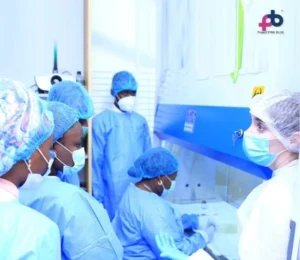
The Democratic Republic of Congo is facing one of its most complex and devastating public health crises in recent memory, with thousands of confirmed Ebola virus cases straining an already fragile healthcare infrastructure. While clinical interventions, therapeutics, and vaccine deployments remain critical centerpieces of the international response, an equally pressing dimension of the epidemic is frequently overlooked: the profound psychological trauma inflicted upon survivors, grieving families, and frontline health workers.
Dr. Patrick Oparpio, a gynecologist based in the northeastern city of Bunia in Ituri province, knows this invisible battle intimately. Having recently emerged from a harrowing, near-fatal bout with the virus that claimed the life of his fiancée, Dr. Oparpio has become a vocal advocate for systemic change. Speaking during a high-level technical webinar organized by the World Health Organization’s Information Network for Epidemics (Epi-WIN), he issued a passionate plea to global health authorities, national governments, and international nongovernmental organizations. He urged them to integrate comprehensive mental health and psychosocial support (MHPSS) directly into epidemic response frameworks, arguing that physical recovery is only half the battle in the war against Ebola.
The Human Toll: A Survivor’s Perspective
The statistics surrounding the outbreak are staggering, but behind every data point lies a deeply human story of loss, disorientation, and resilience. According to figures released this week by the Africa Centres for Disease Control and Prevention (Africa CDC), the DRC has recorded a cumulative total of 6,843 Ebola cases alongside 3,310 deaths, resulting in a soaring case fatality rate exceeding 48 percent.
For Dr. Oparpio, these numbers translate into personal devastation. Like many individuals living in endemic or high-risk regions, his initial symptoms were deceptive. Mistaking the early warning signs of the viral hemorrhagic fever for a routine bout of malaria, he delayed seeking specialized care at an Ebola treatment center by several days—a common delay that significantly increases viral load and complicates clinical management.
Once admitted, his condition deteriorated rapidly. “I was in a coma for four days, and spent eight days under intubation,” Dr. Oparpio shared with global health experts during the Epi-WIN briefing. He spent an extended period hospitalized, battling not only the destructive pathology of the virus but also the subsequent weakness and post-recovery complications often categorized as post-Ebola syndrome.
Yet, the physical ordeal was only the prelude to the psychological abyss that followed his discharge. “When I was discharged from the hospital, I didn’t believe I was going to be able to go back to my regular life or get back to my professional life,” he said. Compounding his trauma was the loss of his fiancée, who also contracted the virus and succumbed to the infection.
“After I recovered, I had to be taken care of by psychologists. I had to get some therapy,” Dr. Oparpio noted. Drawing attention to the wider community, he pointed to the visible scars left on the social fabric of Ituri province. “When I look around me, I see orphans. I see people who have lost loved ones who need that psychiatric support. That’s one of the things that the WHO needs to think about as well. I haven’t really seen that being addressed.”
Geographic Spread and Epidemiological Dynamics
The current outbreak is heavily concentrated in the eastern region of the DRC, an area already burdened by decades of armed conflict, population displacement, and chronic underdevelopment. These compounding humanitarian crises create an exceptionally challenging operational environment for epidemiologists, contact tracers, and vaccination teams.

Data from the Africa CDC highlights the unprecedented geographic footprint of the epidemic. Transmission has now spread across 61 health zones spanning six of the DRC’s 26 provinces. Ituri province remains the epicenter of the crisis, shouldering roughly 80 percent of all reported cases. Within Ituri, 28 out of 36 health zones have registered confirmed infections.
Nevertheless, epidemiological indicators suggest a mixed trajectory. While Ituri remains the primary driver of total case numbers, recent surveillance data indicates that the outbreak there may be stabilizing, with the province recording a noticeable decrease in new weekly cases and deaths compared to previous reporting cycles.
Conversely, the virus continues to advance aggressively in neighboring provinces. North Kivu has emerged as the second most severely affected region, with infections confirmed across 16 of its 34 health zones. Demonstrating the unpredictable nature of the pathogen, the outbreak recently breached new territory when the Kayna health zone in North Kivu reported its first-ever Ebola cases within the past week. Other neighboring regions, such as Haut-Uélé, are also experiencing rising transmission curves. A rare positive development has been observed in South Kivu province, where robust containment measures and surveillance have successfully kept the area free of new cases since May 29.
Frontline Workers in the Crosshairs
Healthcare professionals remain among the most vulnerable populations in any Ebola epidemic. Operating in high-stress environments with limited personal protective equipment (PPE) during the initial phases of outbreaks, doctors, nurses, and community health workers frequently bear the brunt of exposure.
Providing an update during an Africa CDC media briefing, Dr. Yap Boum addressed the toll the virus has taken on the medical workforce. “Some 218 health workers have been infected, but most in the early phase of the outbreak,” Dr. Boum stated. The infection of hundreds of medical personnel not only inflicts a heavy toll on the healthcare workforce but also severely depletes the capacity of local health systems precisely when community demand for care reaches its peak.
The vital role of healthcare workers extends beyond clinical care; their infection rates often reflect broader structural deficiencies in infection prevention and control (IPC) protocols, supply chain reliability for protective gear, and initial diagnostic bottlenecks.
Leveraging Survivors as Community Champions
Despite the profound physical and emotional tolls, individuals who have successfully conquered the virus represent an invaluable, underutilized resource in public health mobilization. Dr. Oparpio strongly advocates for integrating survivors into the formal architecture of outbreak response, particularly in community engagement and risk communication strategies.
“We can talk to those in vulnerable situations to help prevent the spread of the disease,” Dr. Oparpio explained. Drawing on his dual identity as a medical doctor and a survivor, he emphasized that those who have lived through the nightmare possess a unique, empathetic authority that outside experts often struggle to replicate.
“We are probably better situated to fight against this disease as we’ve already experienced it. We know what it’s like, and we know what our community is thinking, and how to answer some of the questions that they have, and [address] some of the distrust that they have.”

Community distrust, fueled by rumors, misinformation, and historical skepticism toward external medical interventions, has historically been one of the greatest barriers to effective Ebola containment in Central Africa. When survivors step forward to share their testimonies, debunk myths, and demystify treatment centers, they help bridge the psychological gap between jittery communities and public health authorities.
Chronology of the Response and Escalation
Understanding the trajectory of the current DRC Ebola crisis requires examining how the epidemic evolved from localized clusters into a multi-province emergency. While historical outbreaks in the DRC—such as the massive 2018–2020 Kivu-Ituri epidemic—tested global response mechanisms, the current wave presents distinct logistical hurdles due to simultaneous active conflicts and population movements across provincial borders.
- Initial Detection and Early Phase: The outbreak began quietly, with initial transmission chains going undetected or misdiagnosed as endemic illnesses like malaria, leading to delayed hospital presentations and secondary household infections.
- Healthcare Worker Infections: As patient admissions surged, numerous frontline medical personnel contracted the virus before enhanced IPC guidelines, triage protocols, and targeted vaccinations could be fully scaled up across all affected health zones.
- Geographic Expansion: The virus gradually migrated outward from Ituri, seeding new transmission chains in North Kivu and Haut-Uélé. The recent inclusion of the Kayna health zone in North Kivu underscores the relentless capacity of the pathogen to find vulnerable pockets.
- Stabilization vs. Progression: While eastern hubs like Ituri show tentative signs of stabilization through coordinated community engagement and localized containment, surrounding provinces continue to record upward trajectories, prompting calls for decentralized response strategies.
- Integration of MHPSS and Survivor Networks: As the epidemic matures, international bodies and local ministries are facing mounting pressure from clinicians and survivors alike to institutionalize mental health support and formally incorporate survivor networks into frontline health education campaigns.
Implications for Global Health Policy
The policy implications stemming from Dr. Oparpio’s testimony and the broader epidemiological data are clear. Traditional public health responses that focus exclusively on clinical containment—such as isolation, contact tracing, and ring vaccination—are insufficient for managing the multifaceted trauma associated with viral hemorrhagic fevers.
First, global health governance structures, including the World Health Organization and the Africa CDC, must elevate mental health from an optional auxiliary service to an essential core pillar of emergency health response. Epidemics of this magnitude shatter family units, orphan children, and induce profound post-traumatic stress disorders that can linger for years after the physical virus has been cleared from a population. Establishing dedicated psychosocial support units within treatment centers and post-discharge follow-up programs must become standard operating procedure.
Second, the empowerment of local health networks and survivors represents a cost-effective, culturally resonant strategy to combat the infodemic and community skepticism. By transforming survivors into educators, health authorities can build sustainable bridges of trust that outlast the immediate acute phase of the outbreak.
Finally, the persistent infection rates among health workers underscore the urgent need for continuous, uncompromised investments in structural workplace safety. Protecting the workforce is a prerequisite for protecting the broader population; when clinics become vectors of transmission, community confidence evaporates instantly.
As the DRC navigates the complexities of this ongoing outbreak, the insights offered by survivors like Dr. Oparpio serve as both a sobering reminder of the virus’s destructive power and a roadmap toward a more compassionate, comprehensive, and resilient public health future.