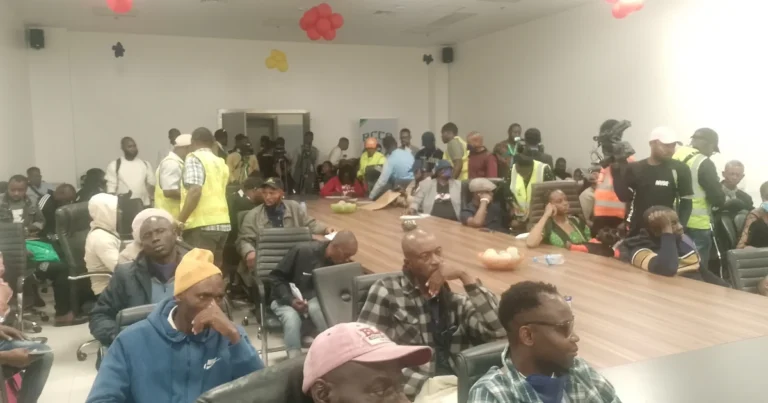
In a significant humanitarian development, 107 Nigerian citizens arrived at the Murtala Muhammed International Airport in Lagos on Thursday night, marking the first phase of a massive repatriation effort funded by the Redeemed Christian Church of God (RCCG). This mission, launched in direct response to an urgent appeal from the Nigerian diplomatic mission in South Africa, seeks to bring home approximately 500 Nigerians who have found themselves in precarious living conditions abroad. The arrival of this initial group represents a coordinated effort between private religious humanitarianism and federal emergency management agencies to address the plight of nationals seeking to return from South Africa.
The returnees, who arrived on a flight from Johannesburg, were received by a multi-agency delegation including the National Emergency Management Agency (NEMA) and the National Commission for Refugees, Migrants and Internally Displaced Persons. Following their arrival, the citizens underwent mandatory health and security profiling, a standard protocol designed to ensure their seamless reintegration into their respective home states.
Chronology of the Humanitarian Crisis and Response
The current repatriation effort is the culmination of months of diplomatic tension and socio-economic challenges faced by migrants in South Africa. The genesis of this specific mission traces back to a formal request submitted by the Nigerian High Commission in Pretoria to various stakeholders, citing the dire circumstances of many Nigerians who had expressed a desire to return home but lacked the financial means to facilitate their travel.
Following the receipt of this request, the leadership of the RCCG, under the guidance of General Overseer Pastor Enoch Adeboye, authorized the financial commitment required to cover air transportation for the affected individuals. The planning phase involved rigorous documentation processes, requiring collaboration between the Nigerian High Commission and South Africa’s Department of Home Affairs. This legal clearance phase is critical, as it ensures that all returning citizens are properly identified and processed, mitigating security risks and ensuring that the repatriation remains within the framework of international migration laws.
Pastor Belemina Obunge, Chairman of the RCCG Task Force for the Reception of Nigerian Returnees, noted that while this was the first batch of 107, additional flights are being scheduled as further documentation is cleared by South African authorities. The logistics of this operation are expected to continue over the coming weeks, with the church providing the necessary funding while government agencies manage the ground operations and the transportation of the returnees to their respective states of origin.
Broadening the Scope: A Non-Denominational Effort
A crucial aspect of this humanitarian intervention is its non-discriminatory nature. While the funding originated from a prominent Christian institution, the beneficiaries were selected based on need, documentation, and nationality, rather than religious affiliation. Pastor Obunge emphasized that the list of returnees includes both Christians and Muslims, stressing that the primary objective was to address the human suffering of Nigerians caught in a difficult geopolitical environment.
"We are intentional in making sure that we have collaborated with the various government agencies," Obunge stated during a press briefing at the airport. "They are Nigerians who, by reason of the situation we are all aware of, need to come back home. We have been given a list from them and definitely, it won’t be surprising if some are members of the Redeemed Christian Church of God, but they are all unique, glorious Nigerians."
This approach highlights a shift in how non-governmental organizations and religious bodies in Nigeria are engaging with the federal government to solve domestic and international challenges. By bridging the gap between diplomatic appeals and private funding, the church has enabled a faster response time than might otherwise be achieved through state-funded channels alone, which often face budgetary constraints and bureaucratic delays.
Supporting Data and Institutional Roles
The repatriation process involves several key stakeholders, each playing a vital role in the transition of the returnees. NEMA, as the lead agency for disaster and emergency management in Nigeria, is tasked with the logistics of moving the citizens from the airport to their final destinations. The National Commission for Refugees, Migrants and Internally Displaced Persons is simultaneously handling the long-term reintegration strategy, which involves assessing the needs of the returnees and connecting them with available state-level support programs.
Statistical data from the Federal Ministry of Foreign Affairs indicates that the demand for repatriation services has spiked in recent years, driven by a combination of economic instability and localized social tensions. While this specific cohort consists of approximately 500 individuals, the actual number may fluctuate due to the inclusion of families, including children and infants. Obunge noted that the final tally could exceed the 500-person estimate by 10 to 20 individuals, highlighting the unpredictable nature of the demographics involved in such mass evacuations.
Implications for Reintegration and State Support
The challenge of reintegration remains the most daunting phase of the repatriation exercise. Upon arrival, the returnees are not merely passengers; they are individuals who have often lost their livelihoods, savings, and social networks in South Africa. The success of this mission depends heavily on the willingness of state governments to take ownership of their citizens.
"We use this opportunity to urge the states and governments to welcome their people home and see what they can do, as some have already started doing, to assist with the effective reintegration of their people into the society," Obunge remarked.
The economic implications are significant. Many of these returnees were once active contributors to the Nigerian economy through remittances. Their return, while necessary for their safety and well-being, places an immediate burden on local resources. Economists suggest that for this repatriation to be truly successful, there must be a transition from humanitarian aid—such as the food packs provided by the RCCG at the airport—to sustainable economic support programs. This includes vocational training, small business grants, and mental health counseling for those who have experienced trauma during their time abroad.
A Call for Broader Civic Engagement
The RCCG’s initiative has set a precedent for other religious and civil society organizations. In his address, Pastor Obunge extended an invitation to other faith-based groups to recognize their potential role in addressing similar crises. "We are encouraging other religious organizations to take cue. As you rightly said, other nations have similar challenges. We have set an example with South Africa," he stated.
This call to action reflects a broader trend of "corporate social responsibility" within the religious sector. In many African nations, where state infrastructure is often stretched thin, faith-based organizations operate as "first responders" in social crises. However, the reliance on such bodies raises questions about the long-term sustainability of the model. Experts argue that while private intervention is commendable, the primary responsibility for the protection and repatriation of citizens rests with the federal government. The current collaboration is viewed as a successful model of "public-private humanitarian partnership," but the underlying causes that lead Nigerians to become "stranded" abroad require sustained diplomatic and economic solutions from the federal government.
The Way Forward: Security and Documentation
For those still residing in South Africa, the path to returning remains strictly governed by the documentation process. The Nigerian High Commission has reiterated that there is no "shortcut" to the process. Every returnee must pass through the vetting of the South African Department of Home Affairs to ensure compliance with local immigration laws before they can be cleared for departure.
The RCCG’s task force has urged any remaining Nigerians facing hardship to avoid irregular channels and instead register directly with the diplomatic mission. "Go to the embassy. Go to the High Commission. They are more than willing to do what they need to do to make sure that the suffering of Nigerians comes to an end," Obunge advised.
As the first batch of 107 individuals begins the process of returning to their home states, the focus of the agencies involved will shift toward ensuring that the subsequent batches are processed with equal efficiency. For these individuals, the arrival at Murtala Muhammed International Airport is the end of an uncertain chapter and the beginning of a complex reintegration process. The support provided by the church, coupled with the organizational oversight of NEMA, provides a structured start to this new phase. Whether this model of intervention will become a standard fixture in Nigerian foreign policy remains to be seen, but for the hundreds currently returning, it has proven to be a vital lifeline.