The rapid escalation of hostilities in Yemen has plunged the nation into a renewed humanitarian catastrophe, with the Iran-backed Houthi movement’s recent capture of the strategic Red Sea port town of Mokha serving as a grim catalyst for a fresh wave of mass displacement. Families, caught in the sudden vacuum of security, have been forced to abandon their homes and livelihoods with almost no notice, fleeing toward the relative safety of government-held strongholds like Aden. This latest military offensive, which began in earnest in late July, has not only reshaped the front lines of a decade-long conflict but has also crippled the fragile survival mechanisms of millions of civilians who were already grappling with the fallout of years of war.
A Chronology of Escalation: From Ceasefire to Conflict
The current instability stands in stark contrast to the relative, albeit tenuous, calm established by the United Nations-brokered ceasefire in 2022. For two years, the truce provided a reprieve from the worst of the aerial bombardment and ground warfare that had defined the conflict since 2014. However, the breakdown of informal de-escalation channels in mid-2024 set the stage for the current crisis.
In late July 2025, Houthi forces launched a coordinated expansion from their strongholds in northern and central Yemen, pushing aggressively toward the Red Sea coast. By early September, the capture of Mokha—a critical gateway for maritime trade and a symbolic loss for the Saudi-backed, internationally recognized government—marked a significant strategic shift. As Houthi forces solidified their hold on coastal corridors, they redirected their tactical focus toward the Kahboub Mountains, a rugged, high-altitude terrain that commands the approaches to the Bab el-Mandeb Strait. This narrow maritime choke point is one of the world’s most vital oil transit routes, and its proximity to the current front lines has international observers increasingly concerned about the potential for further economic warfare, particularly as Houthi militants leverage their positions to project power against regional adversaries.
The Human Toll: Data on a Growing Crisis
The statistical reality of this surge in violence is harrowing. According to the latest data from the International Organization for Migration (IOM), more than 132,000 individuals have been newly displaced since the fighting intensified in late August. This figure is rapidly compounding the existing burden on Yemen’s internally displaced person (IDP) population, which had already exceeded 5.2 million prior to the summer offensive.
The human cost is further quantified by the World Health Organization, which reported at least 674 fatalities and nearly 3,000 injuries in the first month of the renewed escalation. These figures, however, are widely considered to be conservative estimates. The volatile nature of the front lines and the degradation of local healthcare infrastructure mean that many casualties in remote or besieged areas go unrecorded. UNHCR representatives have noted that the sheer velocity of the displacement—with 90,000 people fleeing into the governorates of Aden, Lahj, and Abyan in a matter of weeks—has overwhelmed existing humanitarian reception capacities.
Life Under the Shadow of Siege: The Taiz Experience
For the residents of Taiz, Yemen’s third-largest city, the current conflict is an agonizing echo of the 2015–2016 period, when Houthi forces enforced a suffocating siege that blocked the entry of food, fuel, and medical supplies. Today, the front lines are once again creeping toward the city, located roughly 40 kilometers from the active combat zones in the Kahboub Mountains.
Residents, many of whom have lived under intermittent blockade for years, describe a landscape of profound fear. As supply routes are severed or subjected to extortion by armed groups, the cost of basic commodities has skyrocketed. In local markets, the absence of commercial traffic has led to severe shortages of fuel and essential medicines. For families like those of the anonymous mothers interviewed in Taiz, the survival strategy is once again one of concealment and rationing. The psychological toll—shielding children from the sound of artillery by passing it off as fireworks—highlights the normalized trauma of a generation of Yemeni youth.

Official Stances and Geopolitical Implications
Rashad al-Alimi, the chairman of the Presidential Council, has maintained a firm rhetorical stance, insisting that the government remains committed to restoring state authority across the entirety of Yemen. Despite the loss of territory, the government continues to frame its defense as a struggle for national sovereignty against a non-state actor backed by external regional powers.
Conversely, the Houthi leadership, represented by Abdul-Malik al-Houthi, has issued public assurances that civilians in the newly captured southern and western provinces are not the intended targets of their operations. However, political analysts such as Hisham Al-Omeisy argue that such rhetoric is disconnected from the reality on the ground. The Houthi military strategy is increasingly perceived as a zero-sum game, where territorial gains take precedence over the humanitarian consequences of the occupation. By prioritizing the seizure of high-ground positions like the Kahboub Mountains, the Houthis are effectively positioning themselves to exert greater leverage over the Bab el-Mandeb Strait, a move that carries significant implications for global energy security and the ongoing maritime disputes involving Iran and Saudi Arabia.
The Collapse of Humanitarian Support
The most pressing concern for international aid organizations is the lack of funding to address the immediate surge in needs. The UNHCR’s Yemen operation is currently reported to be only 18% funded for the coming fiscal cycle. This massive deficit leaves relief agencies unable to provide even the most basic necessities—clean water, shelter, and sanitation—to the thousands of families arriving at displacement camps.
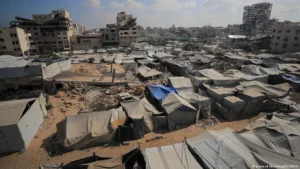
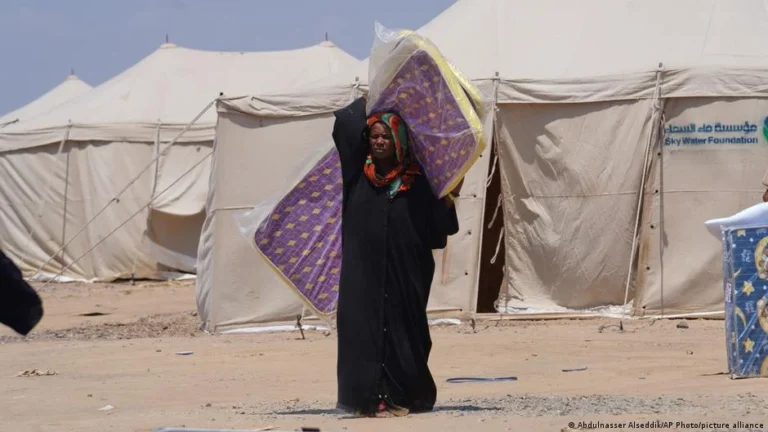
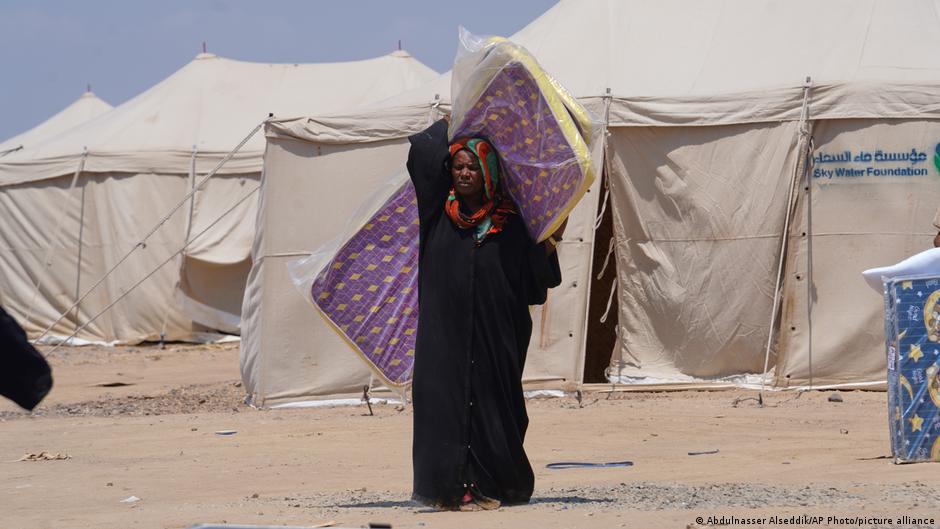
The burden of survival has consequently shifted to the displaced themselves. In camps across Abyan, the phenomenon of "displaced helping the displaced" has become the primary social safety net. Reports from organizations like the Norwegian Refugee Council illustrate the extreme measures being taken, such as multiple families sharing single, makeshift shelters and alternating days for meals to stretch limited supplies. The reliance on this informal, localized generosity is not a sustainable solution and points toward a looming secondary crisis of malnutrition and preventable disease within these overcrowded, under-resourced settlements.

Analysis: A Future in Flux
The broader implications of the current crisis extend far beyond the immediate displacement of families. As the Houthis solidify their control over key infrastructure, the prospect of a negotiated settlement or a return to the 2022 ceasefire conditions appears increasingly remote. The conflict has transformed from a localized civil struggle into a multifaceted proxy landscape where the movement of every battalion carries geopolitical weight.
Furthermore, the potential for mass migration beyond Yemen’s borders presents a challenge for the wider Horn of Africa region. With Djibouti and Somalia already serving as destinations for refugees, the regional spillover effects of a protracted, high-intensity war could destabilize neighboring nations that are already struggling with their own economic and climatic pressures.
As the lines on the map shift, the civilian population remains caught in the crossfire, their lives treated as collateral in a pursuit of military dominance that shows no signs of abating. Without a significant shift in diplomatic engagement or an immediate infusion of humanitarian aid, the cycle of violence, displacement, and economic deprivation is poised to continue, further entrenching the humanitarian catastrophe that has defined Yemen for the last decade. The tragedy of the current moment is not just the physical destruction of homes, but the systematic erosion of the future for millions of Yemenis who, for now, have nowhere left to run.