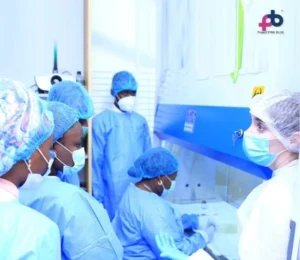
In a significant move for the North African healthcare technology sector, Egyptian startup Reme-D has successfully closed a $1.45 million Pre-Series A funding round, marking a pivotal moment in the company’s mission to democratize advanced medical diagnostics across the continent. Led by Anara Impact Capital, the investment round saw robust participation from the Global Innovation Fund (GIF), Africa Health Ventures, and a consortium of strategic private investors. This latest capital injection follows a $500,000 investment from the Global Innovation Fund in April, bringing the startup’s recent funding momentum to nearly $2 million as it seeks to address critical gaps in Africa’s healthcare infrastructure through local manufacturing and technological innovation.
The primary objective of this funding is to facilitate a massive scale-up of Reme-D’s manufacturing operations, specifically through the commissioning of a new 1,500-square-meter production facility. This expansion is projected to increase the company’s output capacity tenfold, allowing it to meet rising demand for molecular diagnostic tests in underserved markets. Beyond production, the funds are earmarked for regional expansion into new African territories and the diversification of the company’s product line into high-complexity areas such as genetic disease screening and oncology diagnostics.
Addressing the Diagnostic Gap Through Local Innovation
Founded in 2023 by visionary entrepreneur Salma Tammam, Reme-D emerged in response to a systemic failure in the African medical supply chain. For decades, the continent has remained heavily dependent on imported medical equipment and laboratory consumables. Statistics from various health organizations suggest that Africa imports between 70% and 90% of its pharmaceutical and diagnostic products. This reliance leaves local healthcare systems vulnerable to global supply chain disruptions, currency fluctuations, and prohibitive costs that often place advanced testing out of reach for the average citizen.
Reme-D’s core value proposition lies in its ability to develop and manufacture molecular diagnostic tests locally. These tests, which use biological markers at the molecular level to identify diseases, are the gold standard for detecting infections such as tuberculosis (TB), human immunodeficiency virus (HIV), hepatitis, and human papillomavirus (HPV). By producing these kits within Egypt, Reme-D drastically reduces the lead time for delivery and lowers the end-user cost, providing a sustainable alternative to expensive Western or Asian imports.
Technological Breakthrough: Solving the Cold-Chain Crisis
One of the most significant barriers to effective healthcare delivery in Africa is the "cold-chain" requirement. Most traditional molecular diagnostic reagents are highly sensitive to temperature and require continuous refrigeration from the factory to the laboratory. In many parts of Africa, where electricity grids are unreliable and logistics networks are underdeveloped, maintaining a consistent cold chain is nearly impossible. This often results in spoiled tests and inaccurate results, particularly in remote or rural regions.
Reme-D has distinguished itself by developing diagnostic products that remain stable at higher ambient temperatures. This heat-resilient technology eliminates the need for expensive and complex refrigerated shipping and storage. By ensuring that tests can be transported via standard logistics channels without compromising their chemical integrity, Reme-D has effectively extended the reach of advanced diagnostics to the "last mile" of healthcare delivery. This innovation is particularly critical for the detection of tuberculosis and HIV in rural settings, where early diagnosis is the primary factor in reducing mortality rates and preventing community transmission.
A Chronology of Rapid Growth and Operational Success
Since its inception just over a year ago, Reme-D has demonstrated an aggressive growth trajectory. The Cairo-based firm has already developed and commercialized a portfolio of 30 distinct diagnostic products. To date, it has supplied more than 550,000 tests to healthcare providers across Egypt, Kenya, and Sudan. This rapid market penetration underscores the high demand for reliable, affordable diagnostic tools in both the public and private sectors.
A landmark achievement in the company’s short history occurred recently through a partnership with the World Health Organization (WHO). Reme-D was commissioned by the WHO’s Egypt office to equip a solar-powered mobile laboratory. This initiative was designed to bolster the Egyptian government’s capacity to monitor and respond to vector-borne diseases. The mobile lab serves as a proof of concept for how Reme-D’s technology—combined with renewable energy—can provide high-tech medical surveillance in areas completely devoid of traditional hospital infrastructure.
Strategic Shift Toward Non-Communicable Diseases
While the company’s initial focus was on infectious diseases—which remain a major public health burden in Africa—the new funding will support a strategic pivot toward non-communicable diseases (NCDs). As African nations undergo an epidemiological transition, the prevalence of cancer and genetic disorders is rising. However, the diagnostic infrastructure for these conditions is even more scarce than that for infectious diseases.

Reme-D’s plan to enter the oncology and genetic testing space is a response to this shifting demand. The development of locally manufactured tests for cancer markers and genetic predispositions could revolutionize early detection programs on the continent. Early diagnosis of cancer significantly improves survival rates and reduces the long-term economic burden on healthcare systems. By providing the tools for early screening at a fraction of the current cost, Reme-D aims to support the strengthening of national health programs across the region.
Investor Perspectives and the Shift Toward Health Sovereignty
The participation of Anara Impact Capital and the Global Innovation Fund reflects a broader trend in the venture capital landscape: the move toward "impact-driven" healthcare investments. Investors are increasingly looking for companies that do not just offer digital solutions but address the physical and logistical realities of the African continent.
Anara Impact Capital’s decision to lead the round highlights a confidence in the "local for local" manufacturing model. By backing Reme-D, investors are betting on the concept of health sovereignty—the idea that African nations should have the internal capacity to manage their own health crises without total reliance on foreign aid or international shipments. The Global Innovation Fund’s repeat investment further validates Reme-D’s technical proficiency and its ability to scale in high-pressure environments.
While official statements from all participating parties emphasize the financial viability of the startup, the underlying sentiment among stakeholders is one of systemic change. Inferred reactions from the investment community suggest that Reme-D is viewed as a blueprint for future healthtech ventures in emerging markets—combining rigorous scientific research with a deep understanding of local infrastructure constraints.
Broader Implications for the African Healthcare Ecosystem
The success of Reme-D’s funding round has several far-reaching implications for the African continent. First, it serves as a catalyst for the Egyptian startup ecosystem, which has seen a surge in healthtech and biotech innovation over the last three years. Egypt is positioning itself as a regional hub for medical manufacturing, leveraging its strategic geographic location and its pool of highly skilled scientific talent.
Second, the expansion of Reme-D into Kenya and Sudan provides a model for South-South cooperation. Rather than following the traditional North-to-South flow of technology, Reme-D is facilitating an intra-African exchange of innovation. This regional integration is essential for the success of the African Continental Free Trade Area (AfCFTA), particularly in the highly regulated medical sector.
Third, the move toward solar-powered and temperature-stable diagnostics aligns with global climate goals. As healthcare systems globally look to reduce their carbon footprint, the decentralized, low-energy model pioneered by Reme-D offers a sustainable path forward for developing nations.
Future Outlook: Scaling the 1,500-Square-Meter Vision
The transition to a 1,500-square-meter manufacturing facility is the most immediate hurdle for the company. Scaling production tenfold is not merely a matter of space; it requires rigorous quality control, adherence to international standards such as ISO 13485, and the management of a complex supply chain for raw chemical reagents. However, if successful, Reme-D could become one of the largest diagnostic manufacturers in the Middle East and Africa region.
The company’s trajectory suggests that it is preparing for a Series A round in the near future, which would likely focus on global certifications (such as CE marking or WHO prequalification) to allow for even wider international distribution. For now, the focus remains on solidifying its presence in its core markets and proving that African-made diagnostics can compete with—and exceed—the performance of global incumbents.
As Reme-D moves into its next phase of growth, the $1.45 million raised serves as more than just capital; it is a mandate to continue bridging the gap between advanced medical science and the millions of people who currently lack access to basic diagnostic services. The coming years will be a test of the company’s ability to maintain its innovative edge while navigating the regulatory and economic complexities of a diverse and rapidly changing continent.