Saudi Arabia has significantly scaled up its international humanitarian outreach through the King Salman Humanitarian Aid and Relief Center (KSrelief), rolling out targeted financial, educational, and material assistance programs for vulnerable children and families across Djibouti, Gaza, and Kosovo. These newly established agreements aim to alleviate the severe economic and psychological pressures faced by orphans and conflict-affected households, reinforcing the Kingdom’s standing as one of the world’s leading humanitarian donors.
The multi-regional initiatives encompass regular financial stipends, seasonal clothing, educational provisions, and psychosocial support, reflecting a holistic approach to child welfare in crisis zones. By partnering with established regional organizations—such as the Refaq Association in Hail, the Saudi Center for Culture and Heritage, and the Islamic Community of Kosovo—KSrelief continues to bridge the gap between emergency relief and sustainable social support.
Strategic Interventions in Djibouti: Supporting the Horn of Africa
In the Horn of Africa, KSrelief has formalized a strategic partnership with the Hail-based Refaq Association to launch a dedicated orphan support program in Djibouti. This initiative addresses the acute vulnerabilities faced by children in the region by providing structured monthly financial assistance alongside essential material provisions.
Under the terms of the agreement, each participating orphan will receive a reliable monthly stipend of $80, a vital injection of capital designed to help families offset the rising costs of living and basic necessities. In addition to monetary aid, beneficiaries will receive high-quality clothing and specialized vouchers redeemable through designated commercial partners, ensuring that children have access to seasonal garments and daily essentials tailored to their specific needs.
While the direct beneficiaries of this initial rollout are slated at 400 individuals, the broader socioeconomic impact is expected to touch approximately 1,600 indirect beneficiaries, including extended family members and local caregivers whose financial burdens are partially alleviated by the stable income stream. This intervention marks an important expansion of KSrelief’s footprint in Djibouti, aligning with broader international efforts to stabilize vulnerable communities in East Africa.
Comprehensive Relief and Orphan Support in Gaza
Amidst the ongoing humanitarian catastrophe in the Gaza Strip, KSrelief has initiated a robust assistance program designed to restore a semblance of stability to orphaned children and families who have lost their primary breadwinners. Executed in cooperation with the Saudi Center for Culture and Heritage, the comprehensive program targets 1,500 orphaned boys and girls alongside their surviving household members.
The framework in Gaza extends well beyond basic monetary relief. Each participating child receives a monthly financial allocation of $100, alongside comprehensive educational packages containing school bags, stationery, and learning materials necessary to maintain schooling continuity amidst widespread disruption. Furthermore, the program prioritizes psychosocial well-being by incorporating recreational activities, toys, and seasonal clothing into the aid package. An estimated 4,500 family members and secondary caregivers are projected to benefit indirectly from this multifaceted support structure.
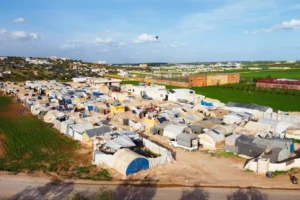
This targeted child-welfare initiative operates in parallel with KSrelief’s broader, high-volume emergency operations in the enclave. Demonstrating the logistical capacity of Saudi humanitarian missions, recent operational reports indicate that KSrelief has maintained a continuous flow of survival essentials, including the distribution of tents, drinking water, and hot meals. In a single operational window, the agency successfully delivered 500,000 liters of potable water and 25,000 hot meals to displaced populations, addressing immediate life-threatening shortages on the ground.
Post-Conflict Recovery and Child Welfare in Kosovo
Extending its reach into southeastern Europe, KSrelief has formalized an agreement with the Islamic Community of Kosovo to support 700 orphans distributed across 29 administrative governorates. This program addresses the long-term socioeconomic recovery needs of a region still navigating the structural legacies of past conflict.
The initiative in Kosovo is designed to cover a wide spectrum of fundamental human needs, including food security, housing stabilization, healthcare access, and educational expenses. To ensure that children remain integrated into their communities and educational institutions, the program provides regular financial stipends, winter clothing distributions, specialized school supplies, and organized recreational trips. By addressing both the material and psychological needs of the beneficiaries, the program seeks to foster resilience and social cohesion among vulnerable youth in the Balkan state.
Chronology of KSrelief Operations (2015–Present)
Since its establishment in May 2015 by royal decree under the directive of King Salman bin Abdulaziz, KSrelief has operated as the central coordinating body for Saudi Arabia’s international humanitarian and disaster relief efforts. Over the past decade, the organization has systematically expanded its operational geography, moving from immediate post-conflict response in the immediate region to a truly global humanitarian enterprise.
- May 2015: KSrelief is officially inaugurated in Riyadh, designed to unify Saudi Arabia’s international aid delivery and streamline partnerships with United Nations agencies and international NGOs.
- 2015–2018: Initial years are heavily defined by large-scale interventions in Yemen and neighboring countries, establishing the operational blueprints for medical evacuations, food security networks, and emergency shelter deployments.
- 2019–2021: The agency broadens its thematic focus, integrating long-term developmental projects, educational rehabilitation, and specialized child protection programs alongside traditional food and medical aid across Africa and Asia.
- 2022–2023: In response to compounding global crises, KSrelief ramps up multi-country operations, launching targeted interventions in the Horn of Africa, South Asia, and Eastern Europe, while cementing its role as a primary responder in active conflict zones.
- 2024–Present: The formalization of expansive orphan and family support agreements in Djibouti, Gaza, and Kosovo underscores a strategic shift toward sustained, multi-year developmental support for vulnerable demographics, bridging emergency relief with structural social safety nets.
Quantifying the Saudi Aid Footprint: Global Data and Regional Allocation
The newly announced programs are components of an expansive global aid architecture built over the last nine years. Statistical data released by KSrelief illustrates the sheer scale of the Kingdom’s international development and humanitarian portfolio.
To date, KSrelief has implemented a staggering 4,463 humanitarian and development projects across 113 countries. The total financial commitment for these operations approaches $8.6 billion USD. This work is executed in close collaboration with a vast network of 357 local, regional, and international implementation partners, ensuring localized accountability and efficient delivery on the ground.
While the agency’s footprint now spans four continents, the Middle East remains the largest recipient region, driven primarily by the protracted crisis in Yemen. Yemen stands as KSrelief’s largest single recipient globally, having absorbed approximately $4.8 billion in targeted aid encompassing food security, healthcare infrastructure restoration, agricultural support, and nutrition programs.
In Africa, the agency has maintained a steadfast commitment to nations experiencing climatic shocks, food insecurity, and localized conflict. Somalia alone has received roughly $258 million in comprehensive assistance, focusing heavily on drought mitigation, nutritional stabilization for malnourished children, and emergency livelihood support. The new agreements in Djibouti represent a continuation of this strategic focus on the Horn of Africa, where chronic vulnerability requires sustained institutional intervention.
International Recognition and Diplomatic Reception
The breadth and efficiency of Saudi Arabia’s humanitarian initiatives have garnered praise from international governments, multilateral organizations, and global policy leaders. Most recently, UK Development and Africa Minister Kirsty McNeill publicly lauded Saudi Arabia’s humanitarian and relief efforts, explicitly highlighting KSrelief’s pivotal role in supporting vulnerable populations affected by crises, natural disasters, and conflicts worldwide.
Such diplomatic endorsements underscore a growing international consensus regarding the importance of cross-border philanthropic partnerships. By working in tandem with international development ministers, UN specialized agencies, and local civil society groups, KSrelief has positioned itself as a critical pillar of global humanitarian governance.
Fact-Based Analysis of Implications
The sustained expansion of KSrelief’s child welfare and family support networks carries several distinct socioeconomic and geopolitical implications:
- Mitigation of Intergenerational Poverty: By targeting orphans and single-parent households with reliable financial stipends and educational support, these programs directly combat the risk of school dropouts and child labor. Ensuring educational continuity is widely recognized by developmental economists as the most effective mechanism for breaking intergenerational cycles of poverty in post-conflict and developing regions.
- Enhanced Regional Stability: Providing structured social safety nets in fragile states such as Djibouti and Kosovo, as well as high-tension environments like Gaza, contributes to grassroots community resilience. Economic stabilization at the household level reduces the drivers of displacement and social unrest.
- Soft Power and Strategic Alignment: Through consistent, high-visibility humanitarian investments, Saudi Arabia continues to project constructive soft power on the global stage. Aligning state aid mechanisms with recognized international development goals enhances the Kingdom’s multilateral standing and strengthens bilateral ties with recipient nations and donor allies alike.
As KSrelief continues to execute its multi-billion-dollar mandate across 113 countries, these targeted initiatives in Djibouti, Gaza, and Kosovo demonstrate a sophisticated evolution in modern humanitarian assistance—moving beyond mere emergency triage toward structured, dignified, and sustainable human development.