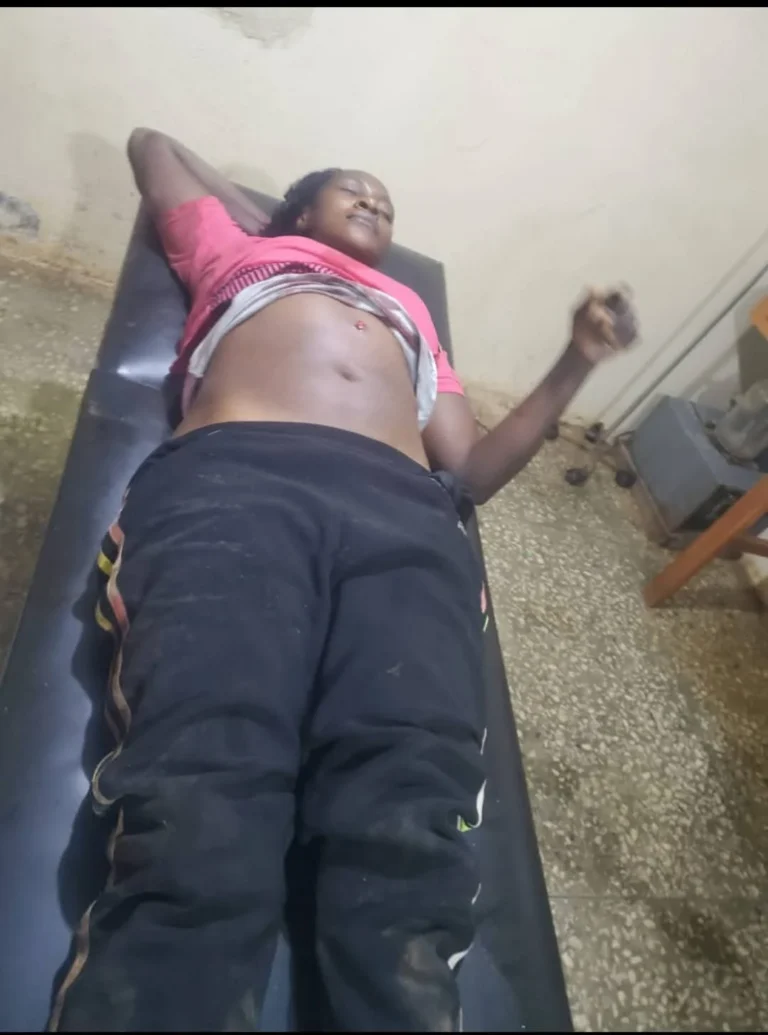
The tranquility of the Yan Gwari Market in Mangu Local Government Area of Plateau State was shattered on Wednesday when unidentified gunmen launched a lethal assault, leaving three individuals dead and several others grappling with varying degrees of gunshot injuries. The attack, which occurred in broad daylight, has once again plunged the volatile region into mourning, reigniting concerns regarding the fragile security architecture in Nigeria’s Middle Belt.
Local sources confirmed that the victims who lost their lives in the sudden onslaught have been identified as Nanker Andrew, Delshak Jacob, and Jessica Thomas. The brutality of the incident has sent shockwaves through the community, as the market—typically a hub of commercial activity and inter-communal exchange—was turned into a theatre of violence within minutes. Five other individuals, identified as Polina Colis, Gloria Fwanshak, Sekyen Lonkat, and Bamret Thomas, were rushed to nearby medical facilities where they are currently undergoing treatment for injuries sustained during the attack.
Chronology of the Incident
According to eyewitness accounts, the attackers descended on the Yan Gwari Market area with surgical precision, suggesting a level of pre-meditation. The incident began in the early hours of the day when the market was bustling with traders and customers. The assailants reportedly opened fire indiscriminately, forcing patrons to flee for cover as chaos engulfed the premises.
The timeline of the retreat indicates that the attackers moved strategically to evade immediate pursuit. After carrying out the initial shootings, the gunmen withdrew through the Water Board axis of Mangu. During their retreat, they encountered one Abdul Muhammad near the Kwata area of the market, whom they accosted before successfully fleeing the scene. The speed with which the attackers navigated the geography suggests a familiarity with the terrain, raising questions about the preparedness of local security outposts.

Contextual Background of Insecurity in Plateau State
To understand the gravity of the attack in Mangu, one must examine the historical context of violence in Plateau State. Over the past decade, Plateau has been a flashpoint for communal clashes, farmer-herder conflicts, and sporadic militant incursions. Mangu Local Government Area, in particular, has seen a resurgence of insecurity over the last 18 months, characterized by night raids, farm destructions, and targeted killings.
The North-Central region of Nigeria, where Plateau is situated, is often caught in a complex web of ethnic, religious, and socio-economic tensions. Analysts frequently point to the breakdown of traditional dispute-resolution mechanisms and the proliferation of small arms as primary drivers of these recurring attacks. The Yan Gwari Market attack is not an isolated event but rather part of a broader, systemic failure to secure rural markets and agricultural hubs—areas that are essential for the local economy but are increasingly becoming soft targets for non-state actors.
Data and Statistical Trends
Statistical data from the Armed Conflict Location & Event Data Project (ACLED) and other independent monitoring groups suggest that incidents of violence in Plateau State have trended upward since 2022. The state has recorded dozens of skirmishes involving "unidentified armed groups" (UAGs), a classification often used for bandits or militants who operate with high mobility.
The economic impact of these attacks is profound. Mangu is a significant agricultural center. When markets are targeted, the immediate effect is a disruption of food supply chains. Farmers, fearing for their lives, often abandon their fields, leading to localized food inflation and a contraction in the regional economy. The loss of human capital—represented by the deaths of individuals like Nanker Andrew and Delshak Jacob—deprives the community of productive members of the workforce, further entrenching the cycle of poverty and instability.
Official Responses and Security Measures
While the state government and the Plateau State Police Command have yet to issue a comprehensive forensic report on the Mangu attack, standard operating procedure in the region typically involves the deployment of the Special Task Force (STF), Operation Safe Haven, which maintains a presence in the state.

Security analysts often note that the delay in identifying attackers in such incidents is due to the difficulty of gathering intelligence in areas where residents fear reprisal attacks. A spokesperson for the community, speaking anonymously, stated that the people of Mangu are "tired of living in constant fear" and called for a more permanent security presence within the market districts. There is a growing demand for the state government to integrate local vigilance groups with formal state security apparatuses, although this remains a contentious issue due to concerns over the regulation of non-state security actors.
Analysis of Implications
The attack at Yan Gwari Market carries significant implications for the administration of Governor Caleb Mutfwang, who has prioritized the restoration of peace in Plateau State since assuming office. The ability of gunmen to strike a busy market and exit through a known route like the Water Board axis highlights critical gaps in surveillance and rapid response capabilities.
- The Erosion of Public Trust: Each unchecked attack further alienates the citizenry from the state, leading to a loss of faith in the police and military. When residents feel they cannot protect their own livelihoods, they may resort to self-help, which historically leads to further escalations and retaliatory violence.
- Psychological Impact: The trauma of witnessing such violence in a commercial space has long-term effects on the mental health of the community. It stifles economic activity, as traders become reluctant to travel to markets, effectively creating "ghost zones" where commerce was once vibrant.
- Security Infrastructure Reform: This incident serves as a grim reminder that static security posts are insufficient. The attackers’ use of a retreat route suggests that security planning must move beyond guarding fixed locations to include active patrols of exit routes and rural corridors.
Looking Ahead: The Path to Stability
To stem the tide of violence in Mangu and across Plateau State, a multi-faceted approach is required. First, there must be a genuine commitment to intelligence-led policing. The use of drones and community-based surveillance networks could help identify potential threats before they reach high-density areas like markets.
Second, the government must address the underlying socio-economic grievances that fuel recruitment into these armed groups. If youths in the region see viable pathways to employment and stability, they are less likely to be swayed by the rhetoric of criminal syndicates.
Third, justice must be seen to be done. The cycle of impunity, where attackers are rarely identified or prosecuted, is perhaps the greatest driver of future violence. A robust investigation into the Yan Gwari Market attack, leading to the apprehension of the perpetrators, would serve as a vital deterrent and a necessary step toward healing for the families of the victims.

As the families of Nanker Andrew, Delshak Jacob, and Jessica Thomas prepare for burials, and as the injured continue their recovery, the residents of Mangu remain on edge. The incident is a stark reflection of the challenges facing Nigeria’s security architecture. Whether this tragedy will serve as a catalyst for meaningful reform or fade into the grim statistics of the region’s ongoing instability remains to be seen. For now, the people of Plateau State continue to wait for the one thing that has remained elusive: a lasting peace.
The incident underscores the urgent need for a coordinated response from both the state and federal tiers of government. The proximity of the attack to critical infrastructure suggests that the perpetrators are emboldened. Without a strategic pivot that prioritizes the protection of the civilian population over reactive measures, the risk of similar occurrences remains critically high. The international community, observers, and civil society organizations continue to monitor the situation, urging authorities to uphold the fundamental right to safety for all citizens, particularly in vulnerable rural markets that serve as the backbone of the local economy.