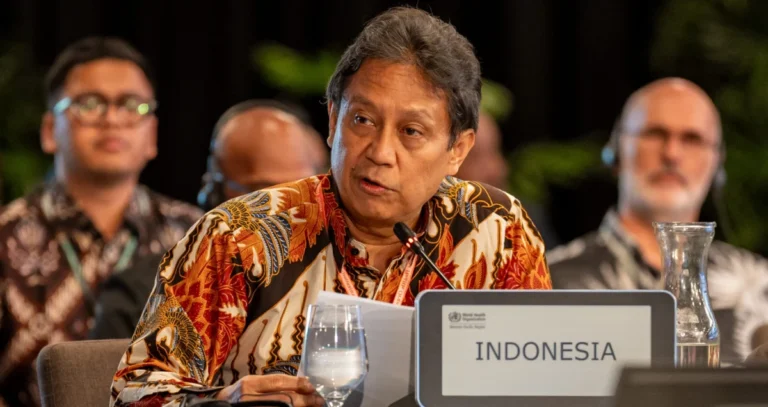
The global race to succeed Dr. Tedros Adhanom Ghebreyesus as the Director-General of the World Health Organization (WHO) has encountered its first major internal disruption, as a high-powered coalition of senior medical professors, anti-corruption watchdogs, and civil society organizations from Indonesia formally petitions the WHO Executive Board to reject Indonesian Health Minister Budi Gunadi Sadikin’s candidacy. Delivered via a comprehensive 12-page dossier submitted to WHO Executive Board members and Geneva-based diplomatic missions, the appeal argues that Sadikin’s domestic governance record fundamentally contradicts the principles of scientific independence, administrative transparency, and equitable human rights stewardship that form the bedrock of international public health leadership.
The petition, spearheaded by the Coalition for Health Justice (Koalisi Keadilan Kesehatan)—a collective comprising more than a dozen civil society and academic organizations including the Council of Professors of Medicine of Indonesia (MGBKI), Transparency International Indonesia, Indonesia Corruption Watch, the Center of Economic and Law Studies (Celios), and BPJS Watch—marks a critical flashpoint. Copies of the dossier were simultaneously transmitted to Indonesian President Prabowo Subianto, national parliamentary leaders, the Indonesian National Human Rights Commission, and the United Nations Special Rapporteur on the Right to Health. When contacted for formal comments regarding the allegations, representatives from the Indonesian Ministry of Health, the Permanent Mission of Indonesia in Geneva, and Sadikin’s campaign offices declined immediate responses, indicating that formal replies would be forthcoming.

At the heart of the domestic pushback is a fierce, years-long struggle over national health sector reforms, administrative centralization, and the systematic marginalization of dissenting medical professionals. As the WHO Executive Board prepares to convene in Geneva in January 2027 to shortlist candidates for the final election at the World Health Assembly in May, the unfolding controversy exposes deep fractures between Jakarta’s technocratic ambitions and its domestic healthcare workforce.
The 2023 Omnibus Health Law and the Centralization of Professional Oversight
Much of the intense opposition directed at Sadikin stems from his aggressive advocacy and implementation of Indonesia’s 2023 omnibus health law. Passed under his ministerial tenure, the sweeping legislation fundamentally restructured the country’s healthcare governance architecture by transferring statutory authority over medical training, competency standards, and professional ethics from independent medical, nursing, and health worker associations to a Health Ministry-backed Health Council and centralized government apparatus.

The move triggered immediate, fierce resistance from Indonesia’s established medical guilds, igniting a protracted multi-year legal and constitutional battle. Critics, including prominent clinical leaders and academic signatories of the MGBKI, argued that the state-led takeover of ethical oversight and disciplinary actions stripped independent professional societies of their traditional self-regulatory roles, creating an environment ripe for executive overreach and administrative retaliation.
"The government, through the leadership of the current minister, has moved into controlling professional ethics and standards," said Dr. Teddy Prasetyono, a plastic surgeon, professor, and leading member of the MGBKI during discussions with health policy analysts. "This is one of the most alarming policies we have ever faced, where disciplinary actions and ethical oversight that belong exclusively to independent professional societies have been taken over by the state."
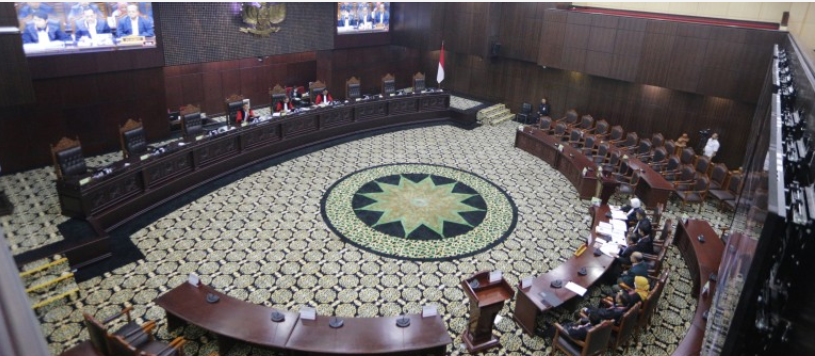
The institutional conflict subsequently shifted to Indonesia’s highest judicial bodies. In a series of rulings issued on January 30, 2026, the Indonesian Constitutional Court delivered a notable rebuke to the Ministry’s centralizing agenda. The court mandated that the Collegia—the academic bodies responsible for setting specialist competency and training standards—must operate independently. Furthermore, the court ruled that the Indonesian Health Council must remain autonomous, answering directly to the President rather than the Health Minister, while restricting the Minister’s role in professional standards strictly to administrative sign-offs. A court-mandated deadline requiring the government to dismantle key elements of its centralized regulatory apparatus is slated to expire in late January 2027, perfectly coinciding with the WHO Executive Board’s candidate shortlisting sessions in Geneva.
Allegations of Retaliation and the Marginalization of Dissenting Clinicians
The Coalition for Health Justice’s petition asserts that Sadikin’s tenure has been characterized by a troubling pattern of administrative penalties, targeted reassignments, and retaliatory measures directed against medical professionals, academics, and healthcare workers who voiced legitimate criticisms of government health policies.
A prominent case highlighted in the dossier involves Dr. Piprim Basarah Yanuarso, president of the Indonesian Paediatric Society and a pediatric cardiologist at Jakarta’s prestigious Dr. Cipto Mangunkusumo National General Hospital. After consistently opposing government efforts to subordinate the independent medical collegium to direct ministerial control, Yanuarso was reassigned by the Health Ministry to Fatmawati General Hospital. Following his refusal to assume the new posting, Yanuarso was formally terminated from the civil service.

Although the Indonesian Supreme Court subsequently annulled the ministerial transfer decree in September, government officials maintained that the ruling applied solely to the initial transfer order, arguing that Yanuarso’s subsequent civil service termination—justified by the ministry on grounds of 28 consecutive days of unexcused absence from the new assignment—remained legally valid.
This high-profile dispute reflects a broader, systemic chill across Indonesia’s medical community. Major professional bodies, including the Indonesian Medical Association (IDI), the Indonesian National Nurses Association (PPNI), the Indonesian Dental Association (PDGI), the Indonesian Midwives Association (IBI), and the Indonesian Pharmacists Association (IAI), initially spearheaded the 2023 constitutional challenges. However, many frontline organizations have grown increasingly reticent to engage in open public confrontations following the statutory dismantling of their authorities.
"We are fully aware that speaking publicly carries professional risks, especially for those working within the public healthcare system," explained Dr. Puspita Wijayanti, a physician and coalition representative. "Pero kami percaya bahwa tetap diam membawa risiko yang lebih besar, khususnya bagi pasien dan tenaga kesehatan yang kepuasannya tidak didengar." ("But we believe that remaining silent carries a greater risk, particularly for patients and healthcare workers whose concerns are not being heard.")
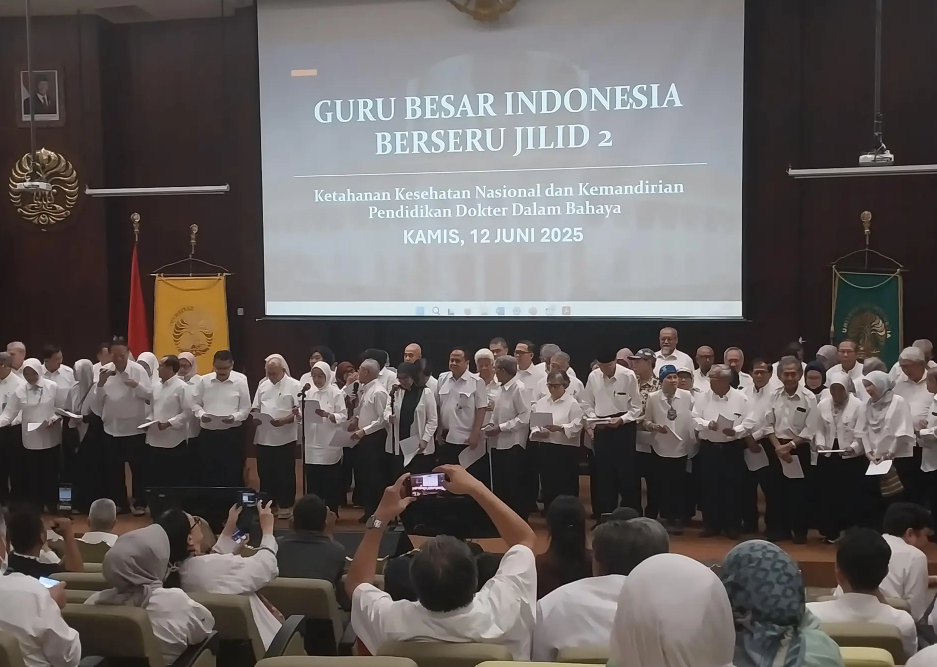
In June 2025, tensions reached a boiling point when 372 medical professors issued a joint declaration of no confidence after the ministry bypassed traditional university faculties to establish hospital-based specialist training directly controlled by the state.
Contrasting Visions: Technocratic Achievements Versus Market-Driven Healthcare
Despite facing formidable domestic headwinds, Sadikin remains a strong contender in the international arena, buoyed by the explicit backing of the Indonesian state and significant administrative achievements. Reports indicate that President Prabowo Subianto personally encouraged Sadikin’s bid, while national business groups, including the Indonesian Chamber of Commerce, have mobilized in support of the former commercial banking CEO.
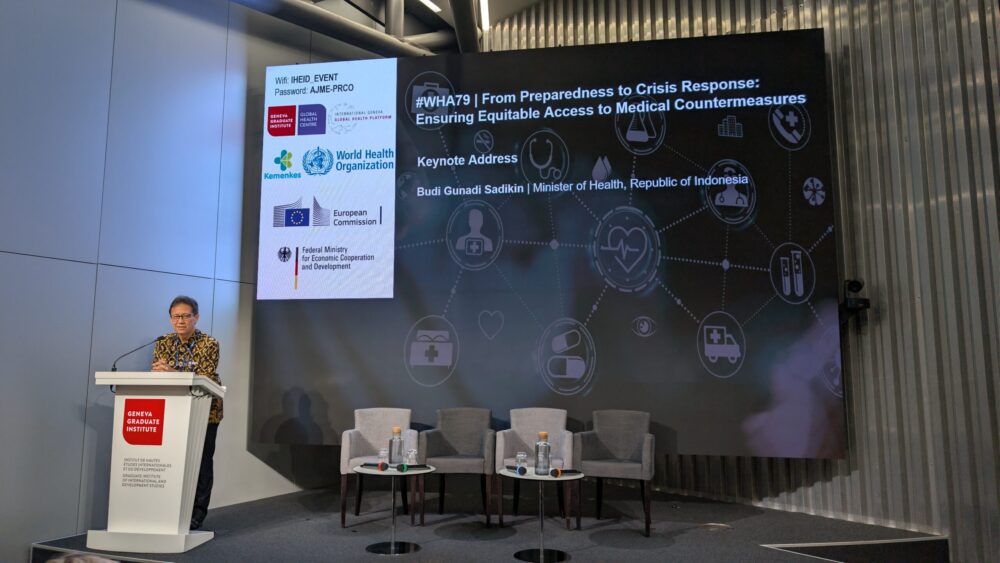
During his tenure as Health Minister, Sadikin’s technocratic record includes the large-scale distribution of 453 million COVID-19 vaccine doses, a measurable reduction in national childhood stunting from 24.4% in 2021 to 19.8% in 2024, and a foundational role in establishing the World Bank-hosted Financial Intermediary Fund for Pandemic Prevention, Preparedness, and Response. Furthermore, as one of the four co-chairs of the Accra Reset’s High-Level Panel on global health architecture—an initiative championed by Ghanaian President John Mahama—Sadikin has actively positioned himself as a champion for Global South representation in international financial governance. Jakarta also bolstered its standing with the WHO in July by pledging an additional $30 million in voluntary contributions to support the organization’s constrained budget, earning public praise from Dr. Tedros.
However, the Coalition for Health Justice argues that Sadikin’s market-oriented approach to public health financing conflicts with the core tenets of universal health coverage. In 2024, the ministry instituted corporate performance directives for public referral hospitals, requiring state facilities to establish revenue targets and generate financial surpluses. Critics argue that these mandates force public institutions to operate as commercial businesses rather than public service providers.
"His target was creating all the hospitals not for servicing the people’s health, but as revenue centres, forcing hospital directors to meet targeted incomes or face being fired," stated Dr. Zainal Muttaqin, a senior neurosurgeon and coalition member whose hospital contract was terminated following public critiques of ministry policies. "It is changing public hospitals into private businesses, using sick people as the objects of business."
Defending these policies, Sadikin has characterized the revenue-generation targets as fiscal pragmatism, explaining that commercial executive wards generate necessary capital to cross-subsidize universal healthcare patients under the national insurance scheme, BPJS Kesehatan. Nevertheless, patient advocacy groups point to systemic strains on frontline delivery, noting instances of prolonged waiting times for inpatient beds and escalating retail medicine prices—which domestic benchmarks indicate can run up to six times higher than international averages, with further projected increases driven by currency fluctuations.
Environmental Health Crises and Genomic Initiatives Under Scrutiny
Sadikin’s international campaign also unfolds against a backdrop of domestic and regional public health challenges, notably Jakarta’s environmental health response to chronic air pollution and ecological crises. Prolonged toxic haze resulting from slash-and-burn agricultural clearing in Sumatra and Borneo has sparked widespread respiratory illness across the archipelago and neighboring nations like Singapore and the Philippines. Compounded by urban waste management failures and burning municipal landfills that generate extensive microplastic pollution, critics contend that the ministry’s public health advisories—such as advising mask usage during pollution emergencies—represent downstream remedies rather than systemic preventive action against climate and environmental health determinants.

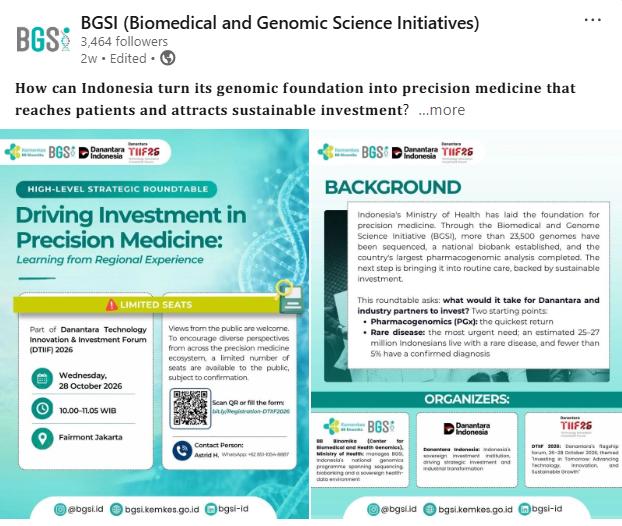
Additionally, critics have scrutinized Indonesia’s Biomedical and Genome Science Initiative (BGSi), launched under Sadikin’s tenure to integrate genomic sequencing and biobanking into routine public health. While the Ministry of Health has repeatedly insisted that sequencing is executed domestically without exporting biospecimens, civil society groups have raised concerns regarding data governance frameworks and partnerships involving multinational technology entities such as the BGI Group, Oxford Nanopore Technologies, G42 Healthcare, and Illumina.
Implications for Global Health Governance
As the WHO Executive Board prepares for its crucial January 2027 shortlisting session, the debate over Budi Gunadi Sadikin’s candidacy crystallizes a broader global tension: the friction between technocratic managerial efficiency and consultative, rights-based health leadership.
For international diplomats and board members, the core question is whether Sadikin’s domestic record reflects necessary, decisive restructuring in the face of institutional inertia, or an alarming disregard for professional independence, human rights, and clinical stakeholder engagement. With the Coalition for Health Justice planning further diplomatic outreach in Jakarta and Geneva, the outcome of this election will serve as a critical benchmark for how international organizations weigh administrative accomplishments against domestic human rights and governance records.