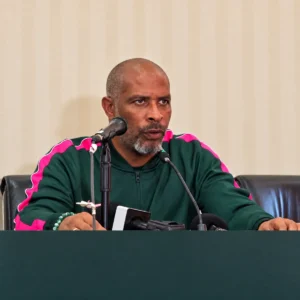
The narrative surrounding the upbringing of Nigerian singer Spyro has taken a somber turn following his recent appearance on Arise TV. During an candid interview with host Rufai Oseni, the musician, known for his chart-topping hits, provided a harrowing account of his formative years under the strict guardianship of his father, a clergyman. The revelations have sparked a significant public conversation regarding the psychological impact of authoritarian parenting, the dynamics of trust between parent and child, and the long-term emotional scars associated with public shaming and corporal punishment.
The Dynamics of a Strained Upbringing
Spyro’s testimony centers on a recurring pattern of behavior that characterized his relationship with his father during his youth. According to the artist, his father’s position as a church leader did not translate into a sanctuary for him at home. Instead, he described a home environment defined by suspicion and a lack of belief in his integrity.
A central theme of the singer’s recollection is the concept of "preemptive guilt." Spyro detailed instances where, whenever funds went missing within the church, he was the immediate and sole suspect. He alleged that his father would frequently subject him to public humiliation by accusing him of theft in front of congregants. These accusations were not merely private admonitions; they were public declarations that damaged the young boy’s reputation and self-esteem.
The psychological toll was compounded by the nature of the "apology" that often followed. Spyro noted that in instances where the missing money was later discovered elsewhere—effectively proving his innocence—his father’s method of reconciliation was superficial, such as buying him milk. This gesture, the singer noted, failed to address the deeper betrayal of trust or the trauma of the public accusation.
Chronology of Traumatic Incidents
While the singer did not provide an exhaustive timeline of his childhood, he highlighted two specific, recurring categories of trauma that left indelible marks on his psyche.
The Church Theft Allegations: Throughout his developmental years, the church served as a theater for his father’s accusations. The cycle was consistent: money would be reported missing, the father would publicly name his son as the culprit, and subsequent exoneration would occur without a meaningful restorative process.
The School Incident: Perhaps the most visceral detail shared by the artist involved a specific event from his school days. Spyro recounted a situation where a female cleaner allegedly scratched his head with her long fingernails. When he sought solace and intervention from his father, he was met with disbelief. His father dismissed the account as a fabrication, leading to a confrontation at the school where the staff member denied the incident.
The aftermath of this event, according to Spyro, was a severe physical punishment. He claimed his father flogged him, leaving a physical scar on his back that remains visible 22 years later. This event appears to be a turning point in his childhood, marking a total fracture in his trust toward his father.
The Role of Maternal Support and Emotional Resilience
In the face of what he described as his father’s antagonism, Spyro credited his mother with providing the essential emotional equilibrium required to survive his youth. He noted that his mother’s consistent love and her efforts to mediate or "balance things out" served as a critical buffer against the total erosion of his self-worth.
Psychological experts often emphasize that even in volatile household environments, the presence of one stable, empathetic caregiver can significantly mitigate the risk of long-term developmental disorders in children. Spyro’s acknowledgment of his mother’s role aligns with established psychological theories regarding resilience in children facing childhood adversity (ACEs). By providing a counter-narrative to his father’s view of him as a "terrible child," his mother seemingly prevented a complete internalization of the labels he was given.
Analysis: The Impact of Authoritarian Parenting
The public disclosure by Spyro invites a broader examination of the consequences of authoritarian parenting styles, particularly in religious or high-pressure environments. Behavioral scientists have long documented that children who are repeatedly accused of wrongdoing without evidence, and who are subjected to public humiliation, are at a higher risk of developing internalizing disorders, such as low self-esteem, anxiety, and depression.
Furthermore, the singer’s admission that he briefly considered "becoming" the terrible child he was accused of being is a phenomenon known in social psychology as "labeling theory." When a child is consistently defined by negative traits by an authority figure, they may adopt those traits as a form of self-fulfilling prophecy, believing that if they are to be punished regardless of their actions, there is no incentive for moral compliance.
Broader Societal Implications
The discourse sparked by Spyro’s revelation touches on deeper societal issues within Nigeria and beyond. The intersection of religious authority and domestic discipline is a sensitive topic, as many traditional structures prioritize parental authority above child welfare.
Public responses to the singer’s interview have been mixed, yet largely empathetic. While some have questioned the timing or the necessity of airing family grievances in the public domain, a larger segment of the public has used the opportunity to discuss the need for more compassionate parenting models.
The mention of the 22-year-old scar serves as a physical manifestation of a common trend: the "generational trauma" that many adults continue to carry. Modern parenting experts increasingly advocate for restorative discipline—which focuses on teaching, understanding, and reconciliation—over punitive measures that rely on physical pain and public shame.
Moving Forward: From Trauma to Advocacy
Spyro’s emergence as a successful artist and his willingness to discuss these experiences publicly marks a transition from victimhood to agency. By sharing his story, he has added his voice to a growing body of public figures who are de-stigmatizing the discussion of mental health and childhood trauma in the Nigerian entertainment industry.
The implications for his career and public persona are significant. Often, celebrities are expected to maintain an image of perfection. By choosing vulnerability, Spyro has shifted the narrative, framing his success not just as a result of talent, but as a triumph over early-life adversity.
As this story continues to circulate, it serves as a reminder of the lasting power of words and the profound responsibility inherent in guardianship. Whether through media interviews, social media discourse, or personal reflection, the narrative of Spyro’s upbringing will likely continue to resonate with those who have experienced similar struggles, offering a degree of validation for their own paths toward healing.
Ultimately, the singer’s journey from a child who was told he was "terrible" to a man who commands national attention is a testament to the complexity of the human spirit. While the scars, both physical and emotional, persist, the narrative arc he has presented suggests a process of recovery that is ongoing—one that finds its strength in the very honesty he was once denied as a child.