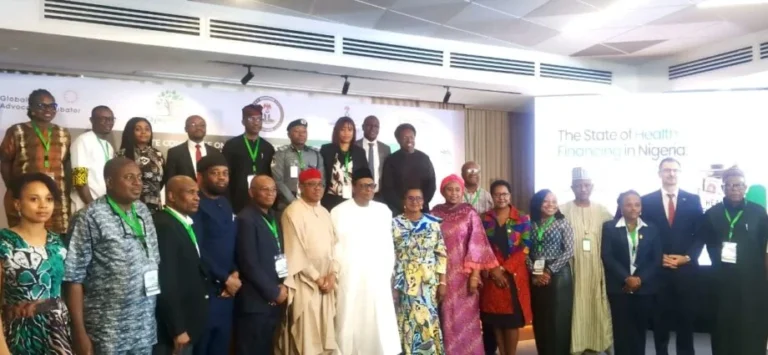
The quest for a resilient and self-sustaining healthcare system in Nigeria has reached a critical juncture, as a coalition of government officials, lawmakers, and policy experts gathered in Abuja for the National Convergence on Sustainable Health Financing. The meeting, orchestrated by the Senate Committee on Health in partnership with the Caywood Brown Foundation, served as a formal clarion call for the Nigerian government to move away from its historical dependence on external donor funding and prioritize domestic investment as the primary engine for health sector growth.
The urgency of the event stems from the stark reality that Nigeria’s health indicators remain among the most challenging in the world, a situation exacerbated by a financing model that has long been characterized by fragmentation, inefficiency, and insufficient budgetary allocation. As the 10th National Assembly approaches the latter half of its legislative tenure, the pressure to codify sustainable financing mechanisms into law has never been higher.
A Chronology of the Push for Reform
The dialogue in Abuja is the latest in a series of high-level engagements aimed at revamping the financial architecture of Nigeria’s healthcare sector. The journey toward this legislative push can be traced back to the 2025 National Health Financing Dialogue, which set the stage for current policy discussions.
Historically, Nigeria has struggled to meet the 15% budgetary allocation for health as prescribed by the Abuja Declaration of 2001. Throughout the last decade, successive administrations have faced the hurdle of competing fiscal demands, leading to a situation where the health sector often received less than 7% of the annual budget. The current push, spearheaded by Senate Bills 713 and 886, seeks to change this trajectory by institutionalizing funding streams that are less susceptible to political cycles and economic volatility.
The Economic Case for Domestic Financing
During the conference, the Coordinating Minister of Health and Social Welfare, Prof. Muhammad Pate, delivered a sobering assessment of the nation’s past fiscal choices. Addressing the assembly, Prof. Pate noted that for decades, Nigeria operated with a per-capita health expenditure of less than 20 dollars, a figure that stood in stark contrast to the investments made by other emerging economies.
"Health is not cheap," the Minister remarked, emphasizing that quality care is a direct reflection of a society’s willingness to pay. He argued that the era of relying on "token investments" must come to an end if Nigeria intends to achieve Universal Health Coverage (UHC). The Minister highlighted that the government is currently aggressively pursuing reforms designed to maximize existing resource pools, enhance the efficiency of the National Health Insurance Authority (NHIA), and ensure that the Basic Health Care Provision Fund (BHCPF) functions as intended.
The Minister’s call to action extended beyond the federal level. He pointedly urged state governors to meet their obligations regarding the domestication of health financing laws and the provision of counterpart funding for the BHCPF. The BHCPF, often described as the backbone of primary healthcare in Nigeria, has faced significant implementation gaps because many states have failed to provide the necessary matching funds, effectively locking out millions of vulnerable citizens from basic medical services.
Legislative Hurdles and the Path to Sustainability
Senator Ipalibo Harry-Banigo, who chairs the Senate Committee on Health and is the primary sponsor of the pending legislation, framed the reforms as a move toward a predictable and domestically anchored health financing architecture. Her position reflects a growing consensus among lawmakers that development assistance—while helpful—should be a supplement rather than a substitute for national investment.

The legislative agenda presented during the convergence focuses on four key pillars:
- The Expansion of the Sugar-Sweetened Beverage (SSB) Levy: Proponents argue that the tax should be viewed not just as a revenue generator but as a health intervention to curb the rising tide of non-communicable diseases (NCDs) like diabetes and hypertension.
- Institutionalization of the BHCPF: Ensuring that the fund is protected from administrative interference and that its disbursement mechanisms are transparent and data-driven.
- Local Manufacturing: A push to reduce the cost of healthcare by incentivizing the domestic production of essential medicines and medical commodities, thereby insulating the sector from foreign exchange fluctuations.
- Strategic Purchasing: Shifting the focus of the NHIA from merely collecting premiums to strategically purchasing high-impact health services for the population.
Rep. Amos Magaji, Chairman of the House Committee on Healthcare Services, echoed these sentiments, noting that UHC cannot be financed through temporary, piecemeal measures. He stressed the importance of strong institutions and rigorous oversight to ensure that the funds reaching the primary healthcare centers are utilized effectively.
Expert Perspectives: Shifting Toward Prevention
Dr. Jide Idris, Director-General of the Nigeria Centre for Disease Control and Prevention (NCDC), provided a perspective grounded in the realities of modern epidemiology. He argued that the current financing model is heavily skewed toward curative services, which are inherently more expensive and less effective at scale.
Dr. Idris advocated for a paradigm shift that prioritizes preventative investments—strengthening surveillance, enhancing immunization coverage, and investing in public health education. According to the NCDC lead, this approach would reduce the long-term burden on hospitals and lower the overall cost of health delivery for the government and households alike.
Similarly, Dr. Kelechi Ohiri, Director-General of the NHIA, emphasized that the collaboration between the health and finance sectors is the "missing link" that has finally been bridged. He noted that without legislative backing that forces financial integration, health remains an isolated expenditure rather than a national investment priority.
Implications and Future Outlook
The implications of these proposed reforms are profound. If the 10th National Assembly successfully passes the pending bills and secures presidential assent, Nigeria could witness a transformation in how healthcare is funded at the grassroots level.
However, analysts point out that the success of these reforms hinges on three critical factors:
- Political Will at the Sub-national Level: Even if federal laws are passed, the impact will be muted if state houses of assembly do not domesticate the legislation and governors do not prioritize the health budget.
- Accountability Frameworks: Given Nigeria’s history of "leakages" in public spending, the establishment of independent oversight bodies to audit the disbursement of the BHCPF is essential to maintaining public trust and donor confidence.
- Economic Stability: The current economic climate, characterized by high inflation and currency depreciation, places immense pressure on household disposable income. This makes the implementation of taxes like the SSB levy a delicate balancing act—too high, and it impacts the poor; too low, and it fails to generate the necessary revenue for health.
The call from the Abuja convergence is clear: the status quo of relying on international aid is unsustainable in an era of global economic uncertainty and rising healthcare costs. As Ms. Ibim Banigo of the Caywood Brown Foundation noted, the window for the 10th National Assembly to leave a lasting legacy on the health sector is closing. The urgency expressed by stakeholders is a recognition that health is not merely a social service, but a foundational pillar of Nigeria’s economic security.
As the legislative process continues, the eyes of the public and the global health community remain fixed on the National Assembly. The passage of these bills would represent a historic shift, potentially signaling a future where every Nigerian has access to essential healthcare, funded not by the charity of others, but by the deliberate, sustainable, and strategic investment of their own nation.