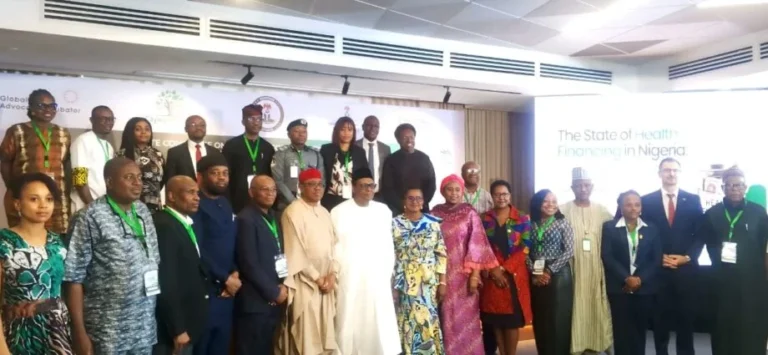
In a decisive move to overhaul the nation’s healthcare architecture, a high-level coalition of policymakers, health experts, and civil society leaders has issued a clarion call to the National Assembly and state governments. The appeal, made during the National Convergence on Sustainable Health Financing in Abuja, demands an immediate acceleration of legislative and policy reforms aimed at decoupling Nigeria’s health sector from its heavy, and increasingly precarious, reliance on international donor support.
The summit, organized by the Senate Committee on Health in strategic partnership with the Caywood Brown Foundation and various multi-sectoral stakeholders, served as a critical platform to address the structural deficiencies in Nigeria’s healthcare funding. The consensus among participants was clear: the era of tokenistic investments must end if Nigeria is to achieve universal health coverage (UHC) and build a resilient system capable of weathering future epidemics.
The Legislative Mandate: A Chronology of Reform
The current push for legislative reform is not a spontaneous development but rather the culmination of years of advocacy and the sobering realities of the post-pandemic economic landscape. Following the National Health Financing Dialogue of 2025, which highlighted the widening gap between health needs and actual budget performance, the 10th National Assembly has taken a lead role in attempting to codify sustainable funding mechanisms.
The primary legislative instruments currently under consideration are Senate Bills 713 and 886, championed by the Chairman of the Senate Committee on Health, Senator Ipalibo Harry-Banigo. These bills seek to establish a more predictable, domestically funded financial architecture. The timeline for these reforms is now considered critical; with the tenure of the 10th Assembly moving toward its later stages, advocates have warned that any delay in concurrence by the House of Representatives could lead to the expiration of the legislative progress made thus far, requiring the process to start anew in the next assembly.
The Economic Imperative: Why Domestic Funding Matters
The Coordinating Minister of Health and Social Welfare, Prof. Muhammad Pate, set a somber tone for the proceedings by challenging the nation to confront the reality of its investment choices. "Health is not cheap," Prof. Pate stated, noting that for decades, Nigeria’s per capita health spending hovered below 20 dollars. He argued that the resulting outcomes—high maternal mortality rates, inadequate primary healthcare infrastructure, and a brain drain of medical professionals—are the direct consequences of long-term underinvestment.
The economic argument for domestic financing is rooted in the volatility of global health aid. As donor nations pivot their resources toward their own domestic crises or shifting geopolitical priorities, countries like Nigeria face a "funding cliff." To mitigate this, the government is looking toward two primary pillars: the strengthening of the Basic Health Care Provision Fund (BHCPF) and the expansion of the Sugar-Sweetened Beverage (SSB) levy.
Data presented at the summit suggested that the BHCPF, while a revolutionary instrument in theory, has been hampered by inconsistent counterpart funding from state governments. While the federal government has attempted to prioritize this fund, the "domestication" of these reforms at the state level remains the weakest link in the chain. Without governors fulfilling their constitutional and moral obligations to provide matching funds, the federal mandate remains largely aspirational in many parts of the country.
Strategic Shifts: From Service-Based to Prevention-Focused
A recurring theme during the discussions was the urgent need to reorient the health system toward preventive care. Dr. Jide Idris, Director-General of the Nigeria Centre for Disease Control and Prevention (NCDC), emphasized that the current model is heavily skewed toward curative services, which are significantly more expensive and less effective in the long run.

"We are managing crises rather than preventing them," Dr. Idris noted. By shifting investment toward public health surveillance, vaccination programs, and early detection, the government could theoretically reduce the long-term burden on hospitals and clinics. This perspective is reinforced by the rising prevalence of non-communicable diseases (NCDs) such as hypertension, diabetes, and cardiovascular conditions—ailments that are often preventable but currently consume a disproportionate share of the national health budget due to delayed diagnosis and treatment.
The Role of Taxation and Accountability
The expansion of the Sugar-Sweetened Beverage (SSB) levy emerged as a focal point for sustainable revenue generation. Proponents of the tax argue that it serves a dual purpose: it acts as a deterrent against the consumption of unhealthy products linked to obesity and diabetes, and it creates a dedicated revenue stream that can be ring-fenced for NCD prevention and primary healthcare.
Rep. Amos Magaji, Chairman of the House Committee on Healthcare Services, echoed the sentiment that UHC cannot be financed through temporary or ad-hoc measures. "We need sustainable resources, strong institutions, and accountability," Magaji stated. He assured stakeholders that the legislature is prepared to provide the necessary oversight to ensure that funds, once generated, are not lost to bureaucratic inefficiency or misappropriation.
Furthermore, the Director-General of the National Health Insurance Authority (NHIA), Dr. Kelechi Ohiri, underscored that legislative support is the "bedrock" of any sustainable financing model. The NHIA’s role in strategic purchasing is expected to expand, acting as the primary vehicle for allocating resources efficiently across the healthcare value chain.
Broader Implications and Future Outlook
The implications of the reforms discussed in Abuja extend far beyond the immediate legislative agenda. If successfully implemented, the transition to domestic ownership of healthcare financing would represent a fundamental shift in Nigeria’s governance model. It would signal a move away from a reliance on external benevolence toward a system where the state takes full responsibility for the welfare of its citizens.
However, the path forward is fraught with challenges. The current economic climate, characterized by high inflation and fiscal constraints, makes the call for increased government spending difficult for some state governors to accommodate. There is also the challenge of public trust; citizens are historically skeptical of new taxes, such as the SSB levy, unless they can clearly see the tangible benefits in their local primary healthcare centers.
To succeed, the proposed reforms must be paired with rigorous transparency. As noted by experts from the Legislative Initiative for Sustainable Development (LISDEL) and the Global Health Advocacy Incubator, the "social contract" between the government and the governed hinges on the effective utilization of resources. If the public sees that SSB tax revenues are directly funding the renovation of rural clinics or the provision of essential medicines, support for these fiscal policies will likely increase.
Conclusion: A Call to Action
As the convergence drew to a close, the consensus was clear: the time for deliberation has largely passed, and the time for implementation is at hand. The prompt passage of the pending health financing bills is not merely a bureaucratic requirement; it is a vital prerequisite for the survival of Nigeria’s public health system.
The stakeholders’ message to the House of Representatives is urgent: concur with the Senate, transmit the bills to the Presidency, and secure the legal framework required to transform Nigeria’s health sector. With the 10th National Assembly nearing its conclusion, the window of opportunity is narrowing. The outcome of these efforts will define the quality of healthcare for millions of Nigerians for decades to come, marking the difference between a system in perpetual crisis and one that is truly sustainable, resilient, and focused on the health of its people.